
Rodent Proofing Services in the Bay Area
Rodent proofing seals the gaps rats and mice use to get into Bay Area homes, from roof vents to crawl space openings. We find every entry point and close it with chew-resistant materials.
- Licensed, Bonded & Insured
- Family-Owned, 25+ Years
- Free, No-Obligation Quote
Get Your Free Quote
Tell us about your project and we'll follow up with next steps — usually the same day.
Request Free InspectionWhere Rodents Get Into Bay Area Homes
Rats and mice rarely chew a brand-new hole. They find an opening that already exists and widen it.
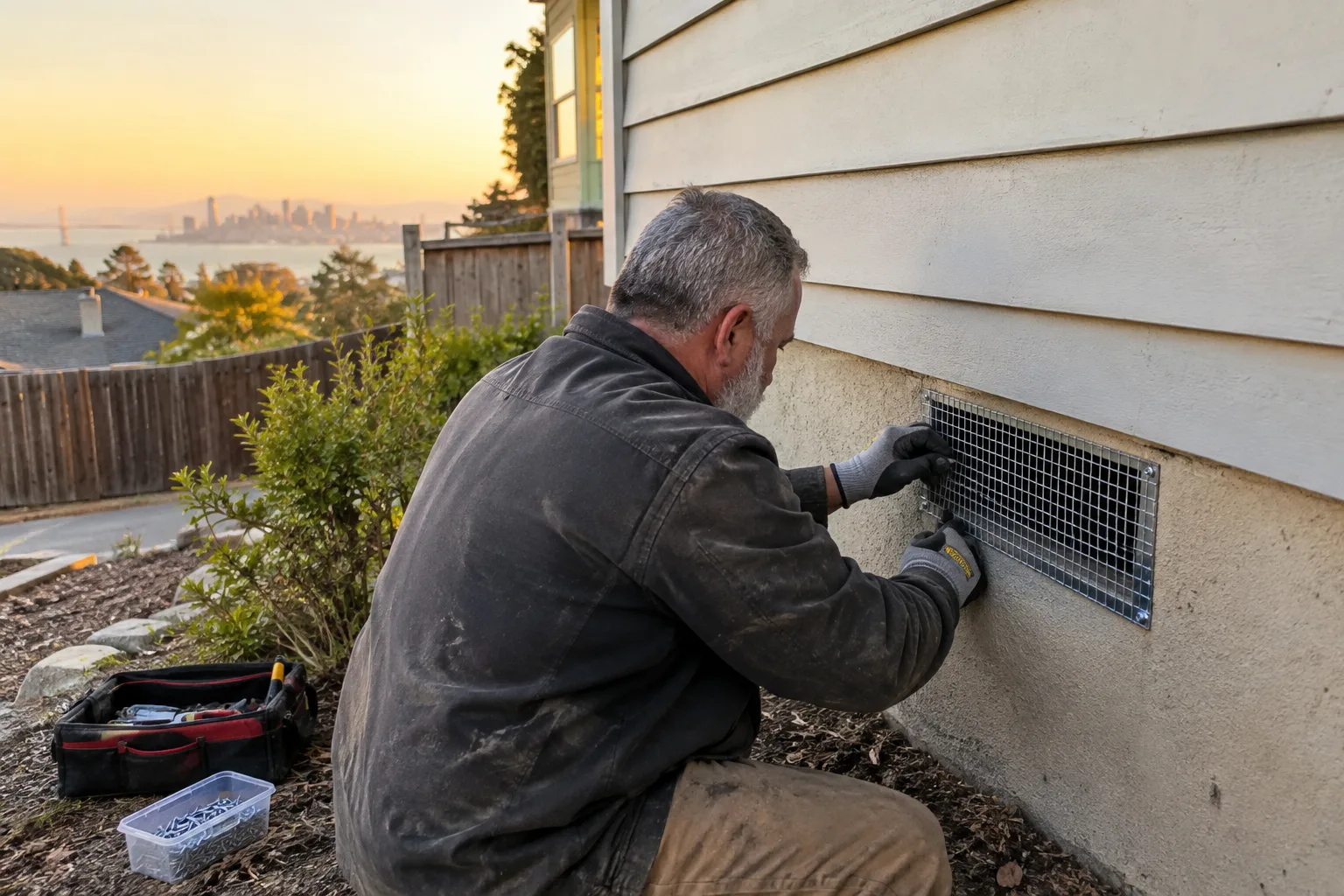
- Roof vents and torn gable vent screens
- Gaps where the roofline meets an exterior wall
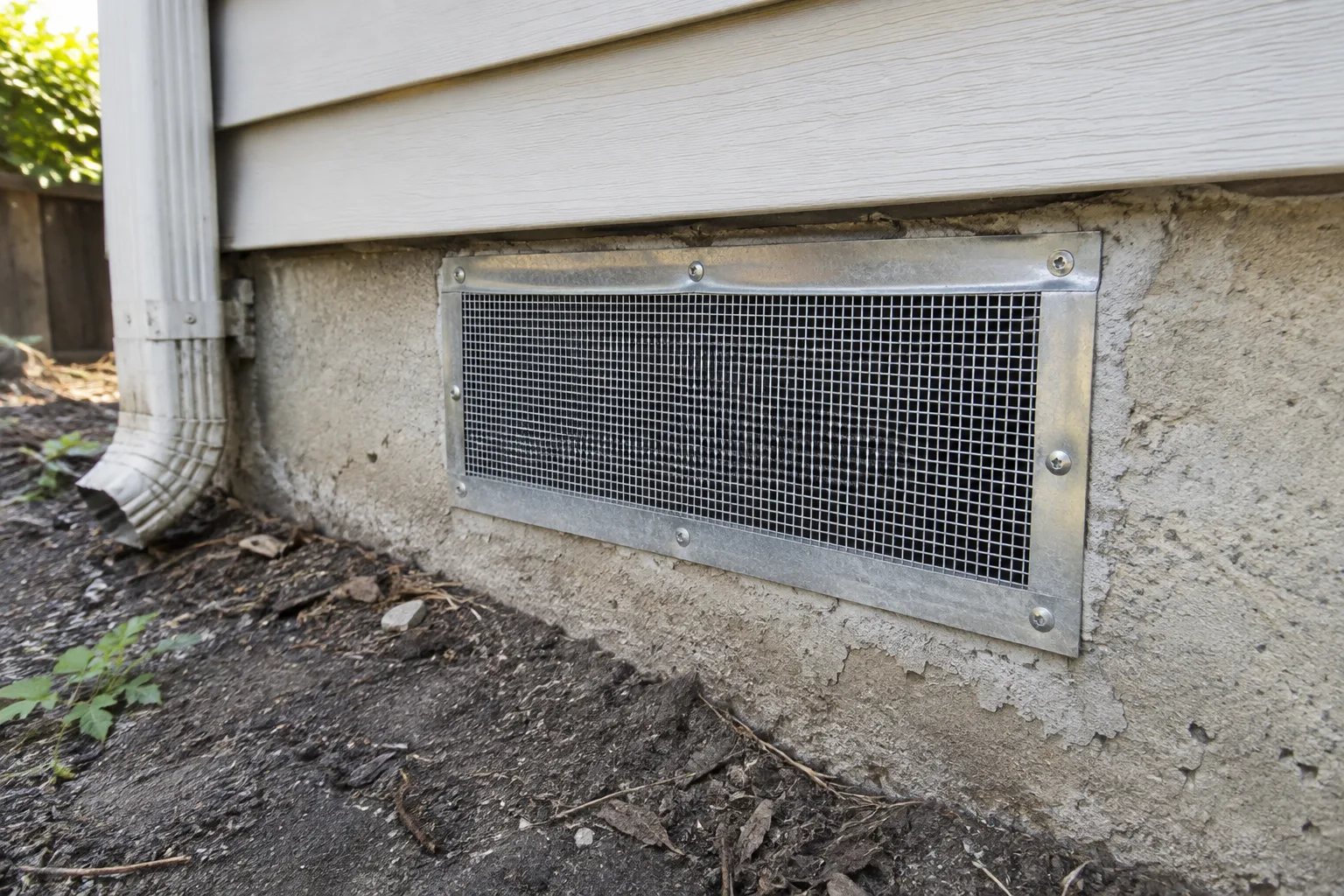
- Open or damaged foundation and crawl space vents
- Pipe, cable, and AC line set penetrations
- Worn weatherstripping under garage doors
 i
Why Seal Your Home Against Rodents
Exclusion work addresses the reason rodents keep coming back: the openings themselves.
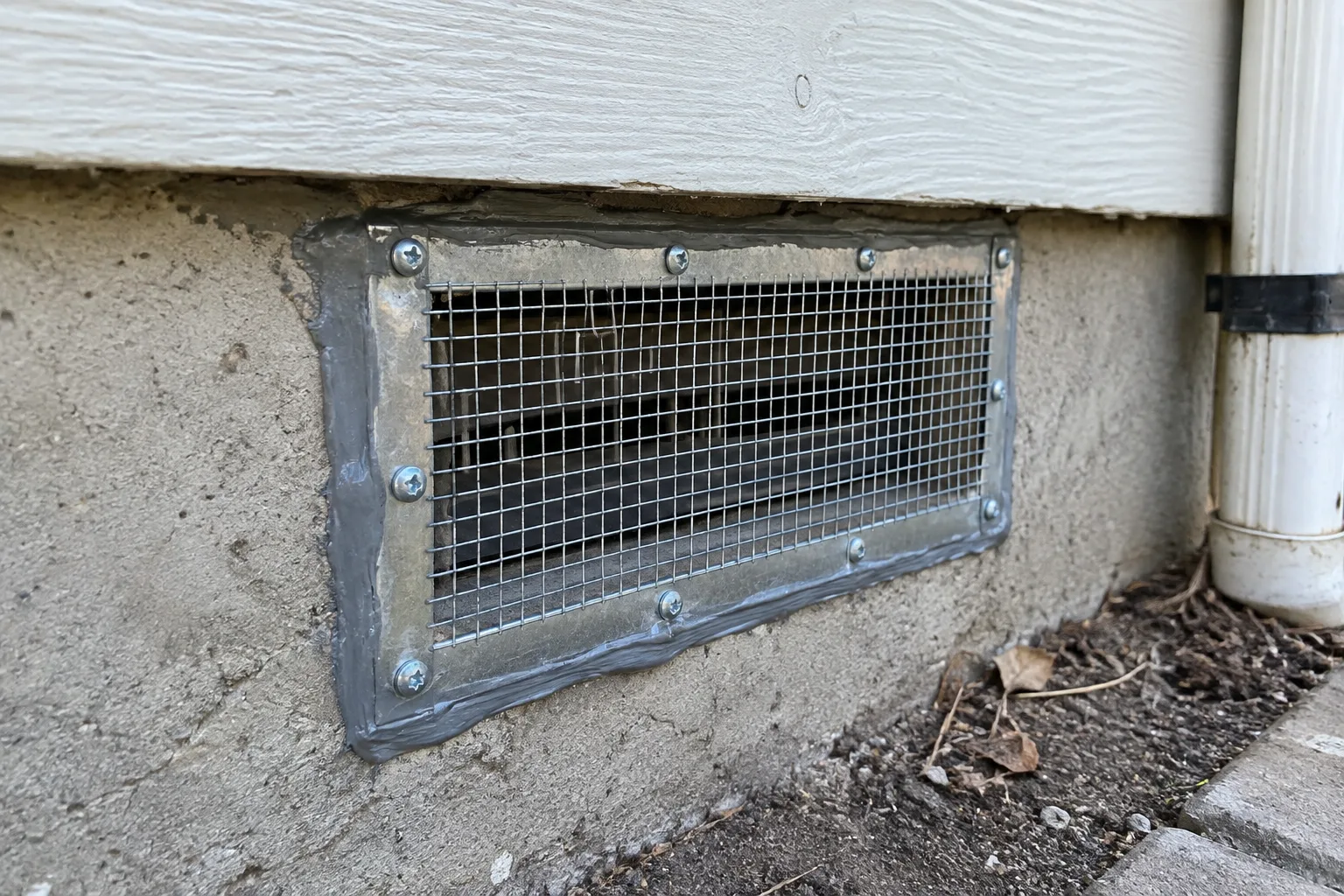
- Every entry point found and sealed
- Durable, chew-resistant materials
- Vents screened, not blocked
- Done by our in-house crew
 i
Everything You Need to Know About Rodent Proofing
Rodent proofing, sometimes called exclusion, is the work of closing every opening a rat or mouse could use to get inside. It sounds simple, but the openings are small and often hidden. A house mouse can typically squeeze through a gap about a quarter inch wide, and a young rat through one around half an inch. That means a loose vent screen, a gap beside a gas line, or a corner where the fascia has pulled away can each be a doorway. Proofing is about finding all of them, not just the obvious one.
Bay Area homes tend to share a few weak spots. Older houses on raised foundations often have crawl space vents with rusted or missing screens. Gable vents and roof vents can lose their screening to weather or to rodents working at the edges. Where a roof meets a second-story wall, small gaps often open up as framing settles. Utility penetrations are another frequent culprit, since the holes cut for plumbing, cable, and air conditioning line sets are rarely sealed tightly. On many homes, the space under the garage door is the easiest way in of all.
Good exclusion work relies on materials rodents can't easily chew through. Galvanized hardware cloth and steel mesh are commonly used over vents and larger openings, while metal flashing is typically used to close gaps along rooflines and corners. Sealants and caulk have a place, but on their own they usually aren't enough, because rats can gnaw through soft materials like expanding foam. The aim is a seal that holds up to weather, keeps vents breathing, and leaves no weak edge for a determined rodent to work on.
Sealing and removal have to go together. Close up a house with rodents still inside and they will chew new exits or die in the walls; trap them without sealing and new ones simply move in through the same gaps. We handle rodent proofing with our own in-house crew, not subcontractors, starting with a free inspection. We clear any rodents still inside before closing the last openings, then repair the damage they left, including replacing contaminated insulation where needed.
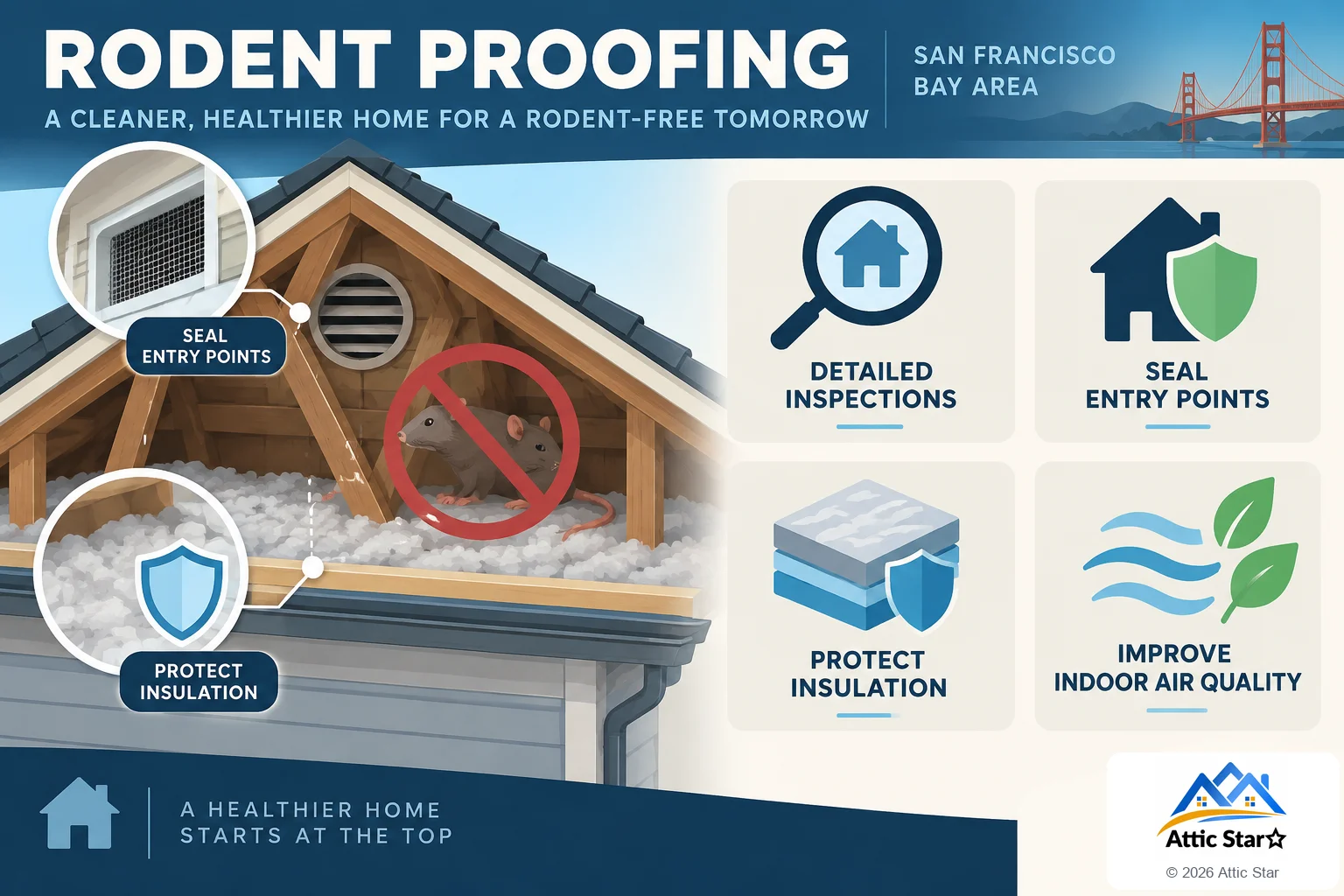
Rodent Proofing at a Glance
Roof Rats, Norway Rats, and Mice: How Each One Gets In
Roof rats are the climbers. They are slender and agile, comfortable traveling along fences, power lines, and tree branches, which is how they usually reach an attic. In the Bay Area they are drawn to backyard fruit trees, citrus especially, and to dense ivy, which gives them cover and a place to nest. When roof rats are the problem, the entry points are typically high: roof vents, gaps at the eaves, and openings where branches touch or hang over the roof.
Norway rats are heavier, stronger, and less inclined to climb. They tend to burrow, so they usually come in at ground level, through foundation vents, gaps around pipes entering the crawl space, holes in garage walls, or the space beneath doors. Signs of Norway rats more often show up in crawl spaces and basements than in attics. Proofing against them means paying close attention to the foundation line, including spots where soil or landscaping is piled right against the house.
Mice can come in almost anywhere, because the openings they need are so small. Gaps around utility lines, dryer vents, weatherstripping, and door thresholds are common routes, and once inside they tend to follow wiring and plumbing runs through the walls. Deer mice, found more often near open land and wooded edges, are a particular concern because they can carry hantavirus. Whatever the species, exclusion only works when every opening is closed, since a single gap left behind becomes the route they all use.
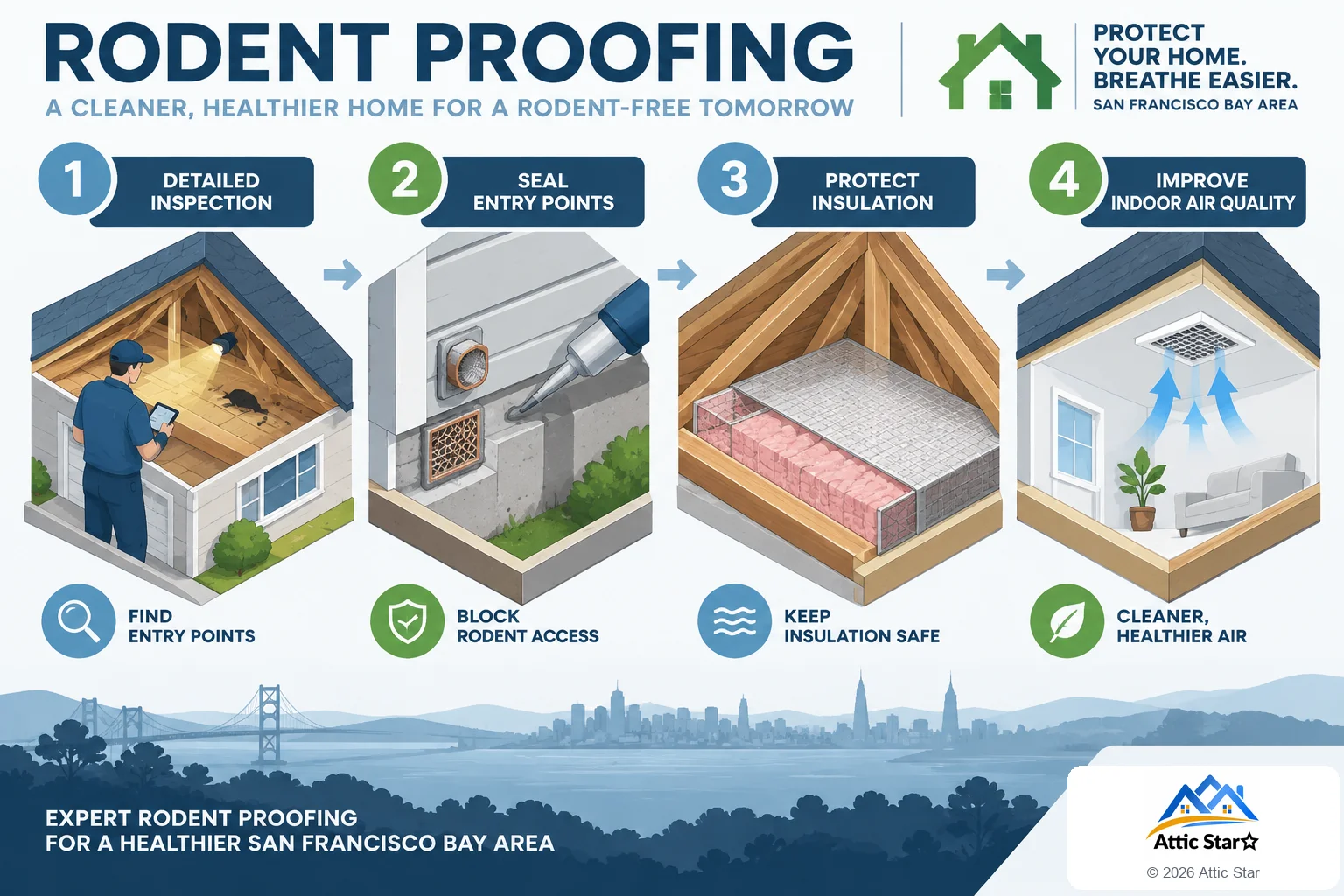
Recent Rodent Proofing Jobs
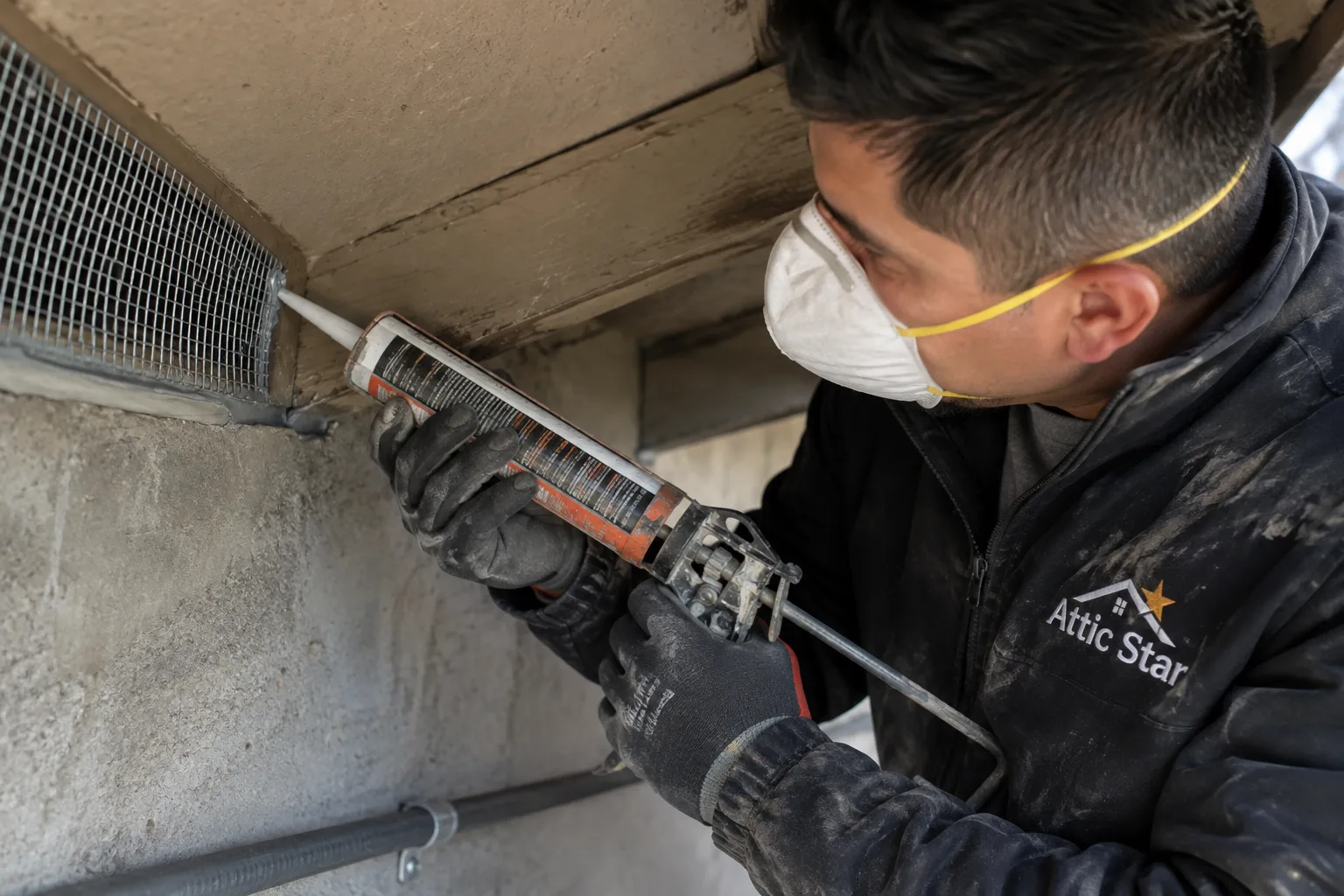 i📍 Cambrian Park, San Josei📍 Dublini📍 San Carlos
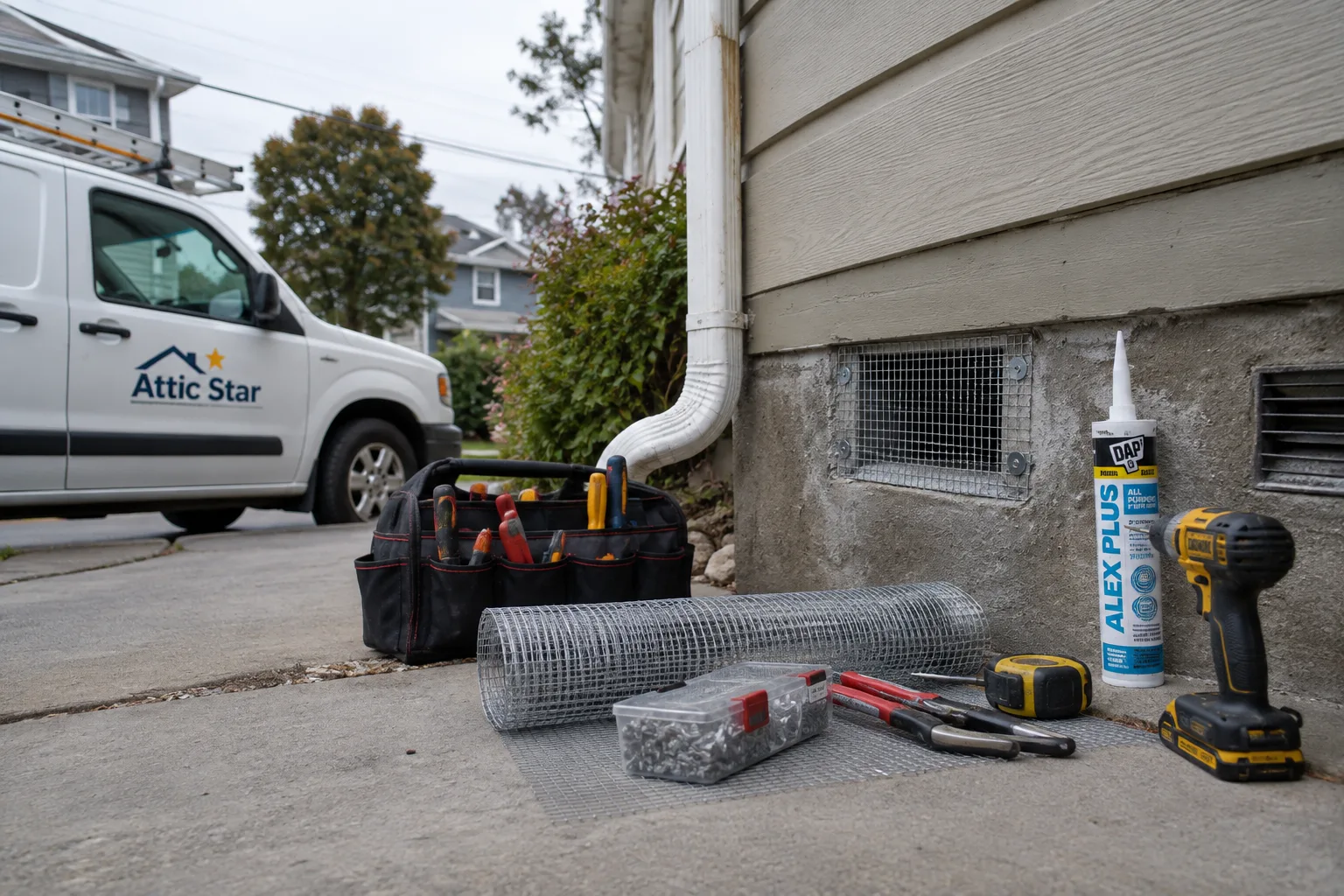 i📍 Lafayette
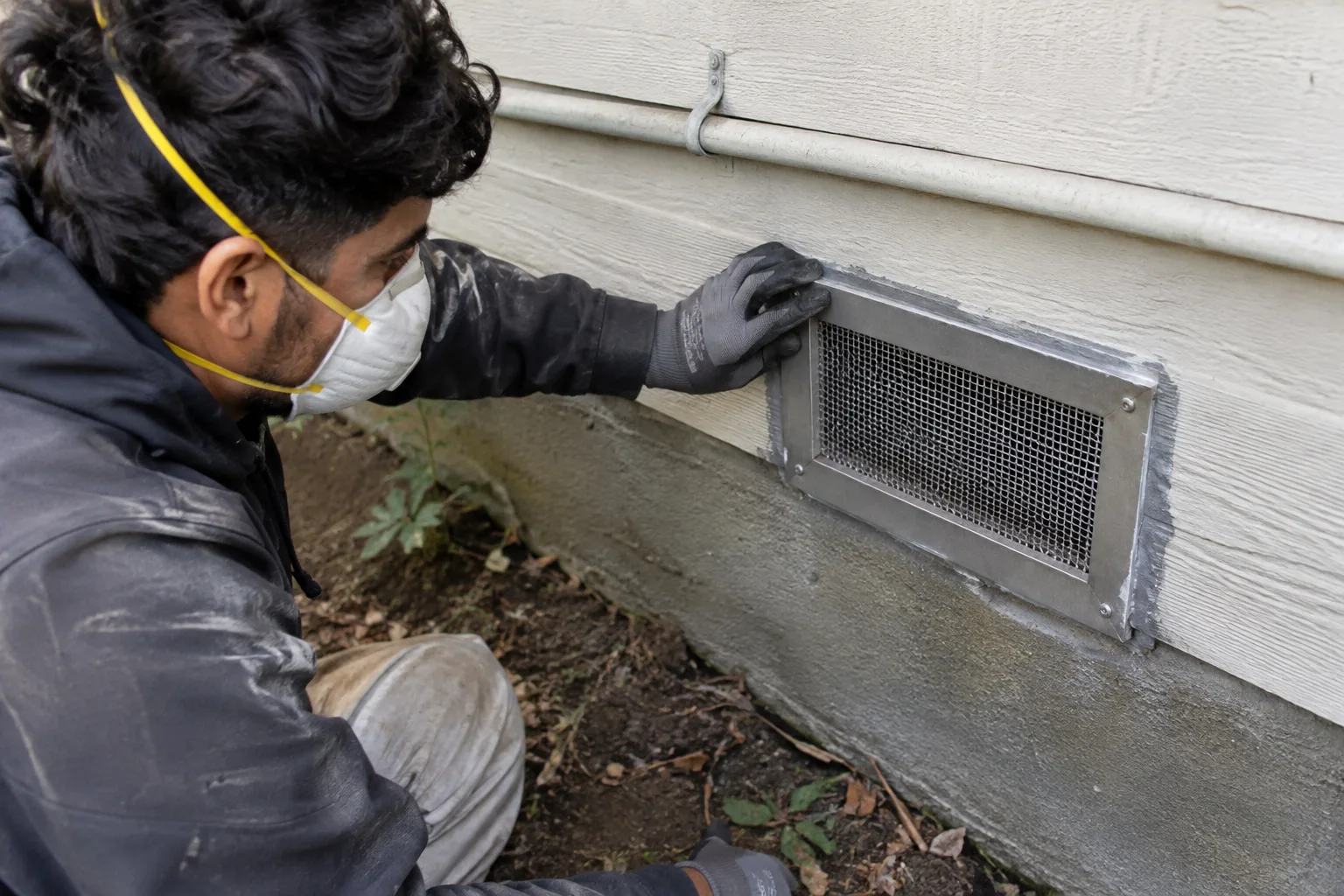 i📍 Palo Alto
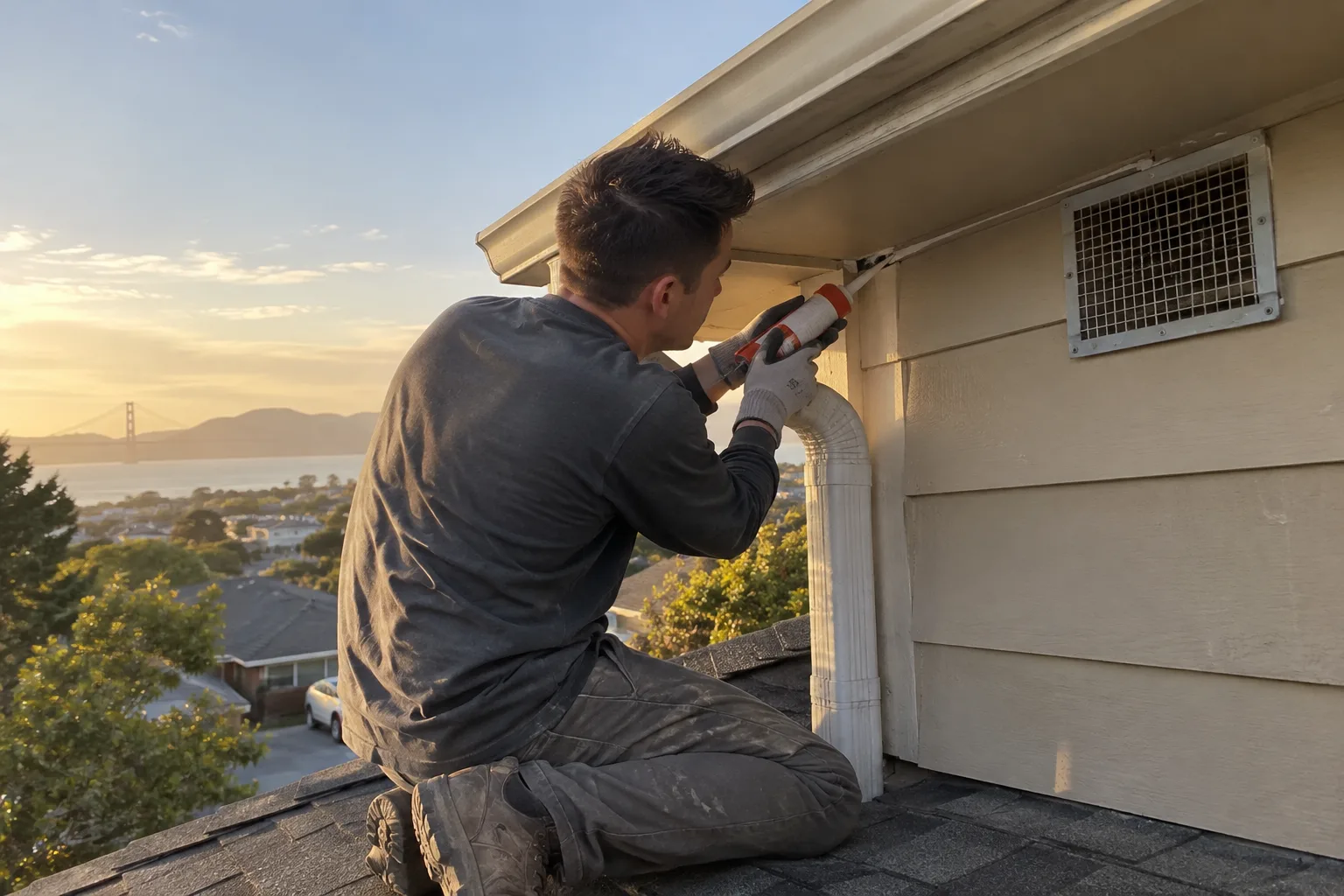 i📍 Corte Madera
 i📍 Bernal Heights, San Francisco
How We Handle Rodent Proofing
Entry Point Survey
We check the roofline, vents, foundation, and utility penetrations, noting each gap rodents could use.
Clear the Occupants
Rodents already inside are removed first, so none get sealed in.
Seal and Reinforce
Each opening is closed with chew-resistant material matched to the gap and the surface around it.
Repair the Damage
We fix gnawed vents and screens and swap out insulation soiled by nesting rodents.
Other Services Homeowners Ask About
Most projects involve more than one service. These are the ones our Bay Area crews pair with this work most often:
- Bay Area rodent removal
- attic cleaning and cleanup
- attic insulation removal and replacement
- crawl space cleaning
We do rodent proofing across the Bay Area from four offices, on the Mid-Peninsula, in the South Bay and East Bay, and in the North Bay, San Francisco and Oakland.
What Bay Area Homeowners Are Saying
Our Guarantee: Expert, Reliable, Affordable
Rodent proofing starts with a free inspection of every likely entry point on your home, and our in-house crew does the sealing and repair work itself.
FAQ
How much does rodent proofing cost? +
Cost depends on the size of your home and the scope of the work. We provide a free, no-obligation inspection and give you an exact quote before anything begins — no surprises.
How long does the work take? +
Sealing and cleanup are usually done in a single visit, but trapping out an active infestation takes follow-up visits until activity stops. We'll give you a timeline during your free inspection.
Do I need to be home during the work? +
You don't need to stay in the work area itself, but we do ask that someone is available at the start and end of the appointment. Our crew works cleanly and keeps you updated throughout.
Are you licensed and insured? +
Yes — Attic Star is fully licensed, bonded, and insured, and has served Bay Area homeowners for over 25 years.
Can you seal up my house while rats are still inside? +
We don't recommend it. Rodents sealed inside a house will try to chew their way out, often creating new damage, or they die somewhere in the walls and leave an odor behind. That's why we remove the rodents first and close the final entry points once activity has stopped. The order matters as much as the quality of the seal.
Will sealing my vents hurt attic or crawl space ventilation? +
It shouldn't. Attic and crawl space vents need to keep moving air, so proper exclusion covers them with sturdy screening instead of blocking them off. The mesh keeps rats and mice out while air still flows through. Closing vents up solid can trap moisture, which is the last thing an attic or crawl space needs.
Can I just fill the holes with spray foam? +
Foam by itself is a temporary fix at best. Rats and mice can chew through it, and soft material is easy for them to work at. Foam can be useful as a filler behind something tougher, but the outer layer of a rodent seal should be a material they can't bite through, such as metal mesh or flashing.
How can I tell which openings rodents are using? +
Look for rub marks, the dark, greasy smudges rodent fur leaves along regular routes, plus droppings and gnaw marks near an opening. Fresh chewing looks lighter in color than old damage. Our inspection covers the whole exterior along with the attic and crawl space, because the hole you've noticed is often not the only one.
Get Your Free Rodent Proofing Quote
Fill out the form and we'll follow up to schedule your free, no-obligation inspection — most homeowners hear back the same day. Prefer to talk now? Call us directly.
Get Your Free Estimate
Takes less than a minute — tell us about your project and we'll follow up the same day.
Get my Free Estimate