
Cellulose Insulation in the Bay Area
Cellulose insulation for Bay Area attics and walls: borate-treated recycled paper fiber, blown loose in attics or dense-packed into closed walls. We inspect for free before recommending it.
- Licensed, Bonded & Insured
- Family-Owned, 25+ Years
- Free, No-Obligation Quote
Get Your Free Quote
Tell us about your project and we'll follow up with next steps — usually the same day.
Request Free InspectionWhen Cellulose Makes Sense
Cellulose is especially useful where you want a dense, high-performing layer, or where walls are already closed up and opening them isn't practical.
- Exterior walls with no insulation at all
- An older home you don't want to gut
- An attic that needs more R-value per inch
- A preference for recycled-content materials
 i
Why Choose Cellulose Insulation?
Cellulose pairs solid R-value with a dense, fibrous texture that slows air movement, and it is made largely from recycled paper.
- Retrofits closed walls through small holes
- Borate-treated against fire and insects
- High R-value per inch
- Largely recycled paper content
 i
Everything You Need to Know About Cellulose Insulation
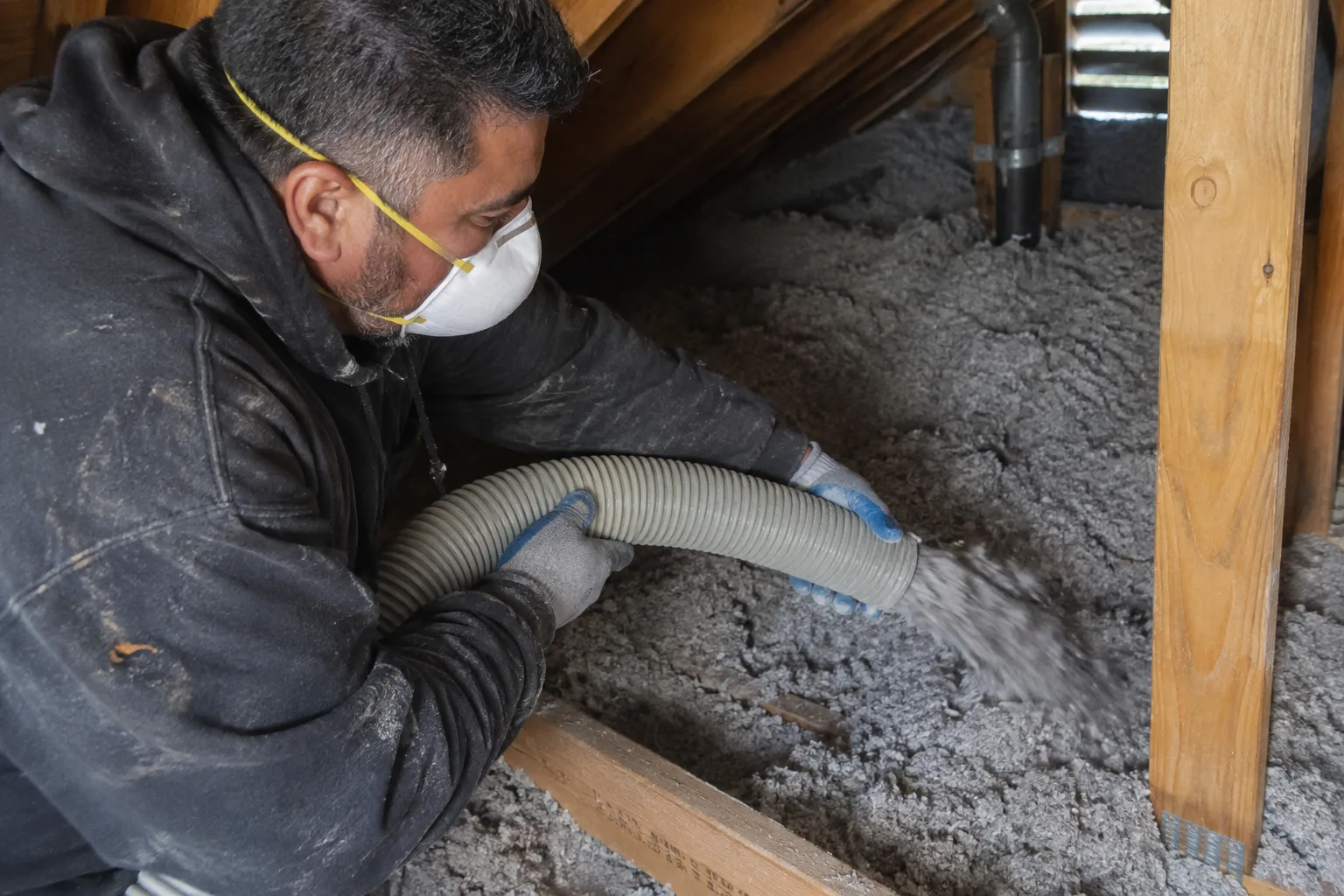
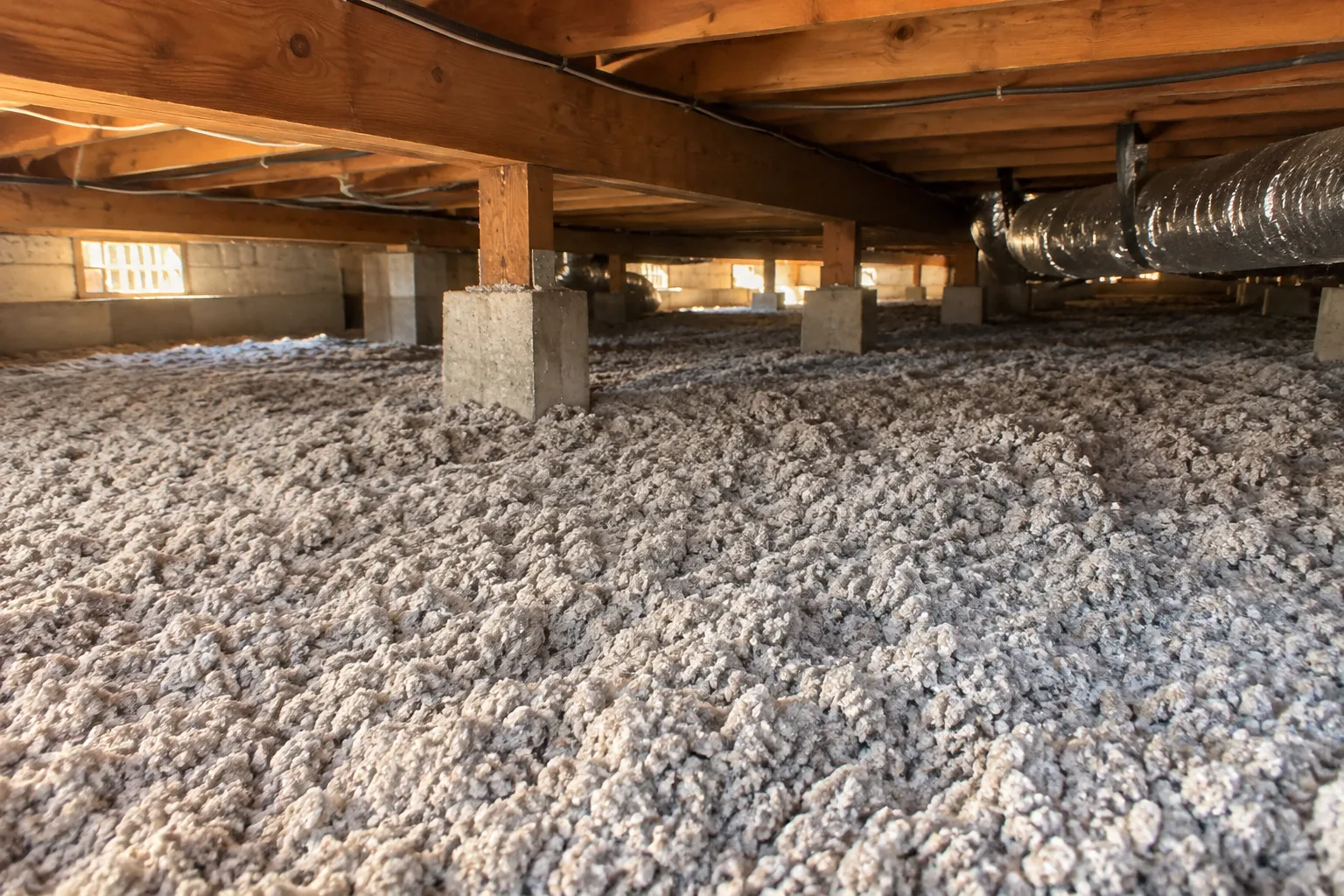
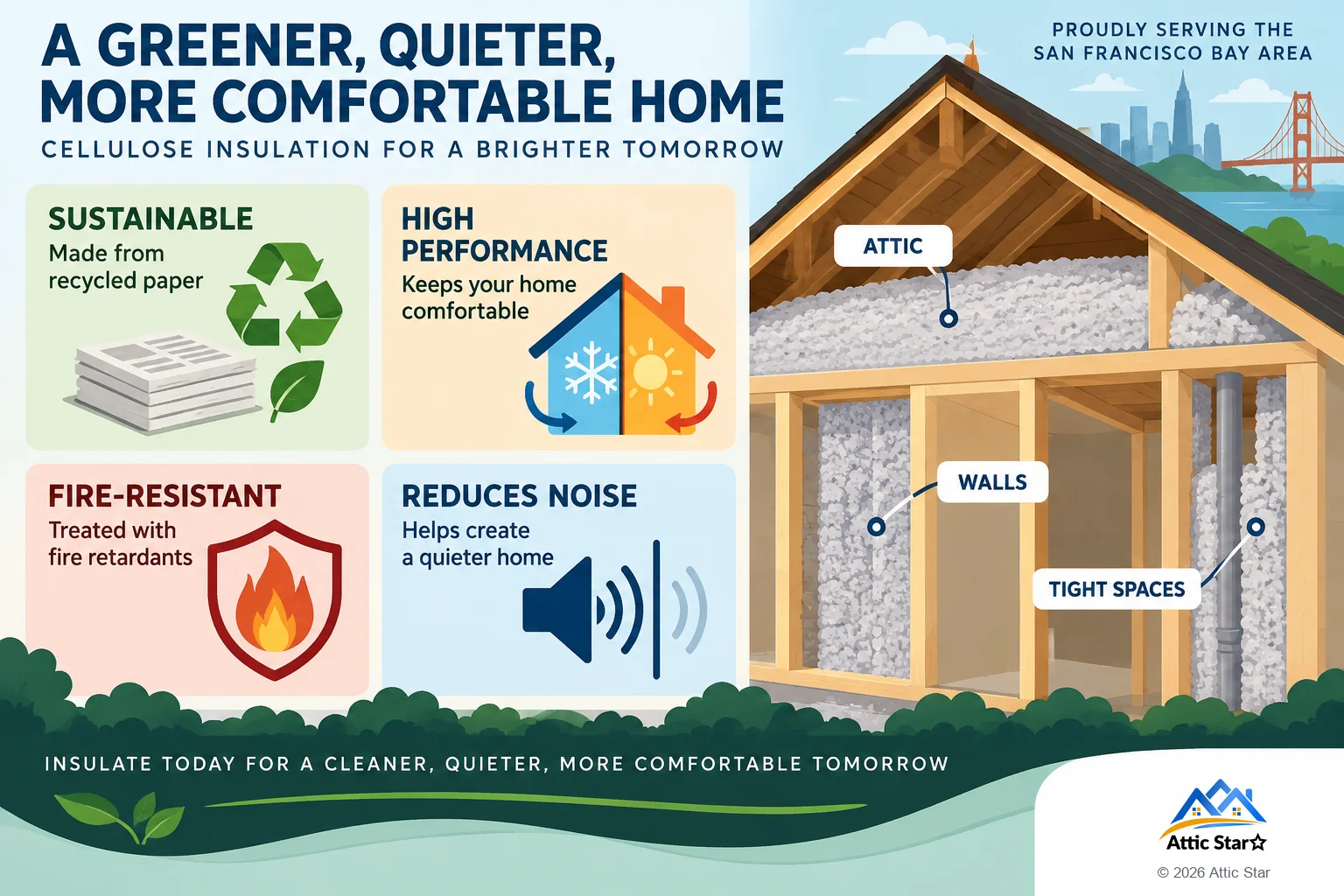
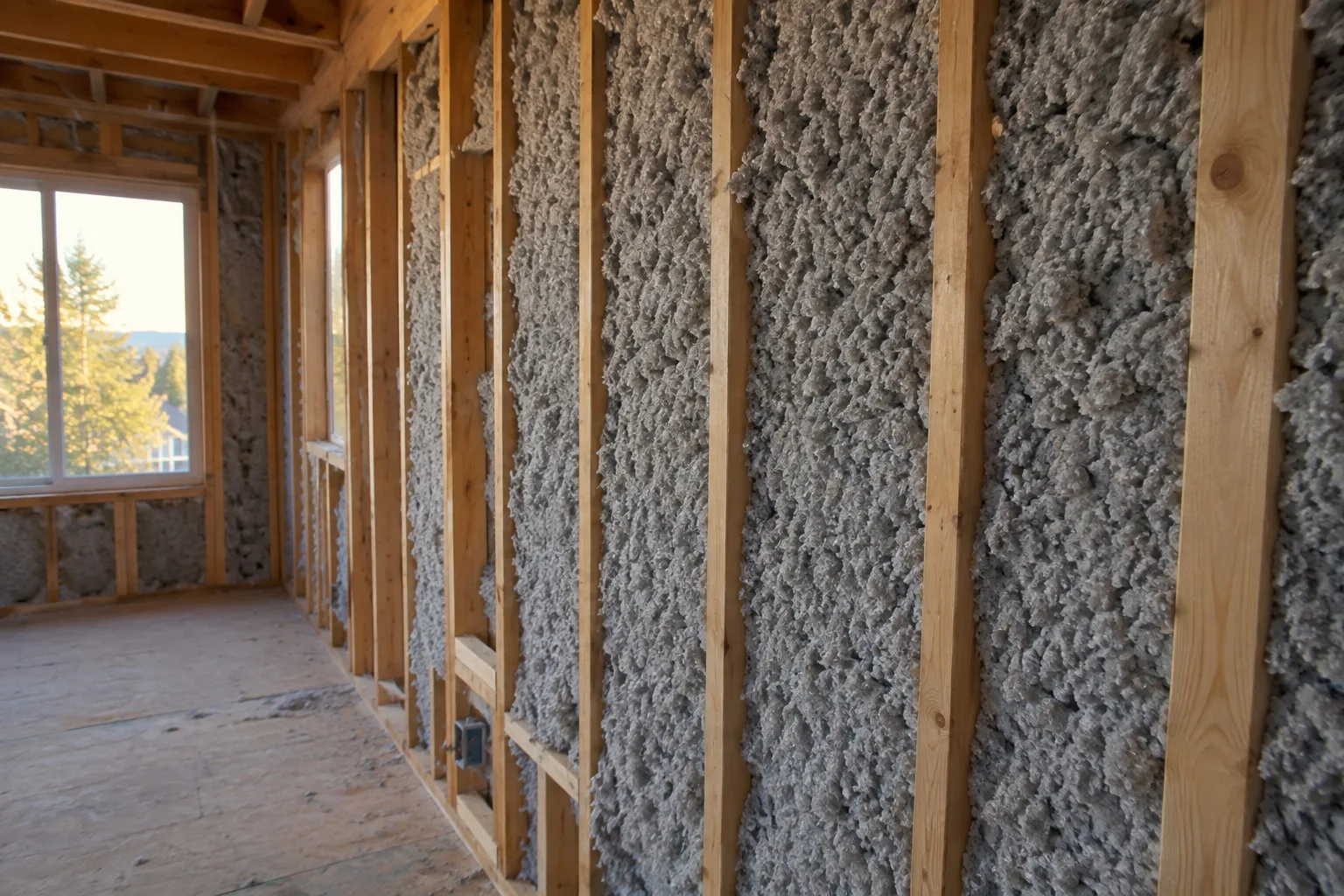
Cellulose insulation is made mostly from recycled paper, largely newsprint, shredded into fine fibers and treated with borate compounds. That treatment is what makes it practical: it helps the material resist fire, discourages insects, and helps inhibit mold on the fiber. Cellulose ships in compressed bags and is installed with a blowing machine, either as loose-fill on an attic floor or packed tightly into closed wall and floor cavities. As loose-fill it typically provides roughly R-3.2 to R-3.8 per inch, more than loose-fill fiberglass at the same depth.
Dense-packing is cellulose's signature application. To insulate a finished wall without removing drywall or plaster, the installer drills a small hole into each stud bay, inserts a tube, and blows fiber in at high density until the cavity is full and firm. Packed that tightly, the material resists settling inside the wall and fills around wiring, blocking, and irregular spaces. For older Bay Area homes built before wall insulation was common, it is one of the few ways to insulate exterior walls without a major remodel.
Density gives cellulose an edge in how it handles air. Its fine fibers sit close together, so a cellulose layer resists air moving through it better than a fluffier fiberglass layer of the same thickness. That helps cut down small drafts and air currents within the insulation itself. It doesn't replace proper air sealing, which still has to happen at the ceiling and top plates, but it does mean cellulose holds its performance well once installed. Inside walls, the same density provides a modest sound-dampening benefit.
Loose cellulose settles after installation as the fibers compact under their own weight. Manufacturers account for this by printing both an initial installed thickness and a settled thickness on the bag for each R-value. Installers blow to the higher initial depth so that, once the layer settles, it still reaches the target, and attic depth rulers make that easy to verify later. Dense-pack in walls behaves differently: because the fiber is compressed tightly as it goes in, there is very little room left for it to sink.
Cellulose Insulation at a Glance
Cellulose vs. Blown Fiberglass, and What to Watch For
Compared with loose-fill fiberglass, cellulose usually reaches a given R-value in fewer inches, and its heavier layer does more to slow air movement. Fiberglass, on the other hand, is much lighter, settles less, and doesn't soak up water. Cellulose also kicks up more dust during installation, while fiberglass fibers are the bigger skin irritant. Neither is universally better. The right choice depends on the space, the ceiling below, and how reliably dry the attic stays from one year to the next.
Moisture is cellulose's main weakness. Paper fiber absorbs water, and wet cellulose clumps, loses much of its insulating value, and can hold dampness against wood framing and drywall. That is why any roof leak, plumbing drip, or condensation problem needs fixing before cellulose goes in, and why a good inspection looks closely for water staining. Most Bay Area attics stay fairly dry, so this is rarely a dealbreaker, but it is a reason to keep up with roof maintenance after the insulation is installed.
The borate treatment gives cellulose good fire resistance for a paper product, but it is still treated fiber, not stone, so it can char and smolder under enough heat. Clearance around non-IC recessed lights and flues applies just as it does with other insulation. Borates discourage insects, though they won't stop rodents from tunneling through. Weight is another consideration: cellulose is heavier than fiberglass, so a deep attic layer over thin ceiling drywall on widely spaced joists is worth checking first.
Recent Cellulose Insulation Jobs
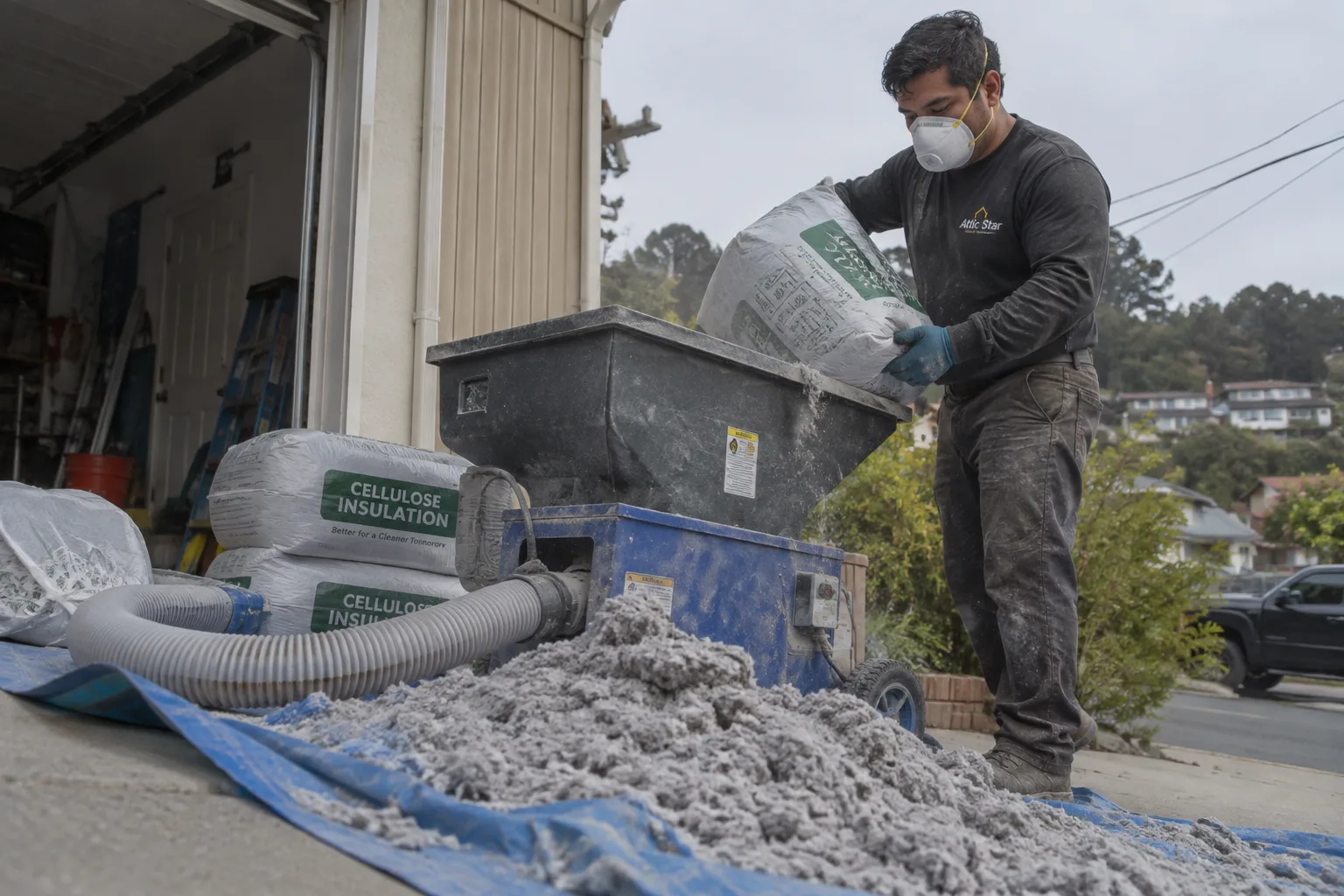 i📍 Mill Valleyi📍 Los Altosi📍 Livermore
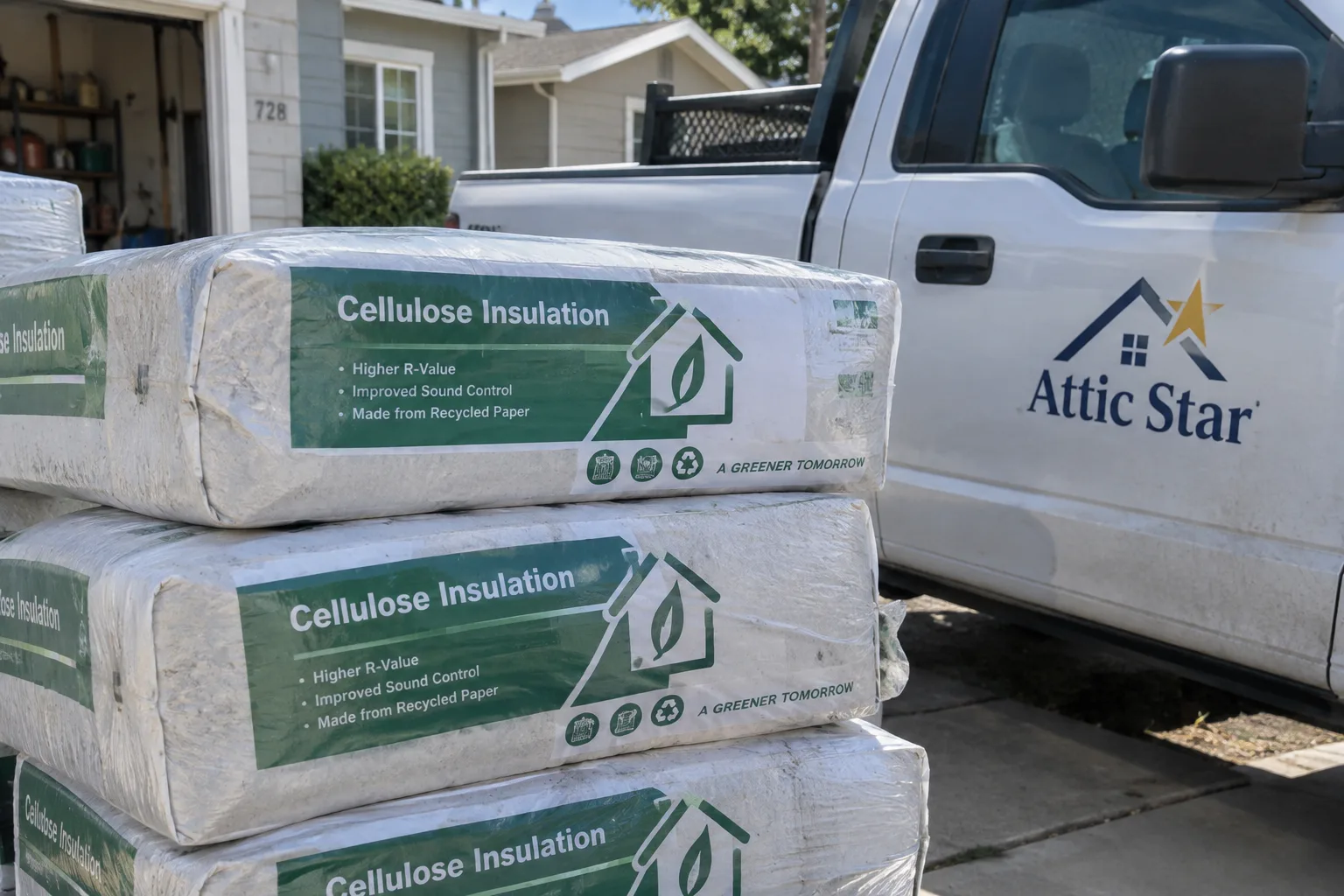 i📍 San Carlos
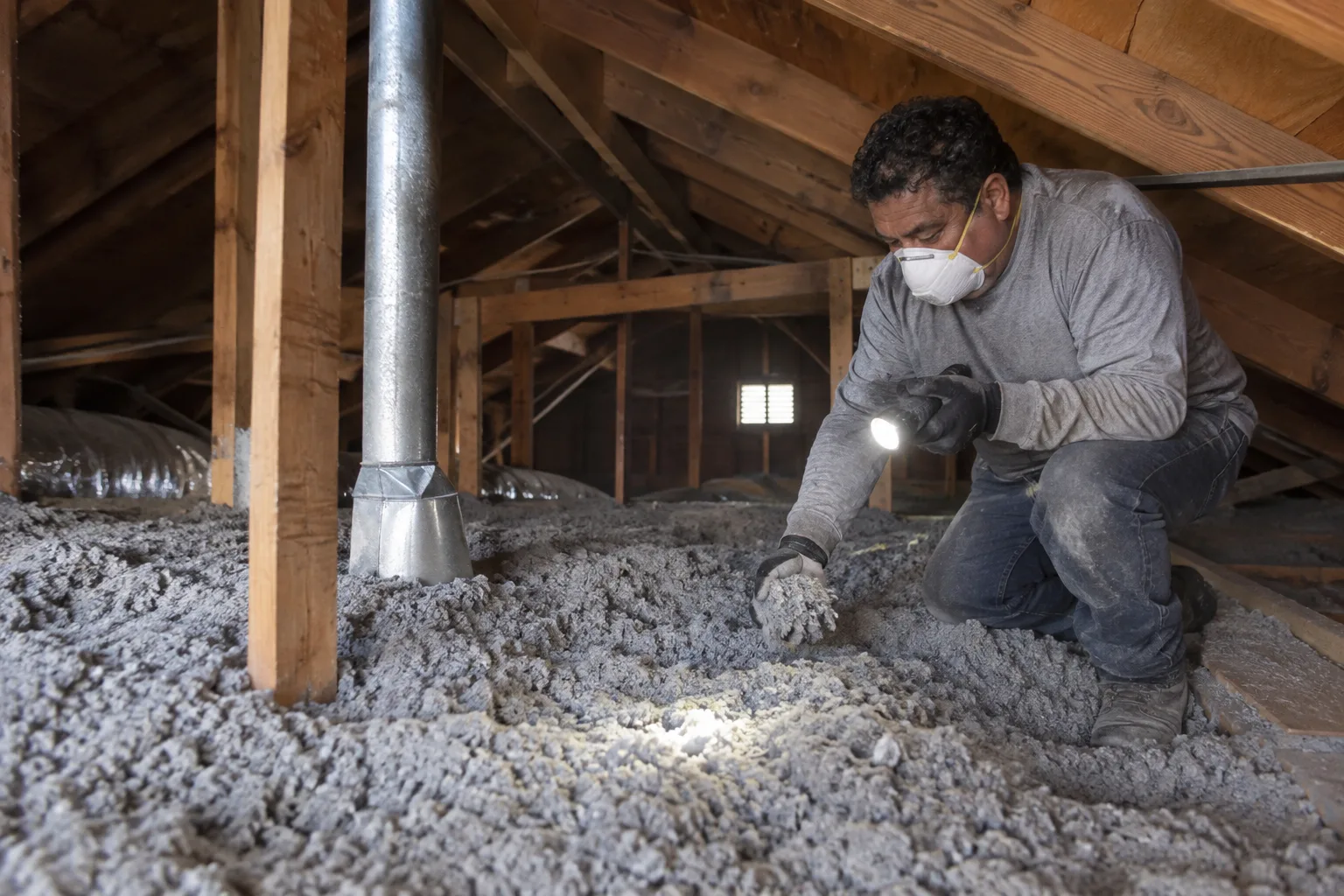 i📍 Walnut Creek
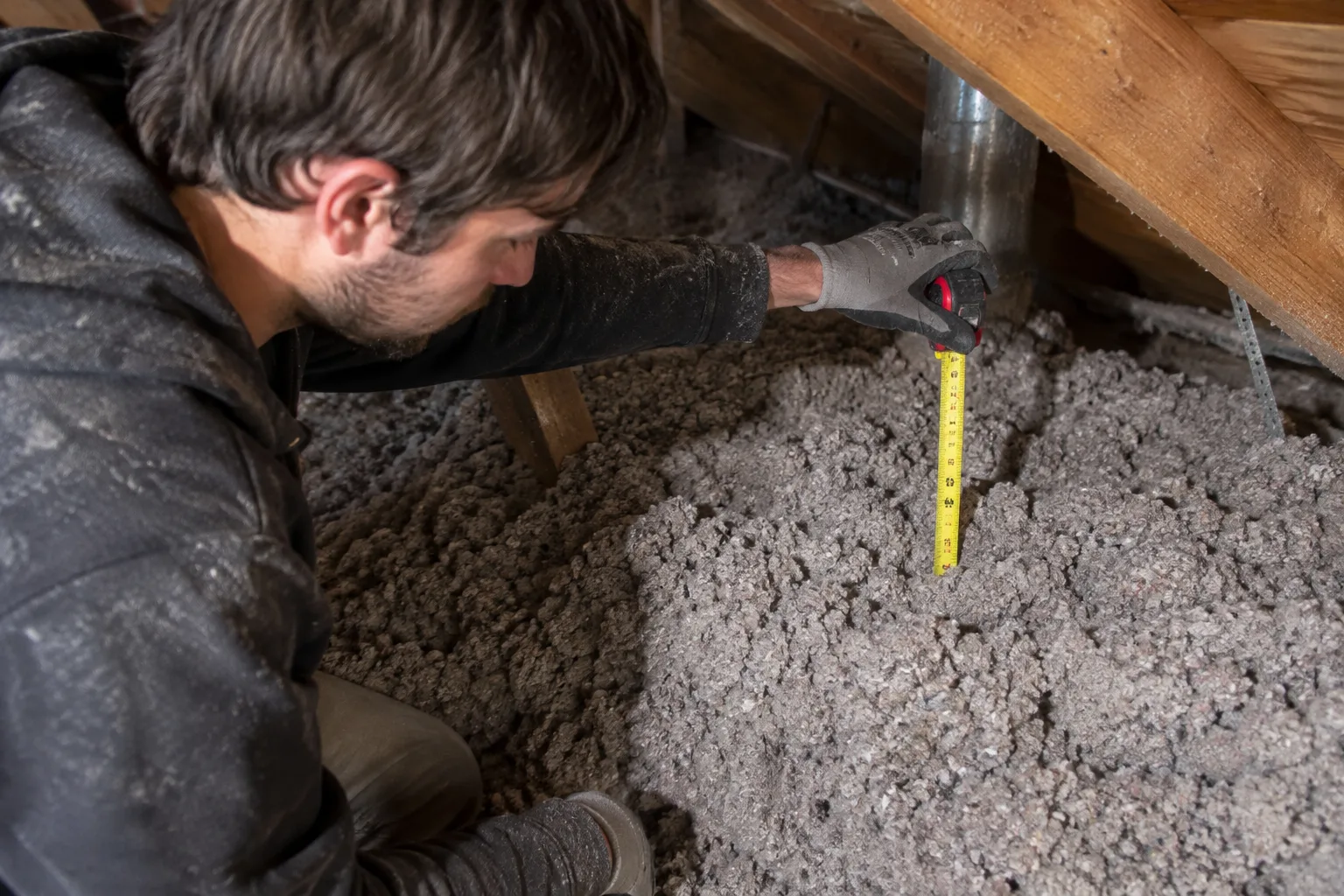 i📍 Evergreen, San Jose
 i📍 Bernal Heights, San Francisco
How We Handle Cellulose Insulation
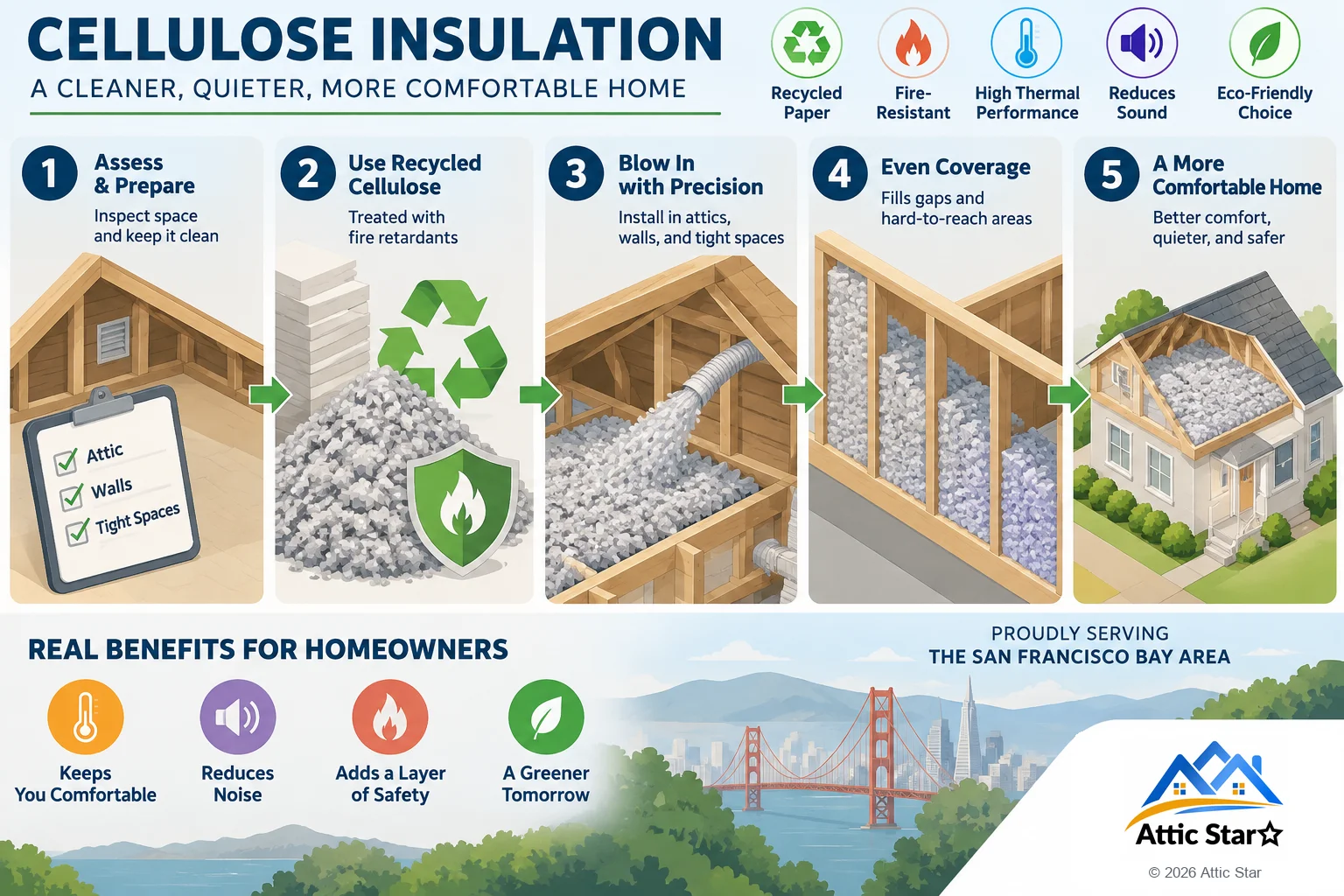
Inspect for Moisture and Wiring
We look for roof leaks, water stains, and knob-and-tube wiring, since cellulose must stay dry and old wiring needs review.
Prepare Attic or Wall
Attics get air sealing and baffles; for walls, a small hole is drilled into each stud bay from outside or inside.
Blow or Dense-Pack
Attic loose-fill is blown to its initial depth so it settles to target; walls are packed tight until each cavity is full.
Plug and Verify
Wall access holes are plugged, and attic depth is checked against the rulers so the settled layer will meet its R-value.
Other Services Homeowners Ask About
Most projects involve more than one service. These are the ones our Bay Area crews pair with this work most often:
- blown-in attic insulation
- attic insulation removal and replacement
- Rockwool insulation
- attic cleaning and cleanup
We do cellulose insulation across the Bay Area from four offices, on the Mid-Peninsula, in the South Bay and East Bay, and in the North Bay, San Francisco and Oakland.
What Bay Area Homeowners Are Saying
Our Guarantee: Expert, Reliable, Affordable
Every cellulose job starts with a free inspection that includes a look for leaks and wiring concerns, and our family-owned team installs it to code.
FAQ
How much does cellulose insulation cost? +
Cost depends on the size of your home and the scope of the work. We provide a free, no-obligation inspection and give you an exact quote before anything begins — no surprises.
How long does the work take? +
Most jobs are completed in a single day. Larger or more involved projects may take longer, which we'll confirm during your free inspection.
Do I need to be home during the work? +
You don't need to stay in the work area itself, but we do ask that someone is available at the start and end of the appointment. Our crew works cleanly and keeps you updated throughout.
Are you licensed and insured? +
Yes — Attic Star is fully licensed, bonded, and insured, and has served Bay Area homeowners for over 25 years.
Can cellulose be added to walls that already have drywall? +
Yes, that is one of its main uses. Small holes are drilled into each stud cavity, through either the exterior siding or the interior wall, and cellulose is dense-packed through them before the holes are plugged. Fire blocking partway up a wall means some bays need a second hole so the space above and below both get filled.
Is cellulose insulation a fire hazard since it's made of paper? +
Treated cellulose behaves very differently from loose paper. The borate compounds added during manufacturing help it resist ignition and slow flame spread, and cellulose sold for building use must meet federal fire-safety standards. Like any insulation, it still needs proper clearance from heat sources.
What happens if my cellulose insulation gets wet? +
A small spot that dries quickly may recover, but soaked cellulose compacts, loses insulating value, and can stay damp long enough to encourage mold on nearby framing. Fix the leak first, then have the affected area checked. Saturated or matted sections are usually removed and replaced.
Can cellulose go in a home with knob-and-tube wiring? +
Not without an electrician's review first. Some older Bay Area homes still have active knob-and-tube circuits, which were designed to shed heat into open air. Burying them in insulation is generally restricted and the rules vary by jurisdiction, so the wiring is evaluated, and often replaced, before insulation goes in.
Get Your Free Cellulose Insulation Quote
Fill out the form and we'll follow up to schedule your free, no-obligation inspection — most homeowners hear back the same day. Prefer to talk now? Call us directly.
Get Your Free Estimate
Takes less than a minute — tell us about your project and we'll follow up the same day.
Get my Free Estimate