
Blown-In Insulation in the Bay Area
Blown-in attic insulation for Bay Area homes: loose-fill fiberglass or cellulose blown to an even, measured depth across open attic floors. Free inspection, with air sealing and vent baffles done first.
- Licensed, Bonded & Insured
- Family-Owned, 25+ Years
- Free, No-Obligation Quote
Get Your Free Quote
Tell us about your project and we'll follow up with next steps — usually the same day.
Request Free InspectionWhen Blown-In Insulation Is the Right Call
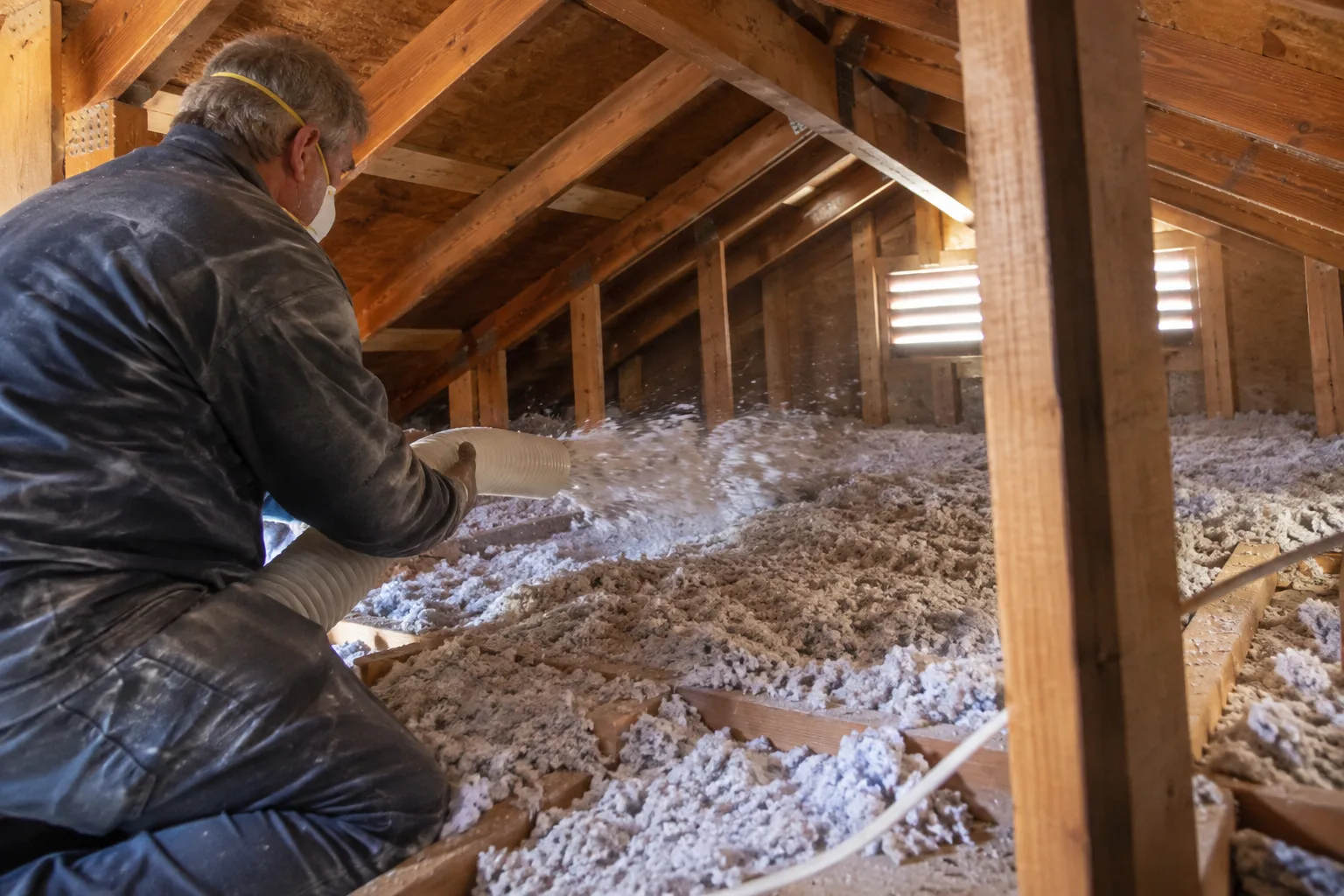
Loose-fill shines wherever insulation needs to flow around obstacles or build up over what is already there. It is usually the best fit when:
- Your attic floor has a thin or patchy layer
- Joists are irregular or crowded with wiring and bracing
- Existing insulation is clean but needs topping up
- A low roof pitch leaves little room near the eaves
- Old batts have gaps, voids, or missing pieces
 i
Why Homeowners Choose Blown-In Insulation
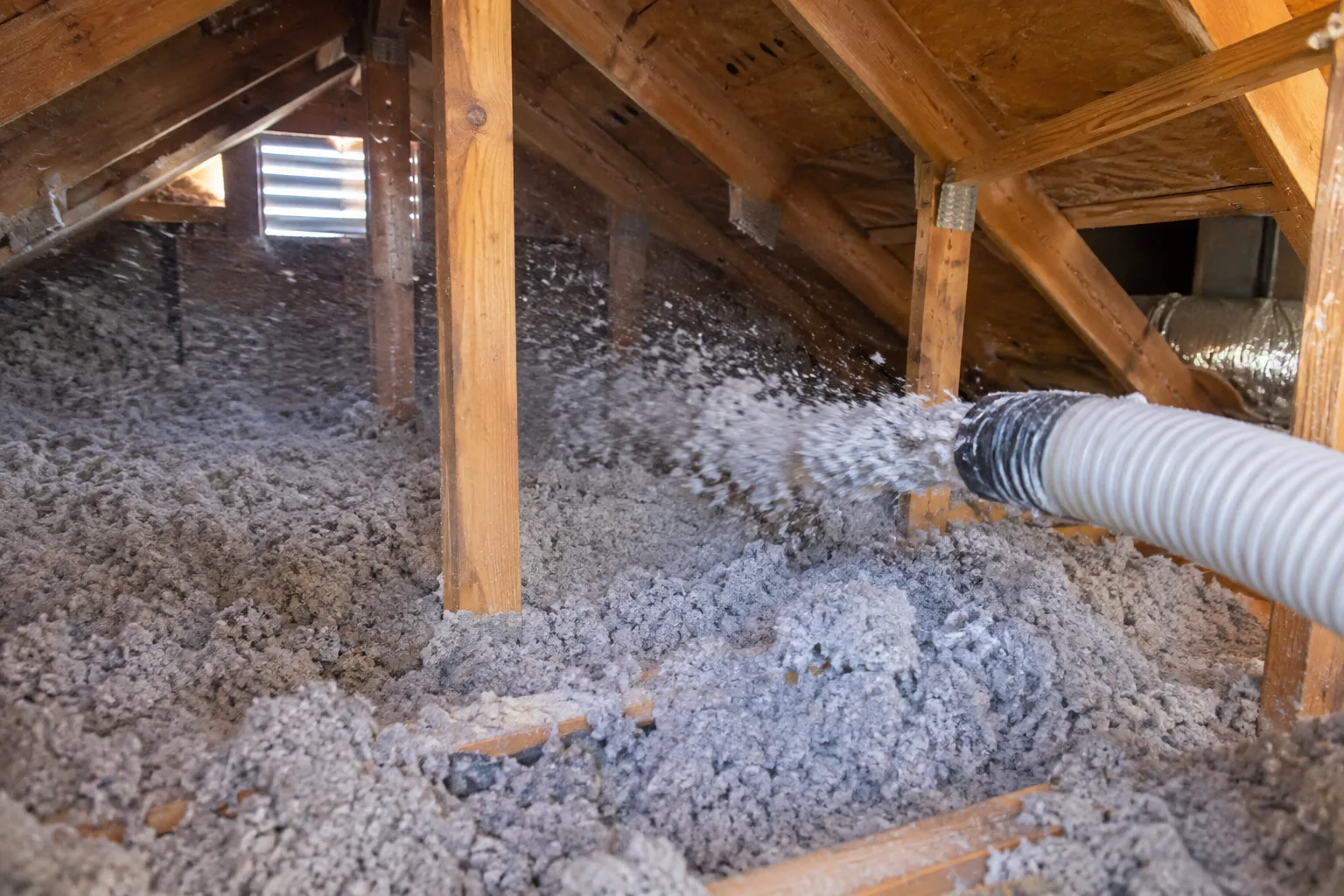
A machine-blown layer covers an attic floor quickly and evenly, with no seams between pieces for heat to slip through.
- Fills around wires, pipes, and blocking
- Even depth across the whole floor
- Tops up existing insulation easily
- Measured depth you can verify
 i
Everything You Need to Know About Blown-In Insulation
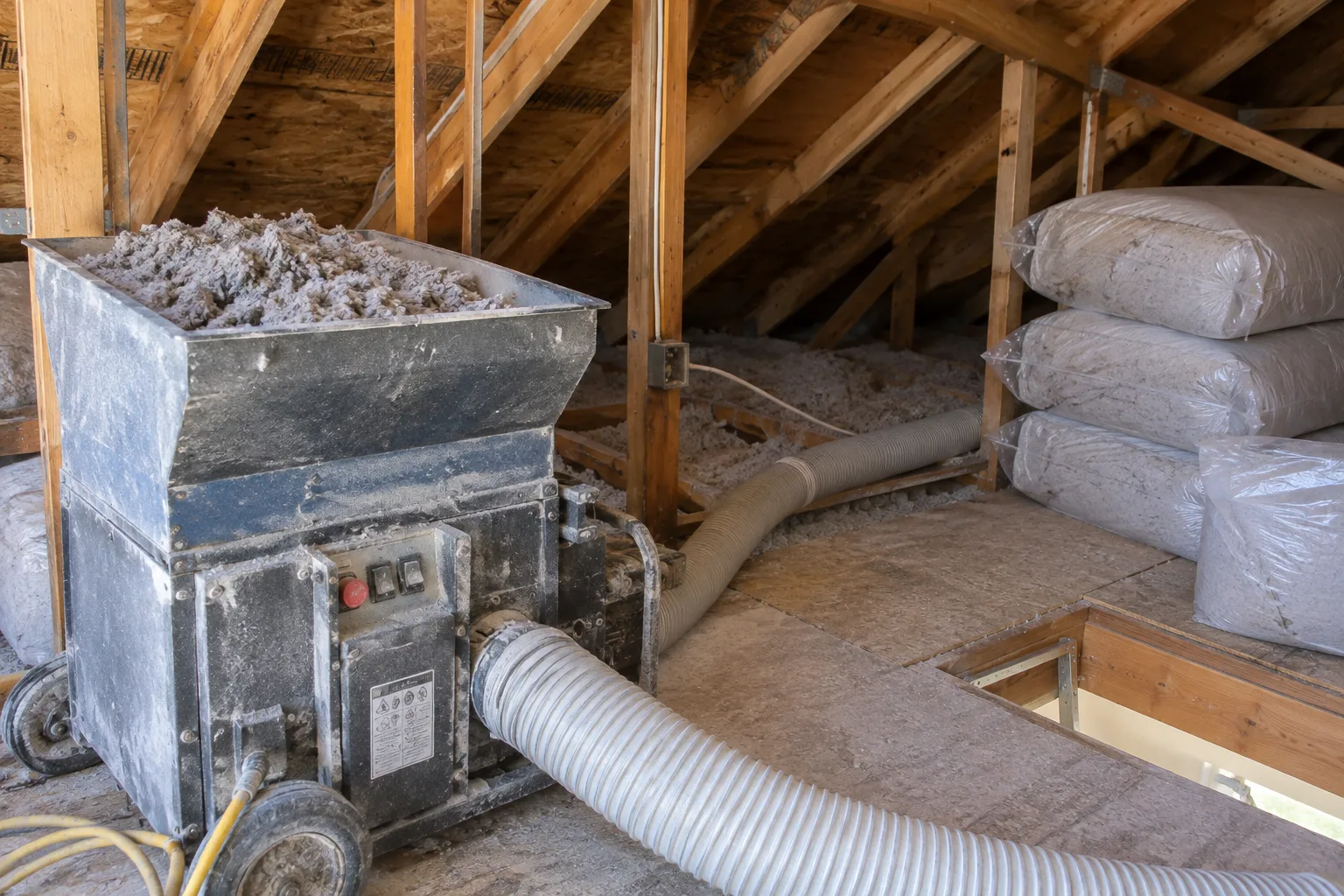
Blown-in insulation, also called loose-fill, arrives as small tufts of fiber rather than pre-cut pieces. A hopper machine breaks up compressed bales and pushes the material through a long hose, so the installer can lay down an even layer across a wide area from one spot. The two common materials are loose-fill fiberglass and loose-fill cellulose. Both are well suited to attic floors, where the insulation simply rests between and over the ceiling joists instead of having to stay upright inside a wall.
With loose-fill, R-value comes from installed depth and density, not a number printed on a blanket. Every bag carries a coverage chart listing, for each target R-value, the minimum thickness, the minimum weight per square foot, and how many bags a given area should take. Loose-fill fiberglass typically delivers roughly R-2.2 to R-2.9 per inch, so it needs more inches than cellulose to reach the same rating. Depth rulers stapled to the framing let you climb up afterward and confirm the coverage matches the plan.
The work done before the hose comes out matters as much as the insulation. Fibrous insulation slows heat flow but does little to stop air, so the attic floor gets sealed first: gaps along top plates, holes for wiring and plumbing, recessed light housings, and bath fan boxes. Next come baffles at the eaves, which keep loose-fill from spilling into the soffit vents and choking off attic ventilation. Skip these steps and you can end up with a thick, tidy-looking layer that still lets conditioned air escape.
Some things in an attic have to stay uncovered. Recessed lights that aren't rated for insulation contact need open space around them, typically about three inches, and furnace or water heater flues need a sheet-metal dam holding material back at the clearance the manufacturer and code require. The attic hatch gets a raised dam too, so insulation doesn't pour down when it opens. All loose-fill compacts slightly after installation; manufacturers' charts account for this, and blowing to the listed depth keeps the layer on target once it settles.
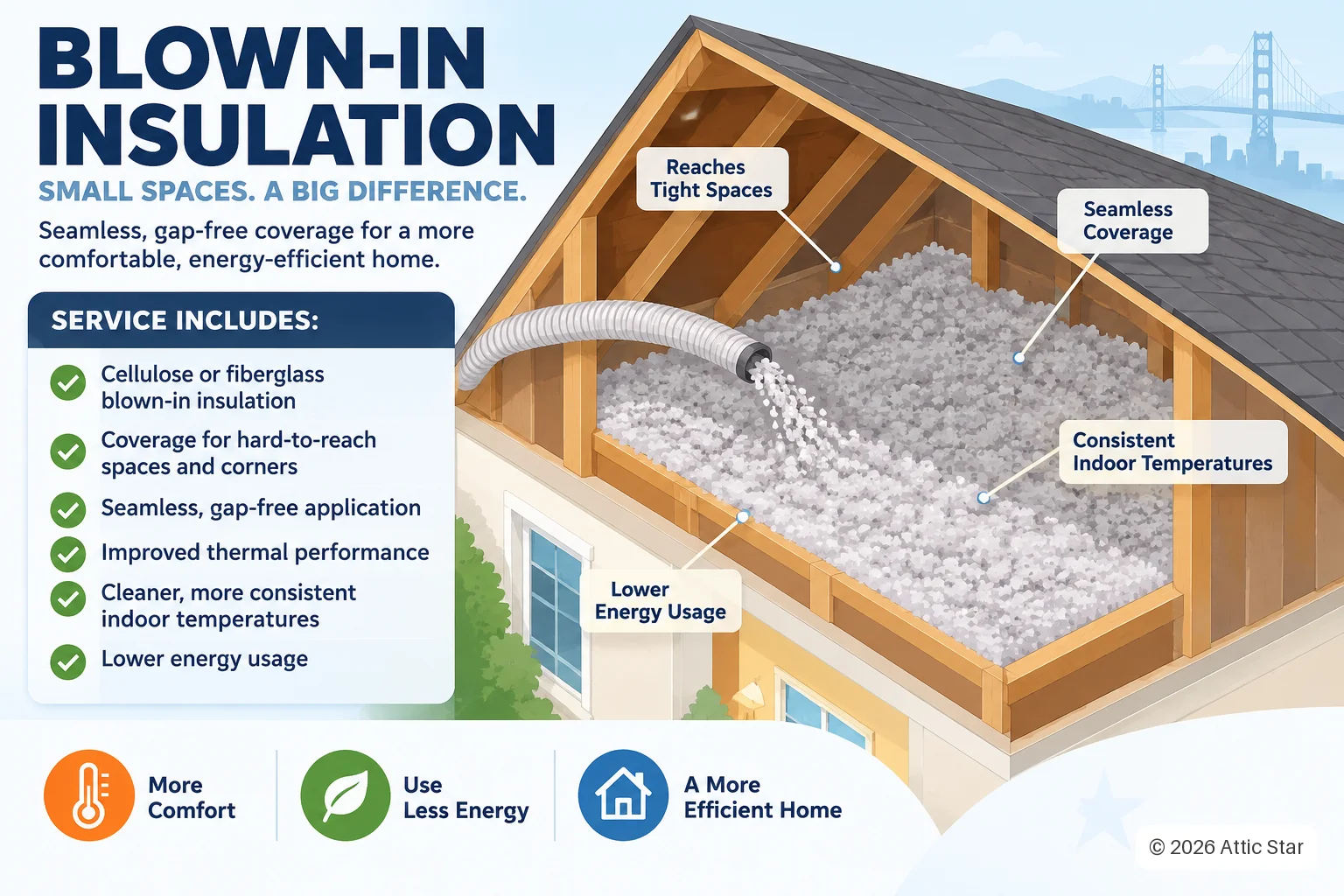
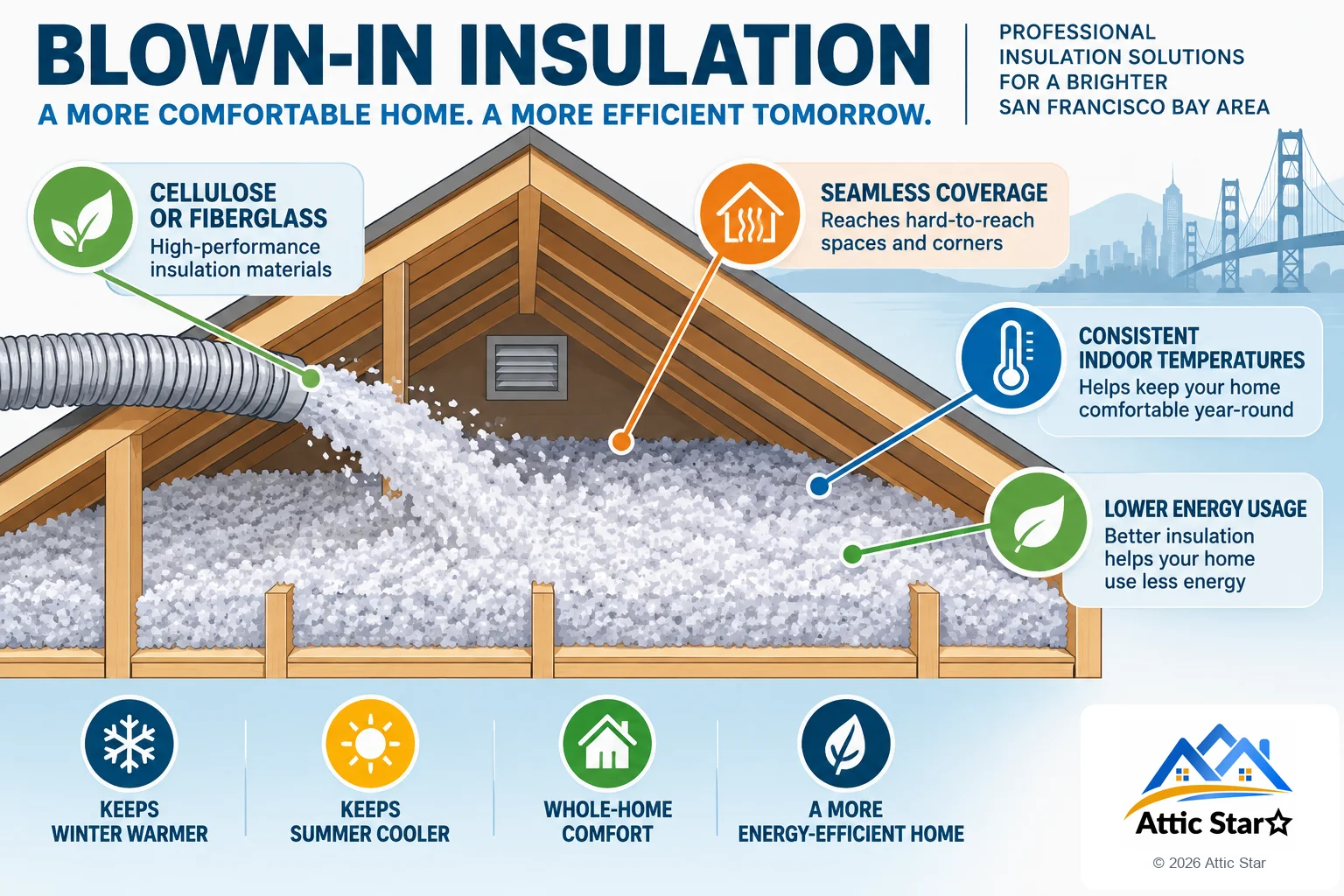
Blown-In Insulation at a Glance
Blown-In vs. Other Options for Your Attic
Batts work well where joists are evenly spaced and the attic is easy to move around in, but every seam, cut, and obstruction is a chance for a gap. Loose-fill has no seams. It flows around wiring, blocking, and cross-bracing and fills odd-shaped bays without trimming. Blown deep enough, it also buries the tops of the joists, cutting the heat that conducts through the wood framing. In attics with tight corners or a low roof pitch, those advantages usually tip the decision toward blown-in.
Picking between fiberglass and cellulose loose-fill comes down to a few trade-offs. Cellulose packs more insulating value into each inch, and its denser layer slows air movement better, but it weighs more and settles more over time. Loose-fill fiberglass is light, shrugs off moisture, and settles very little, though it needs a deeper layer for the same R-value. Either performs well when blown to the correct depth over a sealed attic floor, and we will explain which suits your framing, ceiling, and attic conditions.
If the existing insulation is dry, clean, and free of rodent droppings, new loose-fill can usually go right on top of it. If it is contaminated, water-stained, or packed down from years of storage and foot traffic, removal is the better path, because burying a problem under fresh material keeps it in the house. Both situations are common in older Bay Area homes whose attics were insulated decades ago. Houses without an attic, such as many Eichlers with low-slope roofs, are a different case, since there is no attic floor to blow onto.
Recent Blown-In Insulation Jobs
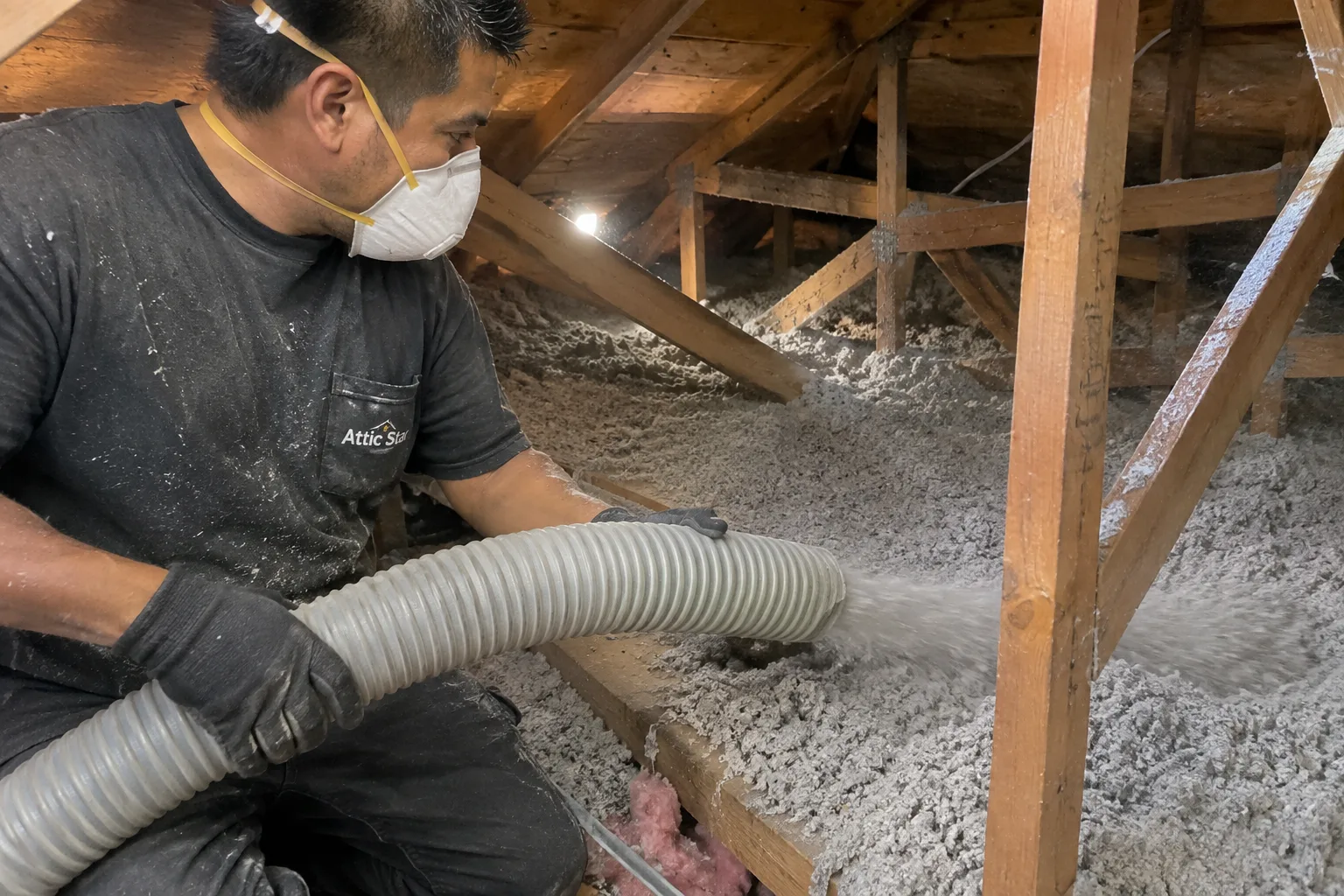 i📍 Alamedai📍 Santa Clarai📍 Menlo Park
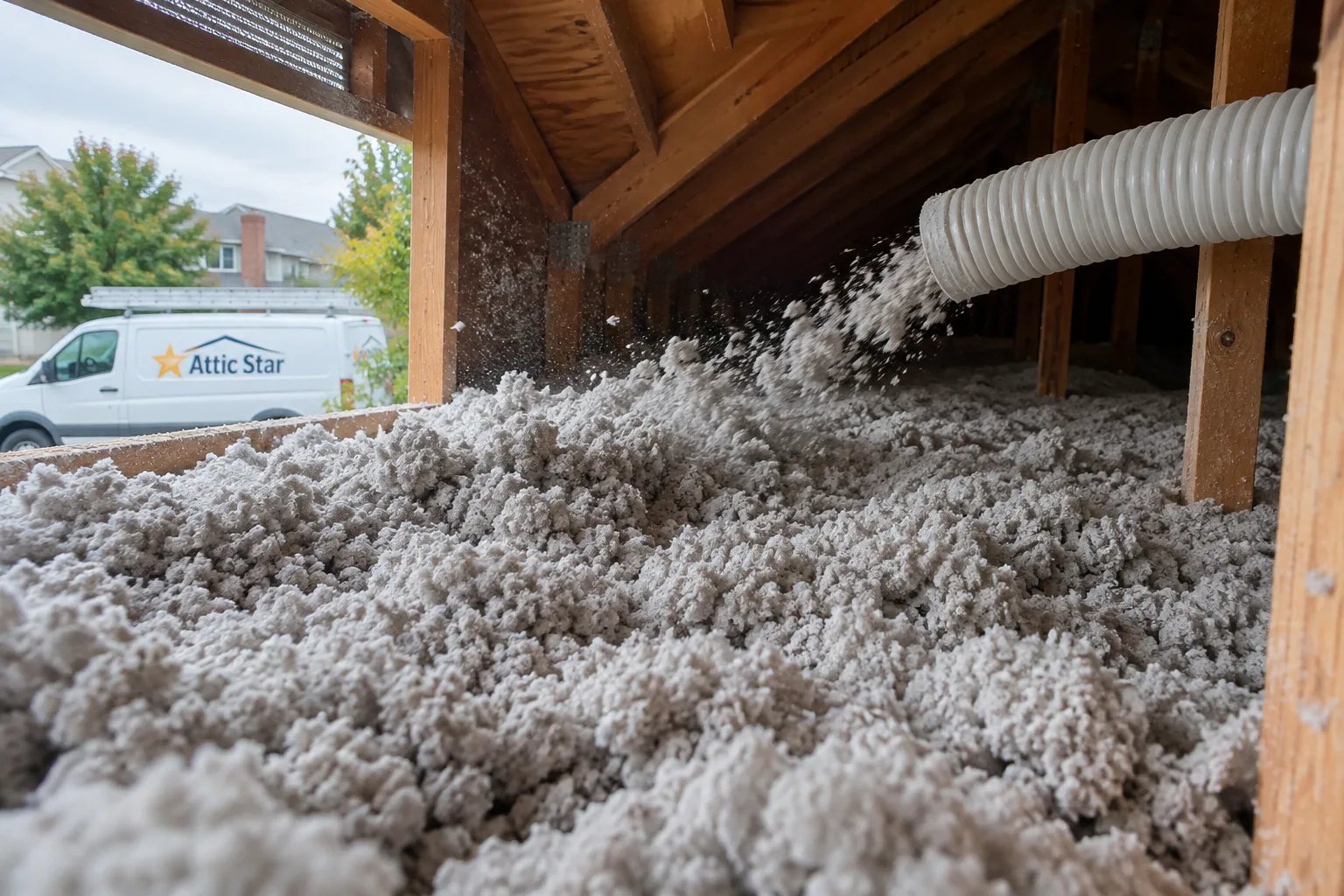 i📍 Lafayette
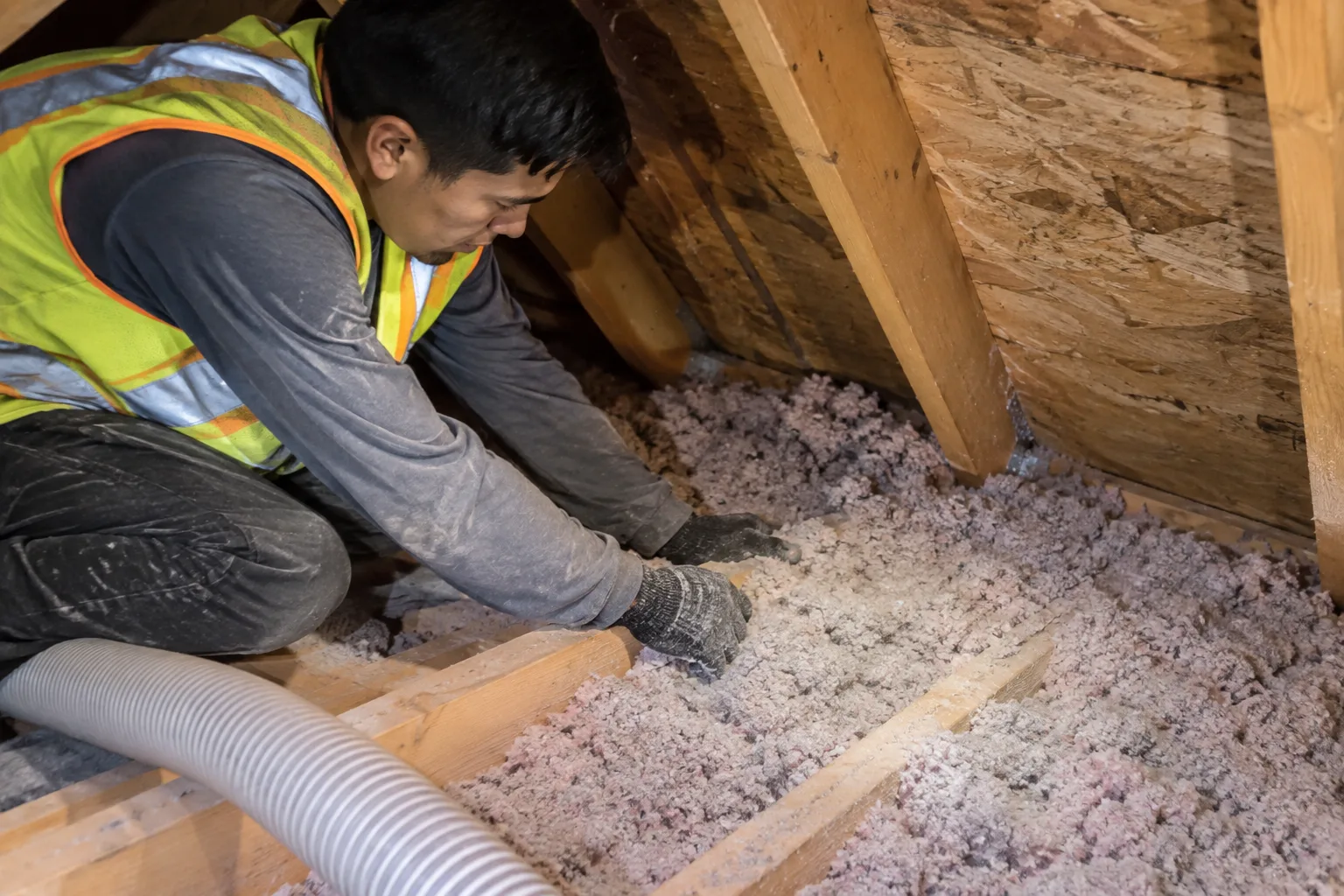 i📍 Noe Valley, San Francisco
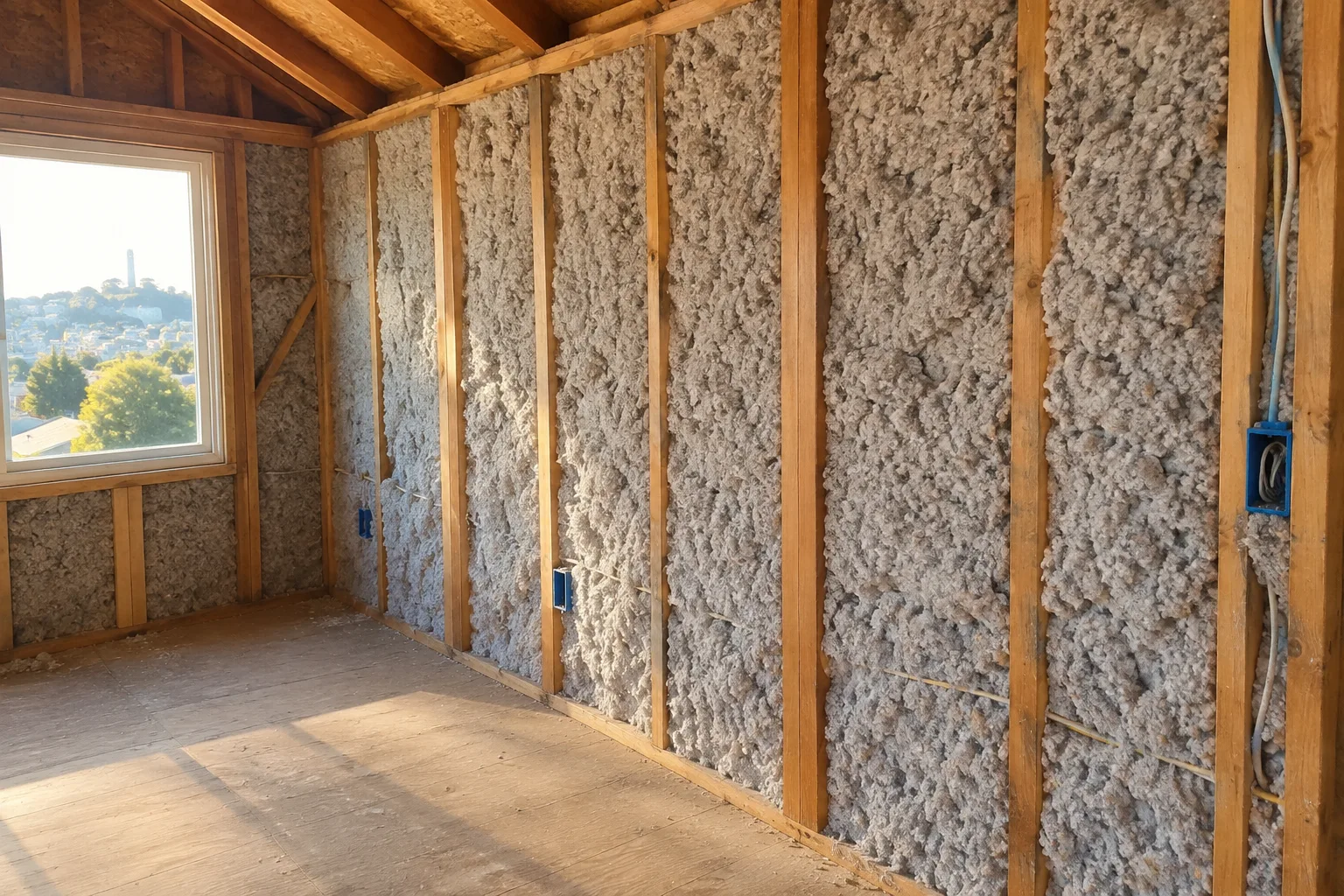 i📍 Castro Valley
 i📍 Cupertino
How We Handle Blown-In Insulation
Attic Assessment
We measure the current depth, look for moisture or pest damage, and note every can light, flue, and vent to protect.
Seal the Attic Floor
Gaps at top plates, wiring holes, can lights, and bath fan housings are sealed so room air can't leak into the attic.
Baffles, Dams, and Rulers
Baffles keep eave vents open, dams hold material back from flues and non-IC lights, and depth rulers go up.
Blow to Target Depth
Loose-fill is blown evenly to the depth the bag's coverage chart lists for your R-value, then checked at the rulers.
Other Services Homeowners Ask About
Most projects involve more than one service. These are the ones our Bay Area crews pair with this work most often:
- attic insulation removal and replacement
- cellulose insulation
- batt insulation installation
- attic cleaning and cleanup
We do blown-in attic insulation across the Bay Area from four offices, on the Mid-Peninsula, in the South Bay and East Bay, and in the North Bay, San Francisco and Oakland.
What Bay Area Homeowners Are Saying
Our Guarantee: Expert, Reliable, Affordable
Every blown-in project begins with a free inspection and is installed to code by our own in-house crew, never subcontractors.
FAQ
How much does blown-in insulation cost? +
Cost depends on the size of your home and the scope of the work. We provide a free, no-obligation inspection and give you an exact quote before anything begins — no surprises.
How long does the work take? +
Most jobs are completed in a single day. Larger or more involved projects may take longer, which we'll confirm during your free inspection.
Do I need to be home during the work? +
You don't need to stay in the work area itself, but we do ask that someone is available at the start and end of the appointment. Our crew works cleanly and keeps you updated throughout.
Are you licensed and insured? +
Yes — Attic Star is fully licensed, bonded, and insured, and has served Bay Area homeowners for over 25 years.
Can blown-in insulation go over my existing insulation? +
Usually, yes, as long as the old material is dry, clean, and free of pest contamination. If old faced batts were installed with the paper facing up, that facing can trap moisture between layers and is usually slit or removed first. Wet, moldy, or droppings-covered insulation should come out before anything new goes in.
Will blown-in insulation block my attic vents? +
It shouldn't, if baffles go in first. Baffles are channels fitted between the rafters at the eaves; they keep an open air path from the soffit vents into the attic while holding the loose-fill back. Without them, blown material can drift into the soffits and cut off the airflow that keeps an attic dry.
How deep should blown-in insulation be in my attic? +
It depends on the material and the R-value your home needs. California's Title 24 energy code sets attic minimums that vary by climate zone, and the bag's coverage chart converts the chosen R-value into a minimum depth. Because fiberglass and cellulose insulate differently per inch, the same target means a different depth for each.
Can I still store things in my attic after blown-in insulation? +
Loose-fill doesn't hold up to boxes or foot traffic; anything set on it compresses the layer and lowers its R-value. If you need storage, the usual approach is a raised platform built above the insulation so the layer underneath keeps its full depth. Walkways to equipment such as a furnace can be handled the same way.
Get Your Free Blown-In Insulation Quote
Fill out the form and we'll follow up to schedule your free, no-obligation inspection — most homeowners hear back the same day. Prefer to talk now? Call us directly.
Get Your Free Estimate
Takes less than a minute — tell us about your project and we'll follow up the same day.
Get my Free Estimate