Fiberglass Roll Insulation in the Bay Area
Fiberglass roll insulation for long, open attic runs in Bay Area homes, unrolled in continuous blankets and often cross-laid over the joists. Free inspection; installed to code by our crew.
- Licensed, Bonded & Insured
- Family-Owned, 25+ Years
- Free, No-Obligation Quote
Get Your Free Quote
Tell us about your project and we'll follow up with next steps — usually the same day.
Request Free InspectionIs Roll Insulation Right for Your Space?
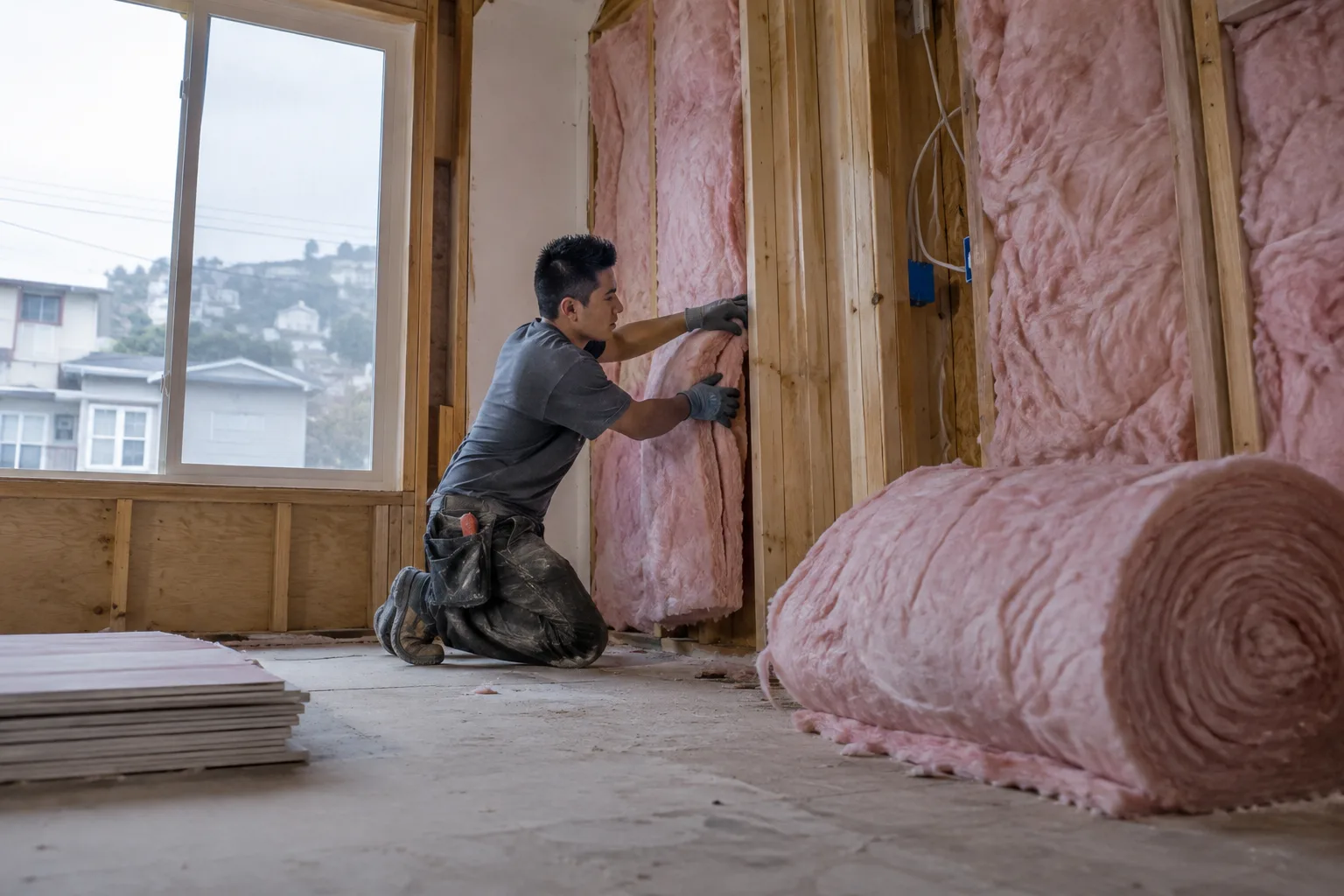
Rolls are at their best where there is a lot of open, uninterrupted framing to cover and room to work. Common situations include:
- Long, open attic joist bays with few obstructions
- Joist-level insulation that leaves the wood exposed
- A large attic and a limited budget
- Unfinished spaces with open, evenly spaced framing
 i
Why Choose Fiberglass Roll Insulation?
Rolls cover a lot of ground with very few seams, and fiberglass is one of the more budget-friendly insulation materials.
- Fewer seams on long runs
- Budget-friendly for large areas
- Cross-layer covers the joist tops
- Holds its loft without settling
 i
Everything You Need to Know About Fiberglass Roll Insulation
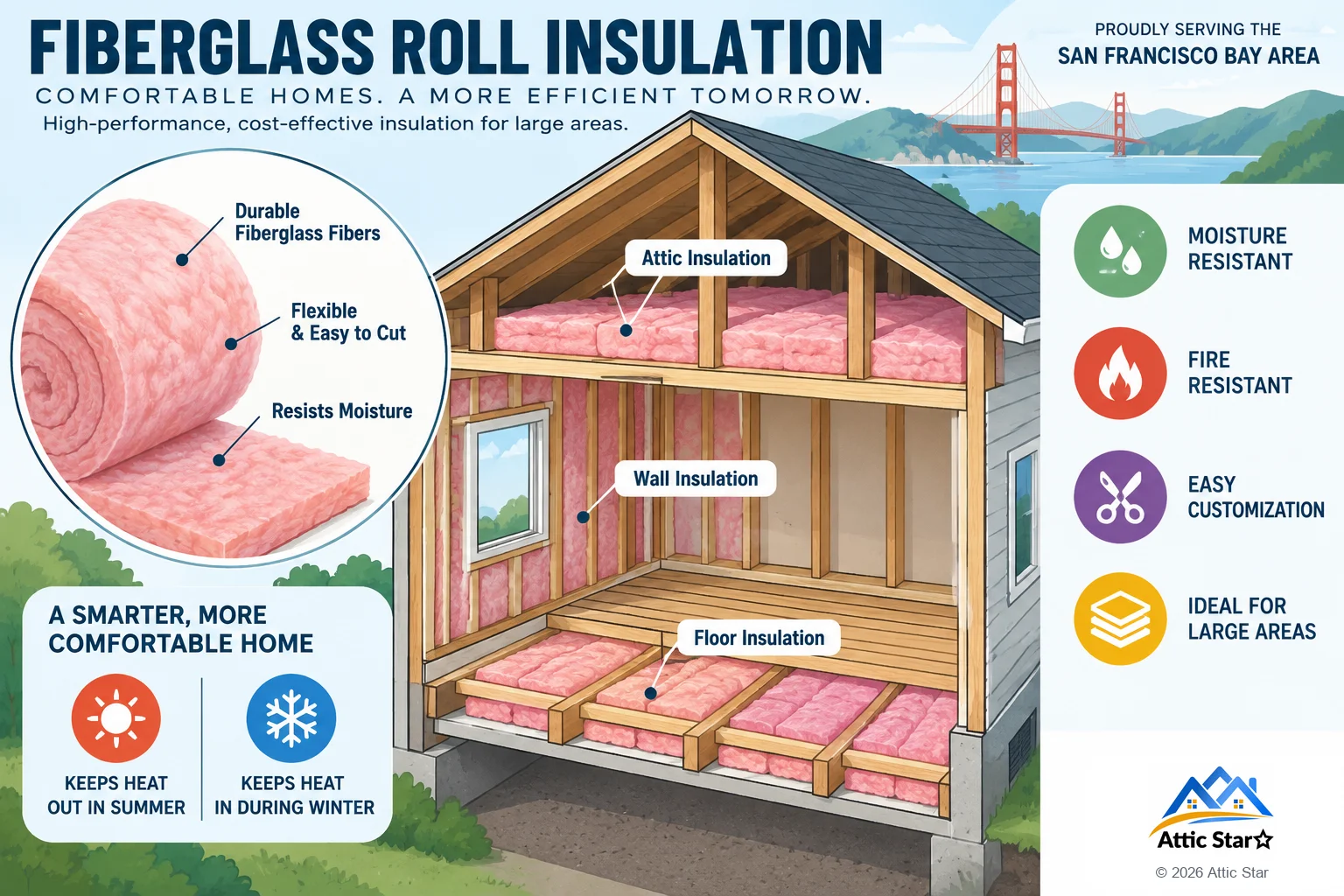
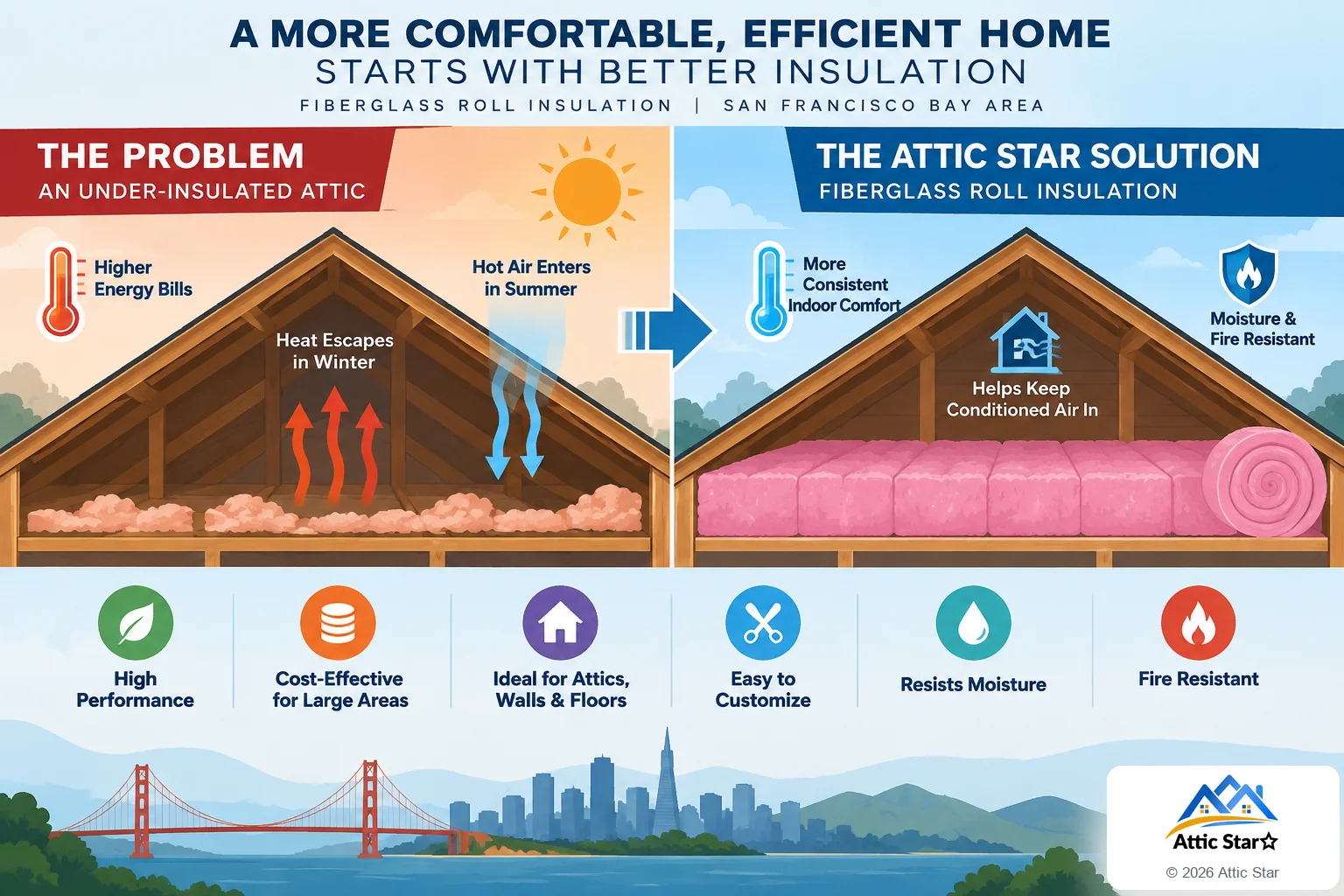
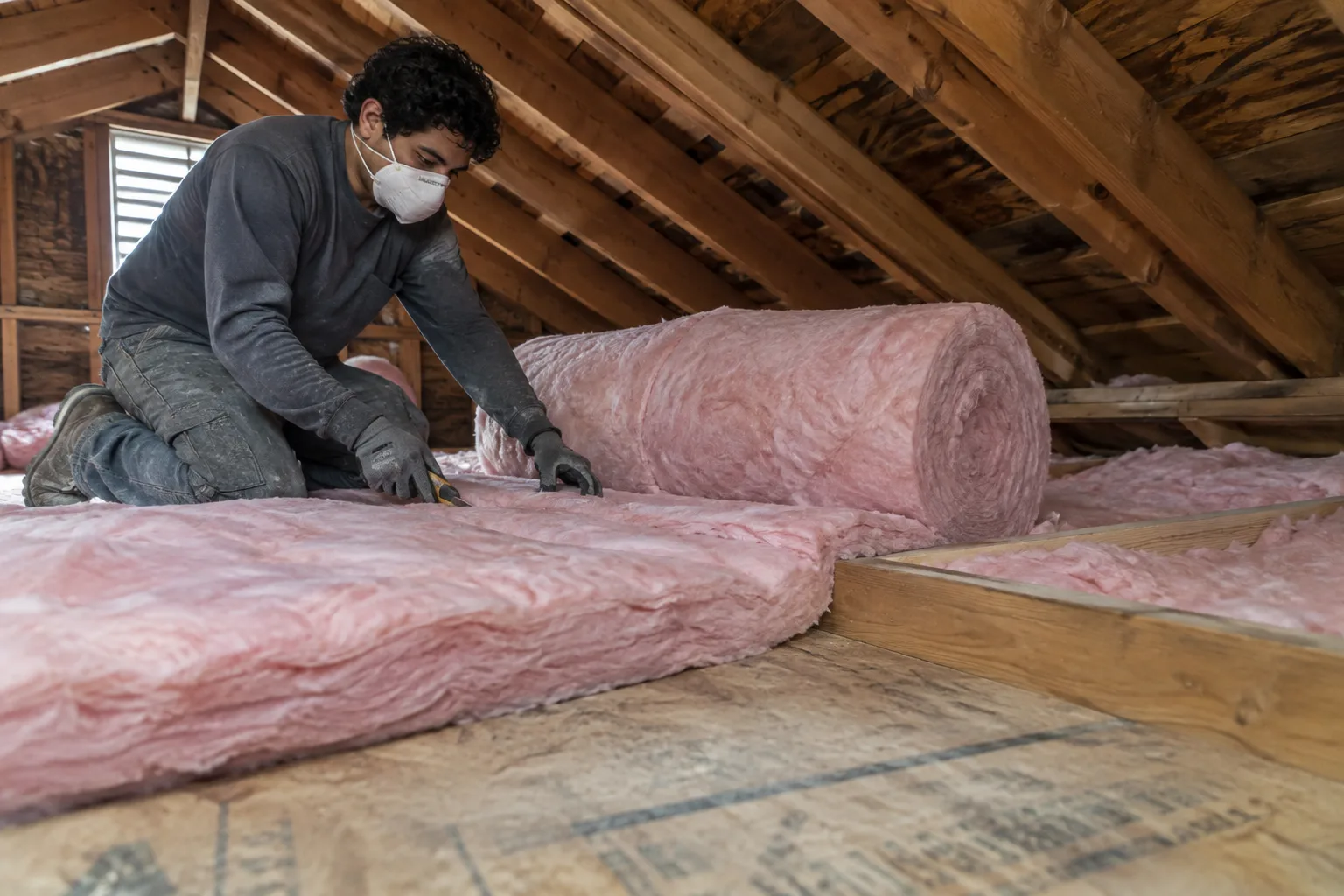
Fiberglass roll insulation, sometimes called blanket insulation, is the same glass-fiber material used in batts, packaged differently. Instead of pre-cut pieces, it comes as a long continuous blanket wound into a roll, which the installer cuts to whatever length a run requires. That one difference shapes where it gets used: rolls make sense for long, unbroken stretches of framing, while batts are handier for walls and short or interrupted bays. Per inch, both typically land in the same range, roughly R-2.9 to R-3.8, with denser products at the high end.
In an open attic with long, parallel joists, a roll can run from one side to the other with just a cut at each end. That means fewer butt joints, fewer weak spots where pieces meet, and much faster coverage than fitting piece after piece. It is a practical way to bring an under-insulated attic up to a more useful level, especially in larger homes where the attic floor spans a lot of square footage. Rolls also lay easily over and between joists without any special equipment.
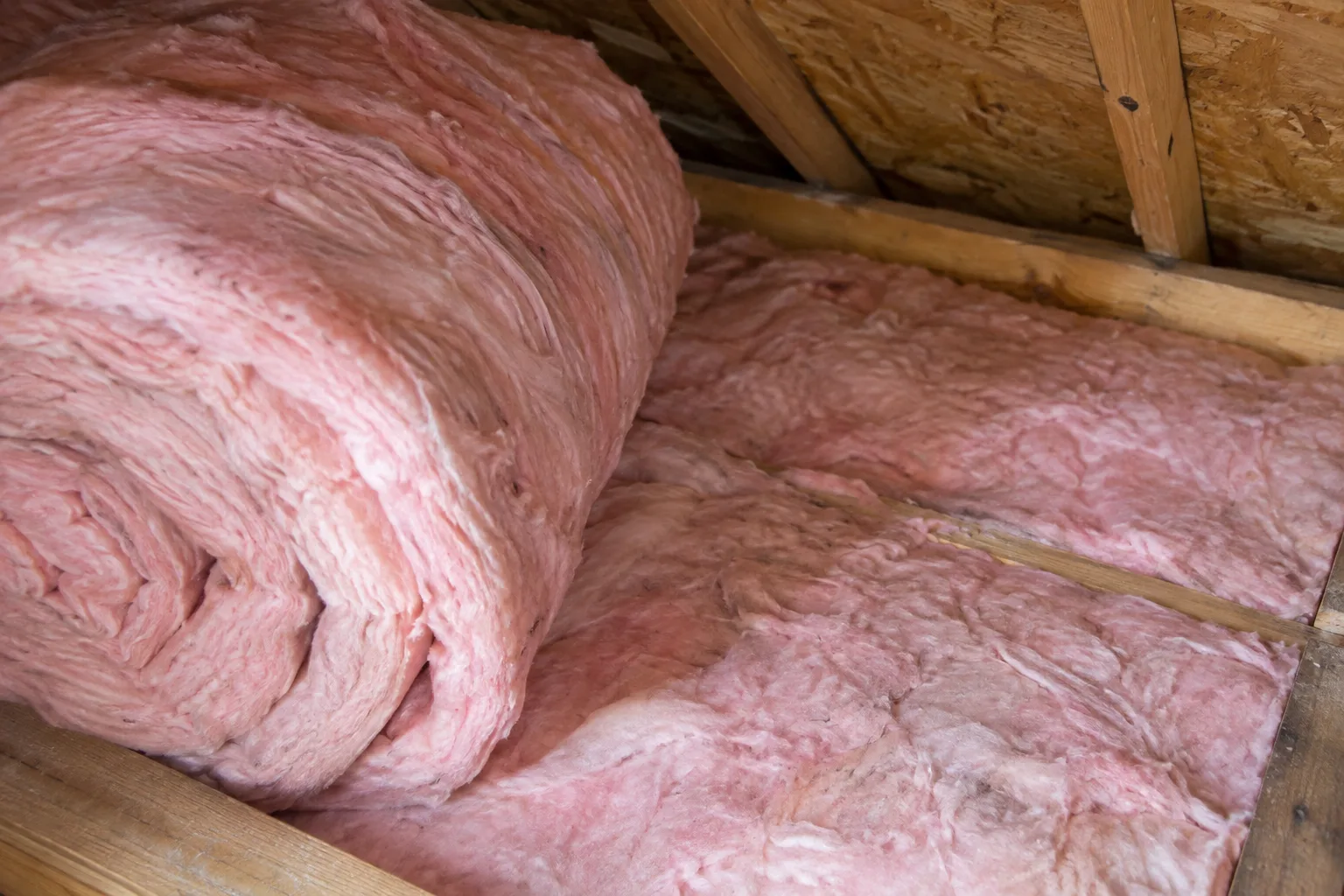
Wood conducts heat more readily than insulation, so the tops of ceiling joists act as small thermal bridges when insulation stops at joist height. A common solution is a second layer of unfaced roll laid perpendicular across the joists. This cross layer covers the framing, overlaps the seams in the layer beneath, and adds R-value without squeezing anything. The second layer should always be unfaced, since a paper facing sandwiched between layers can hold moisture. Near the eaves, where the roof slopes down, enough space must stay open for ventilation.
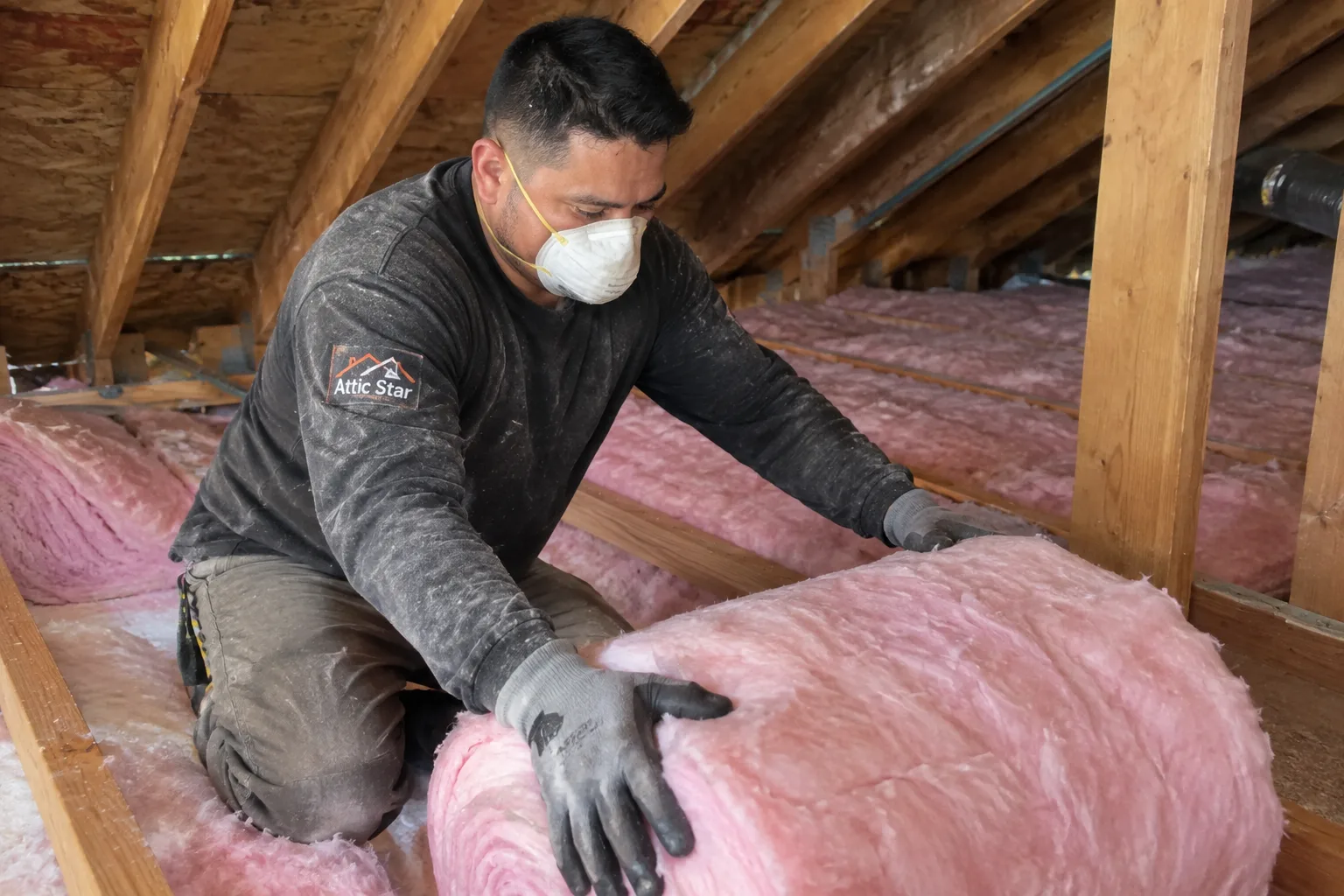
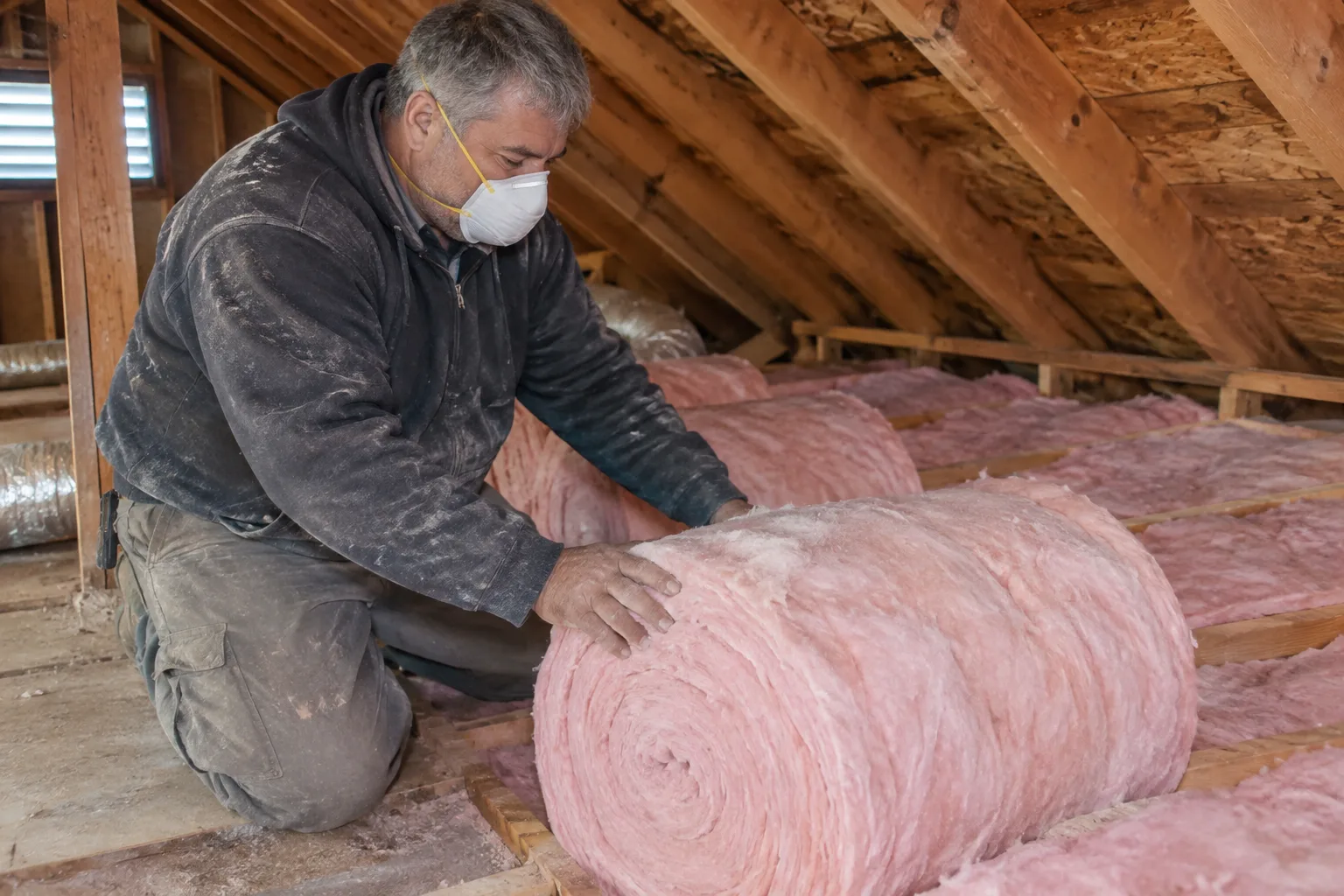
Glass fibers irritate skin, eyes, and lungs, which is why installers wear long sleeves, gloves, eye protection, and a properly fitted respirator or dust mask. The same reason explains why fiberglass shouldn't be left exposed in a living area. In a finished room it belongs behind drywall or another covering, where loose fibers can't be disturbed and drift into the air. In attics and crawl spaces, which people rarely enter, exposed rolls are normal, but anyone going up there should still cover up and avoid handling the material bare-handed.
Fiberglass Roll Insulation at a Glance
Fiberglass Rolls: Pros, Cons, and Alternatives
The strengths of rolls are cost and speed. Fiberglass is among the more affordable insulation materials, rolls require no machine, and they cover open spaces quickly. They don't settle the way loose-fill does, glass fibers don't absorb water, and glass itself isn't a food source for mold. The trade-offs: rolls need fairly regular framing to lie flat, they are awkward around dense wiring, ductwork, or blocking, and every obstruction calls for careful cutting to avoid gaps that quietly lower performance.
When an attic is crowded with ducts, wiring, and cross-bracing, or the joists are irregular, blown-in insulation often gives more complete coverage than rolls. For walls and raised floors, pre-cut batts are easier to handle than cutting a roll down for every bay. And where fire resistance or sound control is the priority, mineral wool may be worth its higher price. Rolls fill a specific niche: big, open, regularly framed areas where a continuous blanket is simply the fastest route to good coverage.
It is common for older Bay Area homes to have only a thin layer of attic insulation at joist height, installed when energy standards were far looser. That is a typical case for adding a cross-laid roll layer, provided the existing material is dry and clean. In hotter inland areas, where attic temperatures climb on summer afternoons, more attic insulation helps keep upstairs rooms cooler; closer to the coast, it is mostly about holding heat on damp, foggy nights. Title 24 attic minimums differ by California climate zone, so the right target depends on where you live.
Recent Fiberglass Roll Insulation Jobs
 i📍 San Leandroi📍 Glen Park, San Franciscoi📍 Millbrae
 i📍 Pleasant Hill
 i📍 Saratoga
 i📍 Union City
 i📍 West San Jose, San Jose
How We Handle Fiberglass Roll Insulation
Check Access and Layout
We map the joist runs, note obstructions and vents, and confirm whether rolls, batts, or a mix fits your attic best.
Clear and Seal First
Damaged or dirty material comes out, and ceiling penetrations are sealed so the new blanket isn't sitting over air leaks.
Unroll Between Joists
The first layer is unrolled into each bay, cut to length at the ends, and kept clear of eave vents, flues, and non-IC lights.
Cross-Lay the Top Layer
An unfaced second layer runs perpendicular over the joists to cover the framing without compressing the layer below.
Other Services Homeowners Ask About
Most projects involve more than one service. These are the ones our Bay Area crews pair with this work most often:
- batt insulation installation
- attic insulation removal and replacement
- blown-in attic insulation
- attic cleaning and cleanup
We do fiberglass roll insulation across the Bay Area from four offices, on the Mid-Peninsula, in the South Bay and East Bay, and in the North Bay, San Francisco and Oakland.
What Bay Area Homeowners Are Saying
Our Guarantee: Expert, Reliable, Affordable
We inspect your attic for free first, and our licensed, bonded, and insured crew installs the rolls to code.
FAQ
How much does fiberglass roll insulation cost? +
Cost depends on the size of your home and the scope of the work. We provide a free, no-obligation inspection and give you an exact quote before anything begins — no surprises.
How long does the work take? +
Most jobs are completed in a single day. Larger or more involved projects may take longer, which we'll confirm during your free inspection.
Do I need to be home during the work? +
You don't need to stay in the work area itself, but we do ask that someone is available at the start and end of the appointment. Our crew works cleanly and keeps you updated throughout.
Are you licensed and insured? +
Yes — Attic Star is fully licensed, bonded, and insured, and has served Bay Area homeowners for over 25 years.
What's the difference between fiberglass rolls and batts? +
The material is the same; the format differs. Batts are pre-cut pieces, usually sized to a standard wall height, while rolls are long continuous blankets cut to length on site. Rolls suit long, open runs like attic joists, and batts are easier in walls and shorter bays. Many projects use both.
Should the second layer of roll insulation be faced or unfaced? +
Unfaced. The second layer goes over existing insulation, and a paper or foil facing in the middle of the assembly could trap moisture between the layers. Laying that unfaced layer at a right angle to the joists also covers the exposed tops of the framing.
Is it safe to have fiberglass insulation in my house? +
When it is enclosed, yes. Fiberglass in an attic, crawl space, or behind drywall stays put and isn't a concern for everyday living. The irritation comes from handling or disturbing it, which is why installers wear protective gear and why the material shouldn't be left exposed in rooms people use.
Can roll insulation be used in a crawl space? +
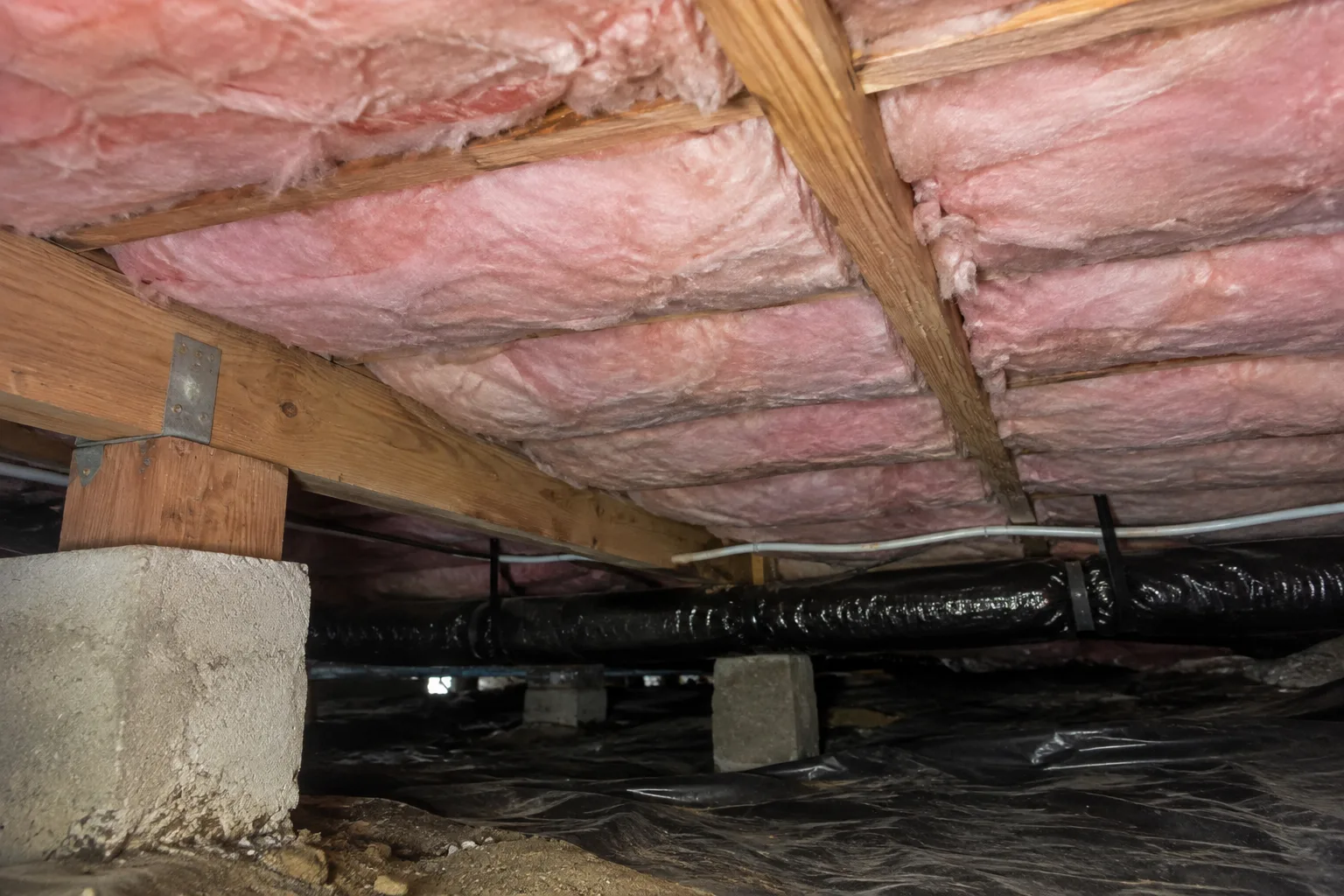
It can be installed between floor joists from below, but it has to be supported so it stays tight to the subfloor instead of sagging. In a cramped crawl space, pre-cut batts are often easier to maneuver than long rolls, so they are commonly used there instead.
Get Your Free Fiberglass Roll Insulation Quote
Fill out the form and we'll follow up to schedule your free, no-obligation inspection — most homeowners hear back the same day. Prefer to talk now? Call us directly.
Get Your Free Estimate
Takes less than a minute — tell us about your project and we'll follow up the same day.
Get my Free Estimate