Furnace Repair in the Bay Area
Fast, honest furnace repair for Bay Area homes. We find the real problem, fix it right, and check your system for safety issues — so your heat is reliable when the nights turn cold.
- Licensed, Bonded & Insured
- Family-Owned, 25+ Years
- Free, No-Obligation Quote
Get Your Free Quote
Tell us about your project and we'll follow up with next steps — usually the same day.
Request Free InspectionSigns Your Furnace Needs Attention
A furnace usually warns you before it quits. Catch these early and the repair is often simple; wait, and it can become a no-heat emergency.
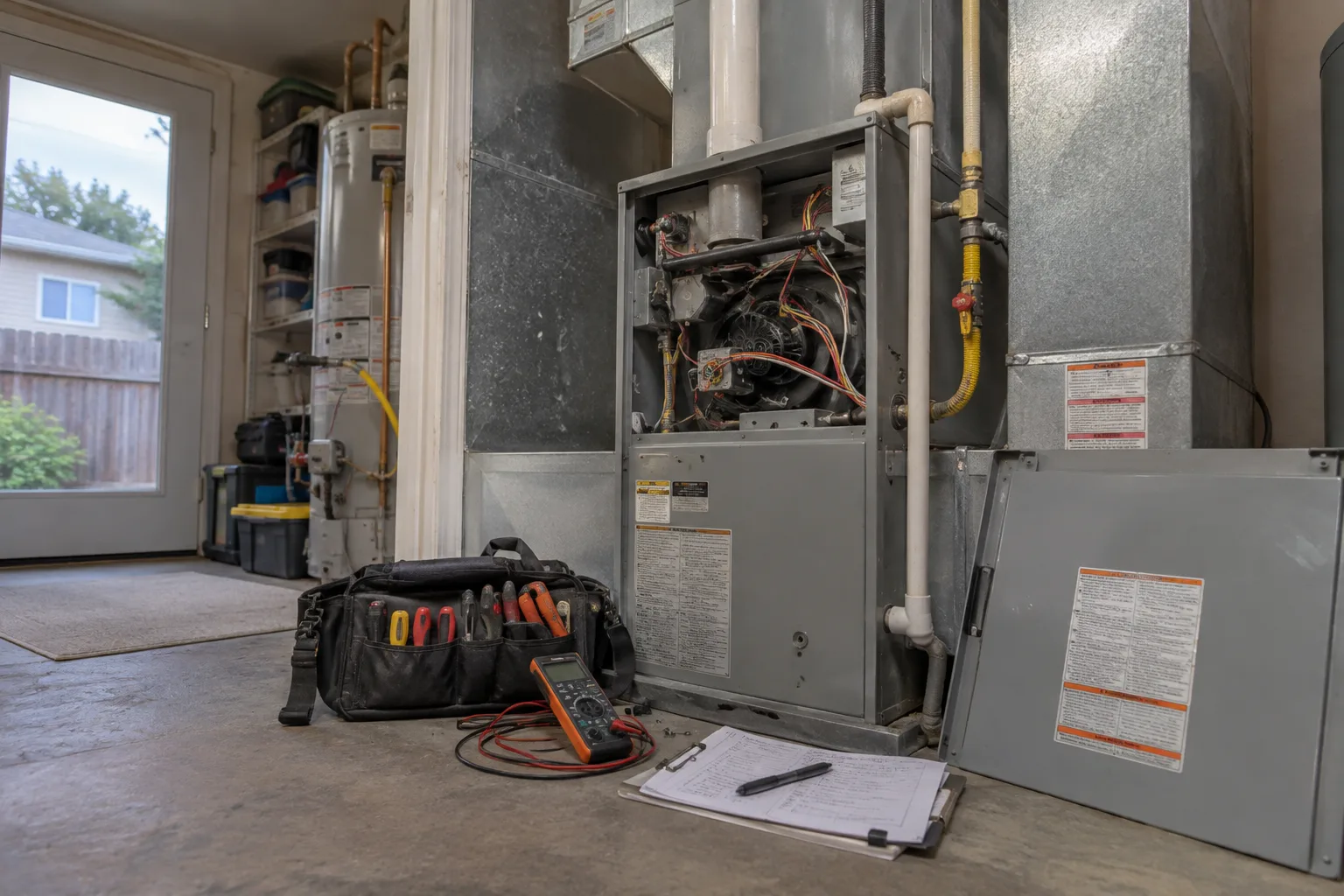
- No heat, weak heat, or cold air from the vents
- The furnace turns on and off every few minutes
- Banging, rattling, or squealing at startup
- A burning smell or a yellow, flickering burner flame
- Heating bills rising faster than the weather explains
 i
i
Why Choose Attic Star for Furnace Repair?
We fix what's actually wrong — not what's easiest to sell — and we tell you plainly when repair stops making sense.
- Accurate diagnosis before any work begins
- Upfront pricing you approve first
- Safety check on every furnace we service
- Honest repair-or-replace guidance
 i
i
Everything You Need to Know About Furnace Repair
Most furnace problems trace back to a short list of culprits: a clogged filter starving the system of air, a failed igniter or dirty flame sensor, a worn blower motor or capacitor, a faulty thermostat, or a limit switch shutting the burners down because the furnace is overheating. Each has distinct symptoms, and each is usually a manageable repair when it's caught early.
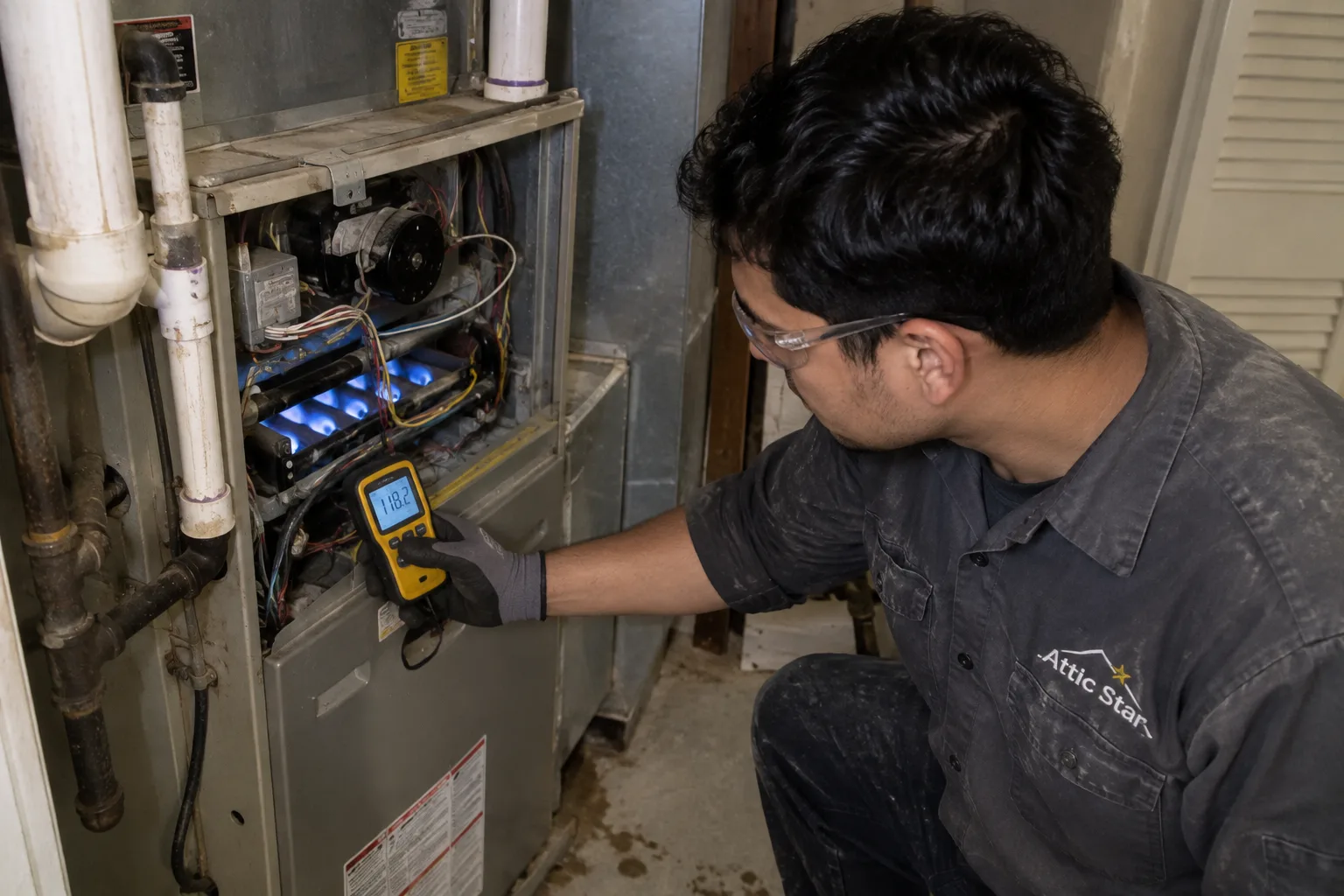
Our diagnosis looks at the whole picture. We check ignition, burners, and flame quality, test the safety controls, measure airflow, and inspect the venting that carries combustion gases out of your home. When a furnace keeps tripping its limit switch, the real cause is often restricted airflow from crushed or blocked ductwork — a problem we can see and fix because we work in attics and crawl spaces every day.
Safety is part of every visit. A cracked heat exchanger or blocked flue can let carbon monoxide into your living space, and many Bay Area furnaces sit in attics, closets, and crawl spaces where small problems go unnoticed for years. We look for these issues on every furnace we service and explain exactly what we find.
If your furnace is near the end of its life, we'll say so. When repair costs start approaching the price of new equipment, we'll walk you through replacement options — including high-efficiency furnaces and all-electric heat pumps — so you can decide with real numbers in front of you.
Furnace Repair at a Glance
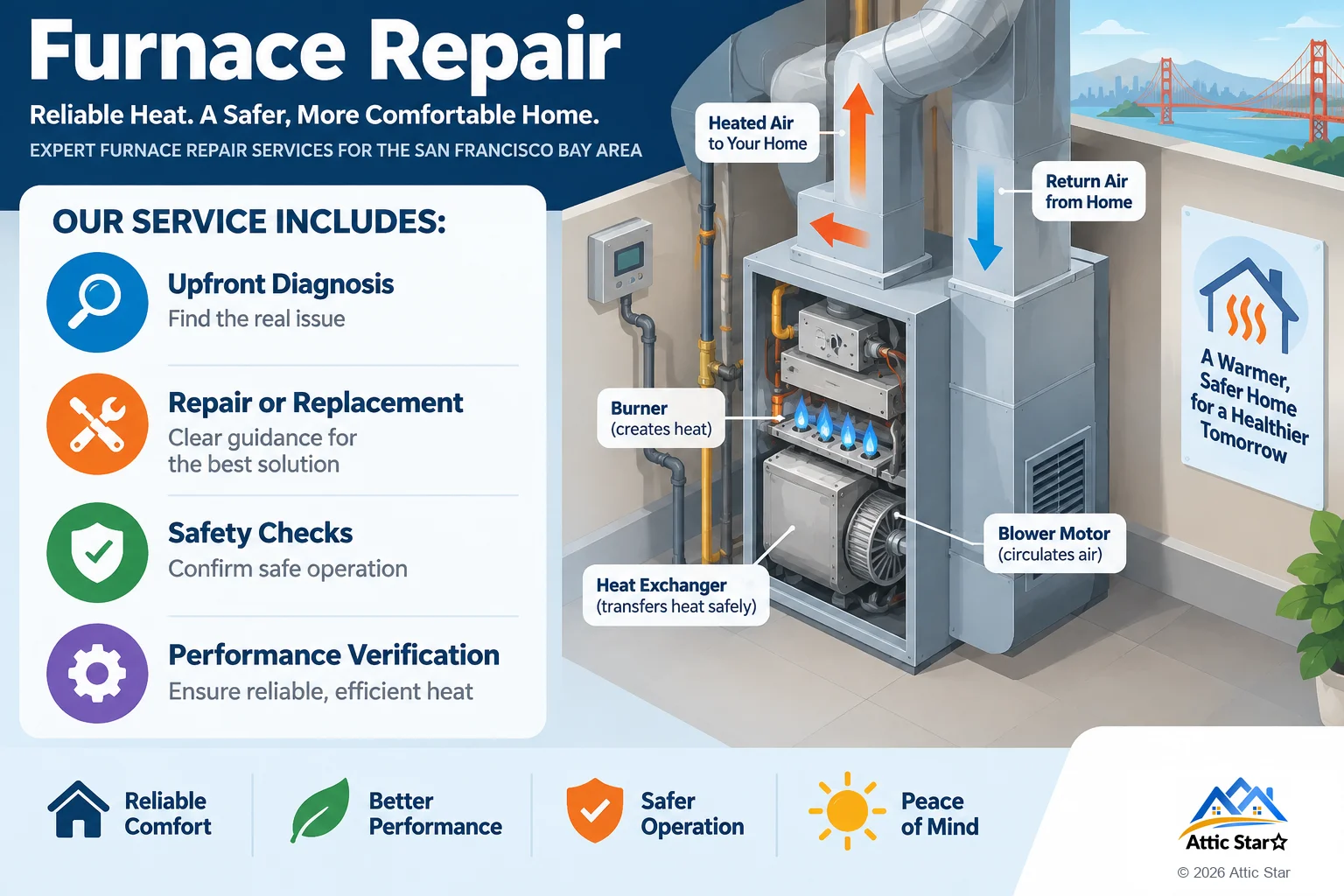
Furnace Basics Every Homeowner Should Know
Check your furnace filter every one to three months during heating season. A clogged filter is one of the most common causes of overheating, short-cycling, and weak airflow — and the easiest one to prevent.
Most furnaces last roughly 15 to 20 years. Past that point, efficiency drops, parts get harder to find, and repairs come more often. Age alone doesn't mean replacement, but it should factor into any major repair decision.
California requires carbon monoxide alarms in homes with gas appliances, fireplaces, or attached garages. Test yours monthly and replace them on the manufacturer's schedule — especially if your furnace is more than a decade old.
Recent Furnace Repair Jobs
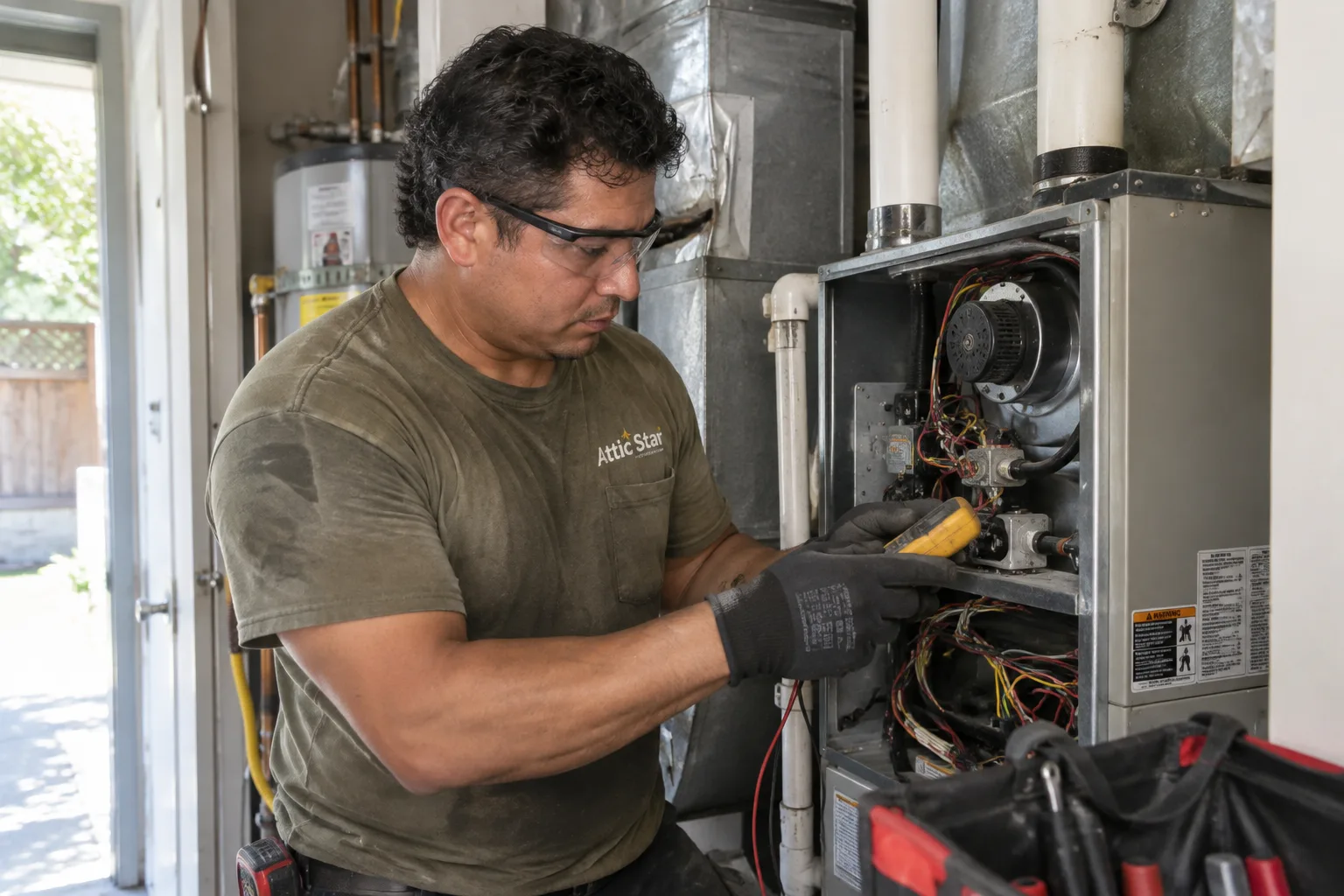 i📍 Cambrian Park, San Josei📍 Burlingamei📍 Lafayette
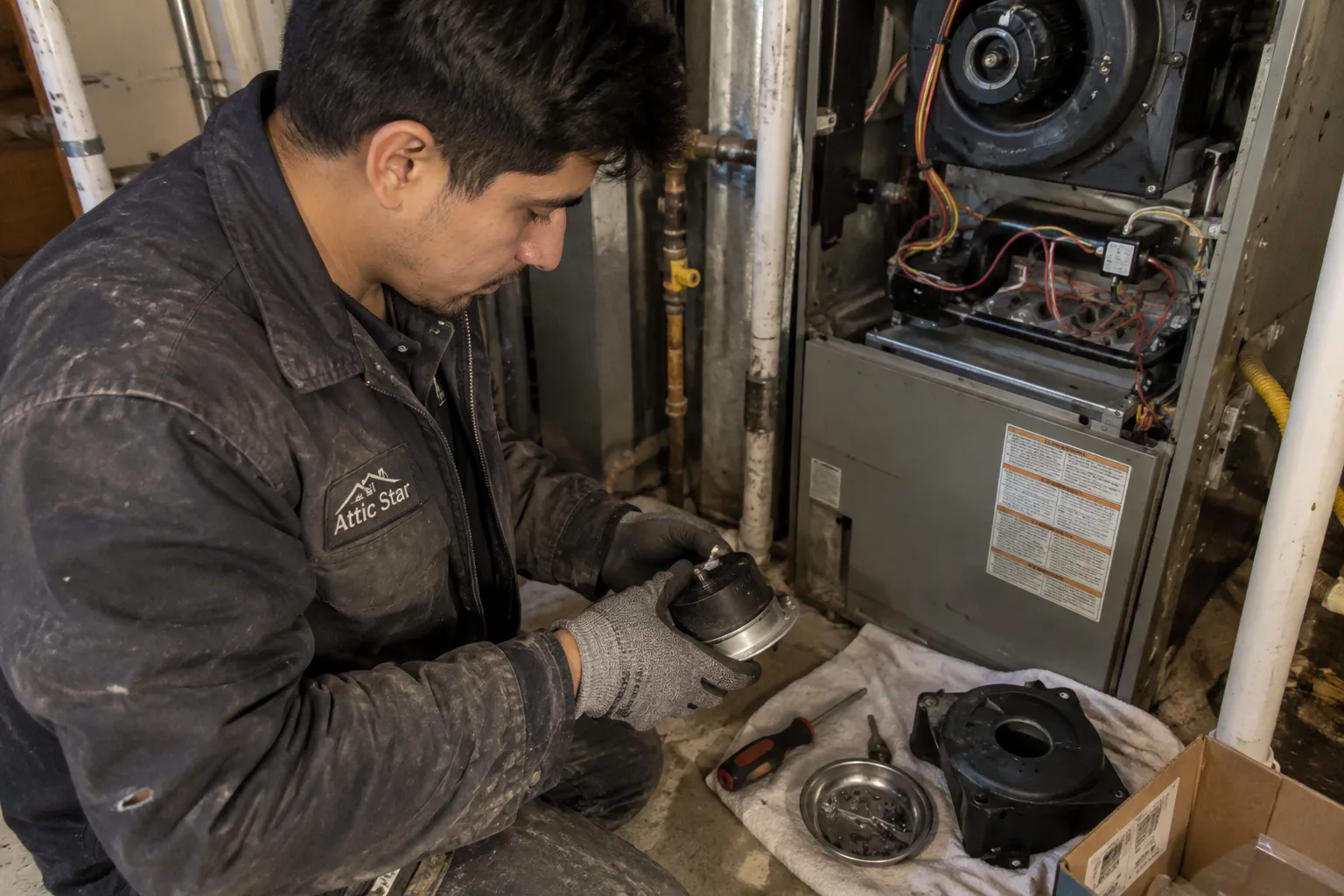 i📍 Richmond District, San Francisco
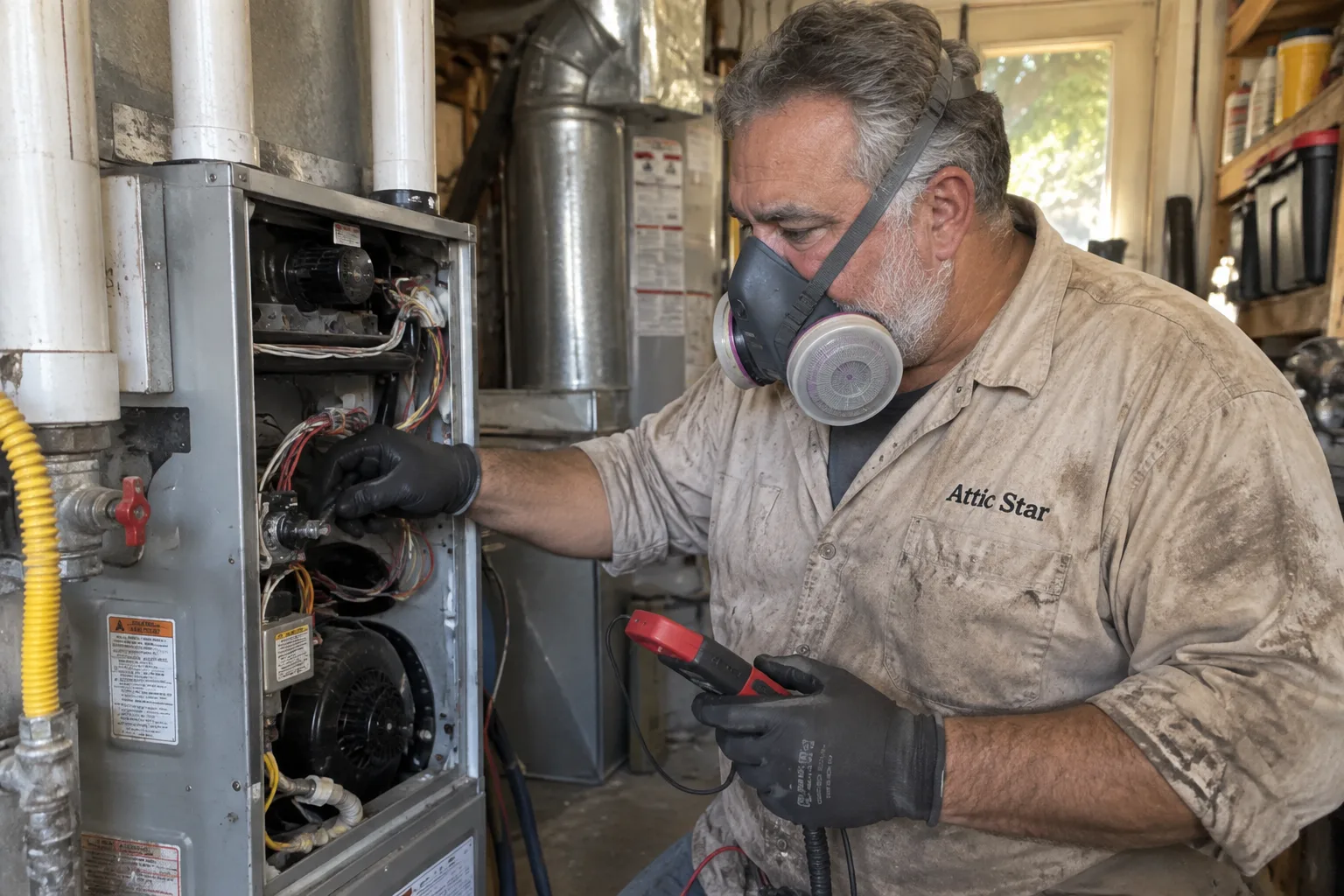 i📍 Castro Valley
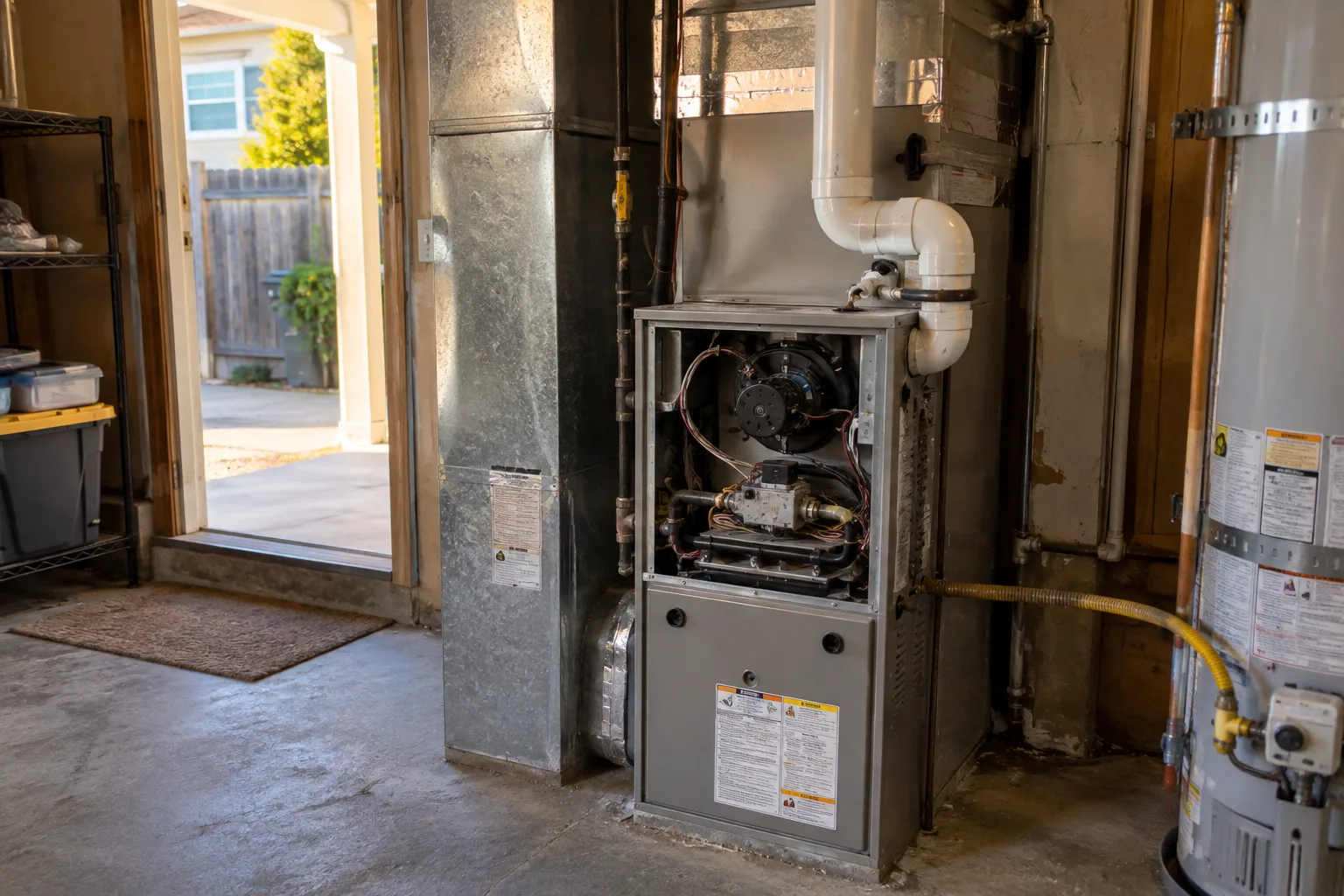 i📍 Novato
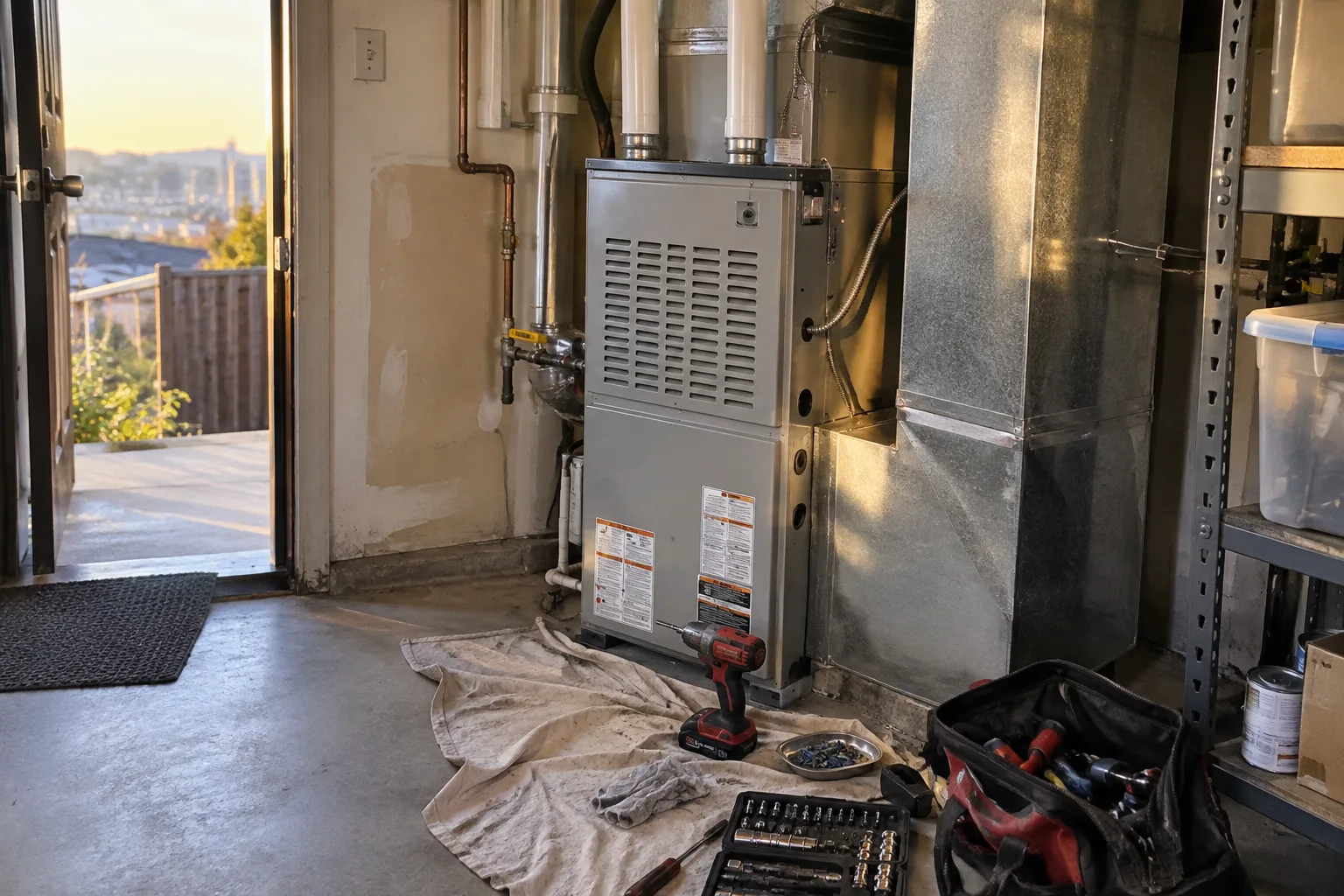 i📍 Belmont
How We Handle Furnace Repair
Diagnose
We test ignition, controls, airflow, and venting to pinpoint the real cause.
Upfront Quote
You see the repair and the price before any work begins.
Repair & Safety Check
We complete the repair and inspect the heat exchanger, flue, and safety controls.
Verify Performance
We run a full heating cycle and confirm steady, safe operation before we leave.
Other Services Homeowners Ask About
Most projects involve more than one service. These are the ones our Bay Area crews pair with this work most often:
- HVAC system installation
- air duct repair and replacement
- air conditioning installation
- crawl space cleaning
We do furnace repair across the Bay Area from four offices, on the Mid-Peninsula, in the South Bay and East Bay, and in the North Bay, San Francisco and Oakland.
What Bay Area Homeowners Are Saying
Our Guarantee: Expert, Reliable, Affordable
Every furnace repair is backed by our satisfaction guarantee. You'll know what's wrong, what it costs, and whether it's worth fixing before we touch a single part.
FAQ
How much does furnace repair cost? +
Cost depends on the size of your home and the scope of the work. We provide a free, no-obligation inspection and give you an exact quote before anything begins — no surprises.
How long does the work take? +
Most jobs are completed in a single day. Larger or more involved projects may take longer, which we'll confirm during your free inspection.
Do I need to be home during the work? +
You don't need to stay in the work area itself, but we do ask that someone is available at the start and end of the appointment. Our crew works cleanly and keeps you updated throughout.
Are you licensed and insured? +
Yes — Attic Star is fully licensed, bonded, and insured, and has served Bay Area homeowners for over 25 years.
What should I do if I smell gas near my furnace? +
Leave the house right away, don't flip switches or use anything that could spark, and call PG&E or 911 from outside. Once the utility has made the home safe, we can diagnose and repair the furnace.
Why is my furnace blowing cold air? +
Common causes include a thermostat fan set to "on" instead of "auto," a dirty flame sensor or failed igniter, a limit switch tripped by overheating, or a gas supply issue. Check the thermostat and filter first; if that doesn't fix it, it's time for a diagnosis.
How often should a furnace be serviced? +
Once a year, ideally in the fall before heating season. A tune-up keeps efficiency up, catches worn parts before they fail, and includes a safety check of the burners, controls, and venting.
Should I repair or replace my furnace? +
If the furnace is over 15 years old and the repair would cost a large share of a new system, replacement usually makes more financial sense. We'll give you both numbers so you can compare.
Get Your Free Furnace Repair Quote
Fill out the form and we'll follow up to schedule your free, no-obligation inspection — most homeowners hear back the same day. Prefer to talk now? Call us directly.
Get Your Free Estimate
Takes less than a minute — tell us about your project and we'll follow up the same day.
Get my Free Estimate