
Batt Insulation Installation in the Bay Area
Batt insulation installed in Bay Area walls, raised floors over crawl spaces, attic joists, and kneewalls, cut to fit snugly with no gaps or compression. Free inspection from our in-house crew.
- Licensed, Bonded & Insured
- Family-Owned, 25+ Years
- Free, No-Obligation Quote
Get Your Free Quote
Tell us about your project and we'll follow up with next steps — usually the same day.
Request Free InspectionWhere Batt Insulation Works Best
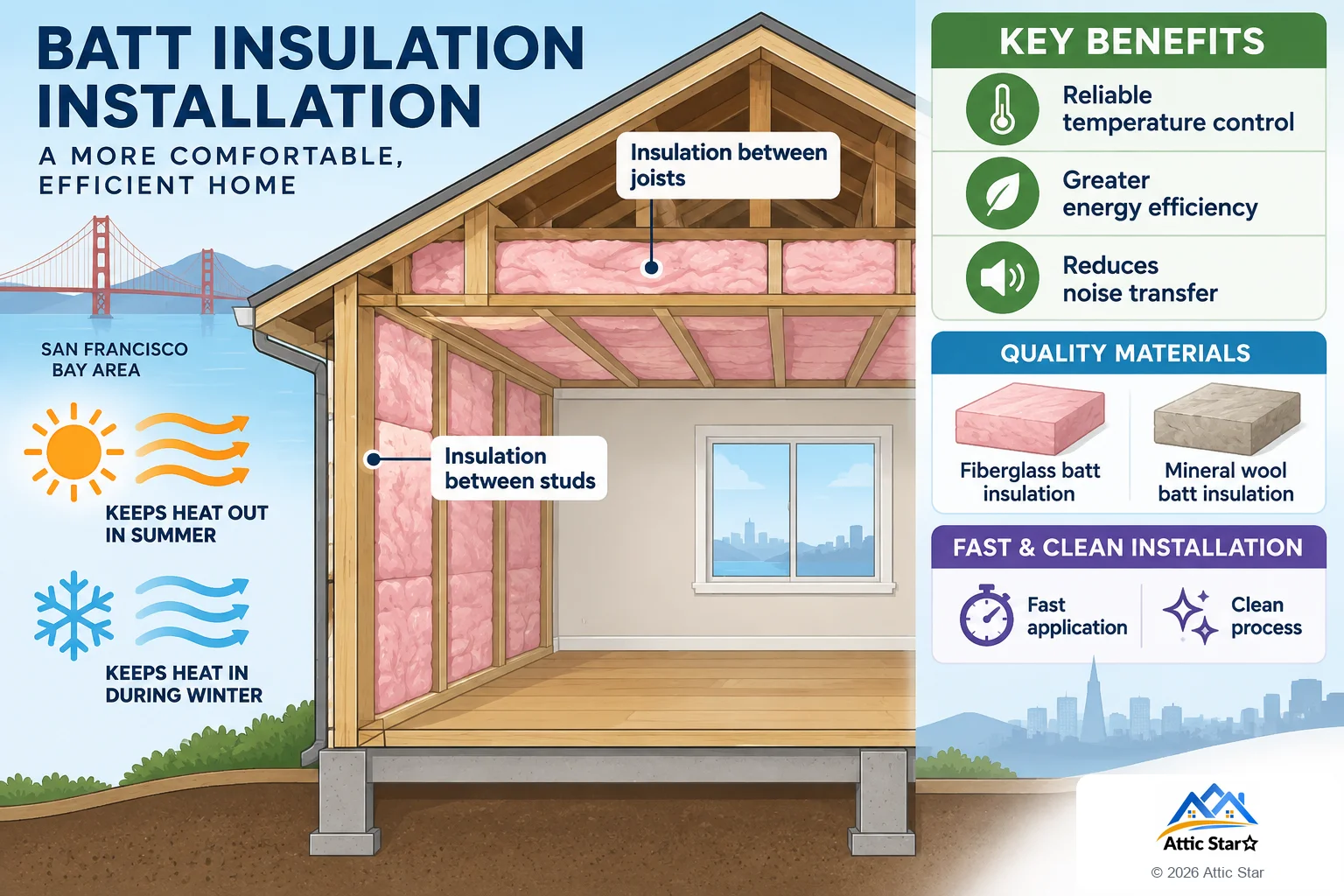
Batts are made to drop between framing set at standard widths, so they are the natural choice when cavities are open and reachable.
- Open wall studs during a remodel or addition
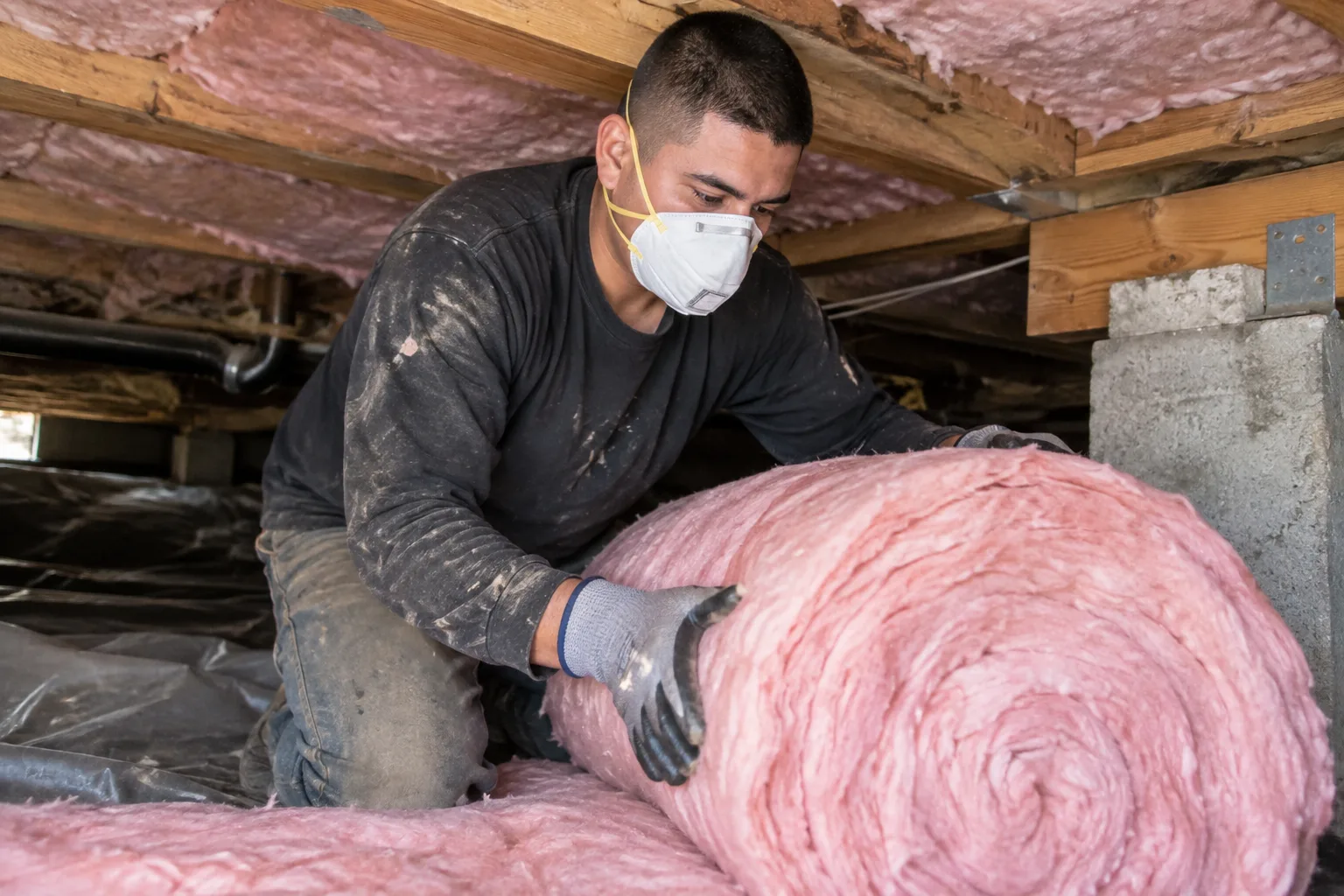
- A raised floor over a crawl space with no insulation
- Kneewalls beside finished attic rooms
- Underfloor batts that have sagged or fallen
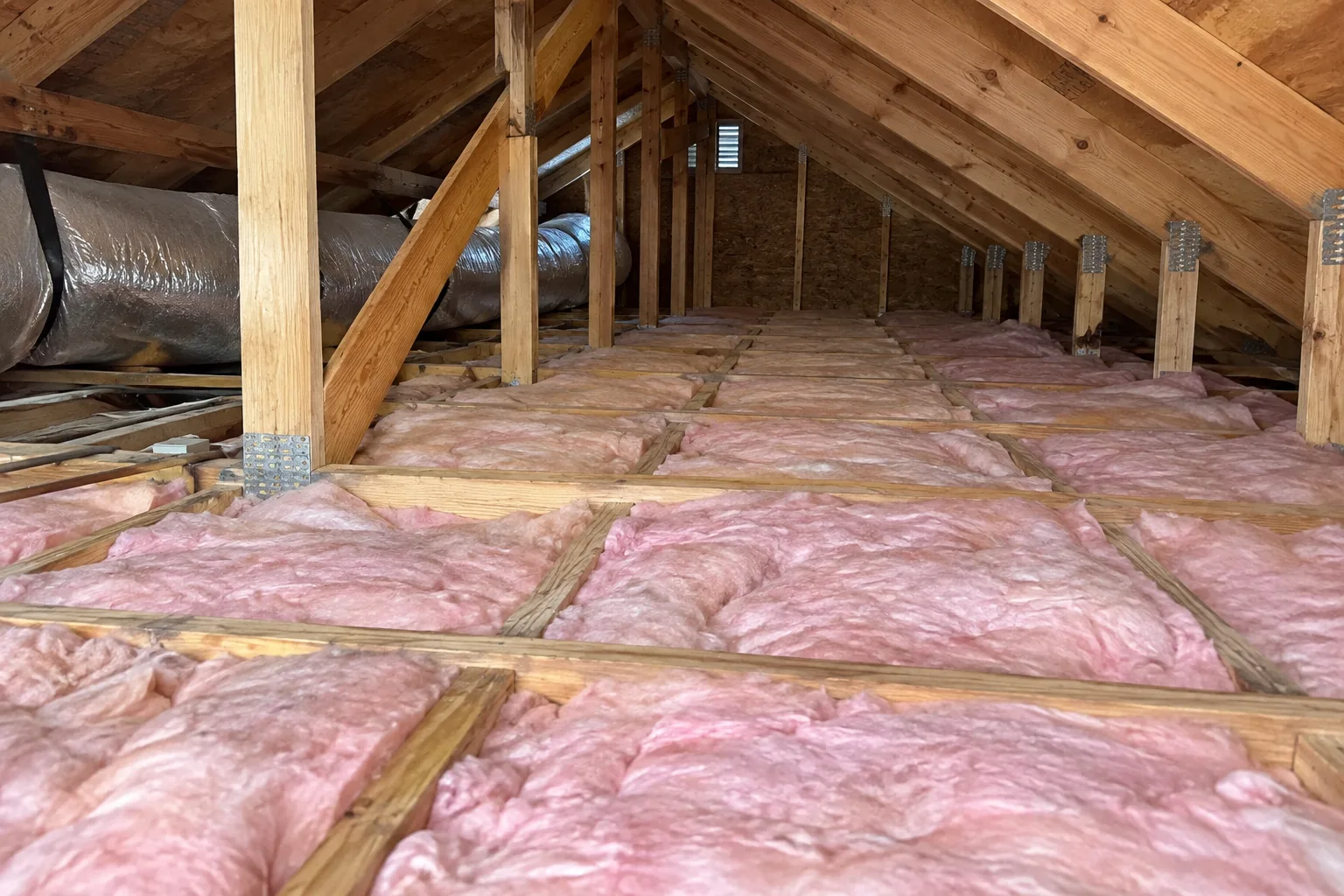
- Open attic joists at standard spacing
 i
Why Choose Batt Insulation?
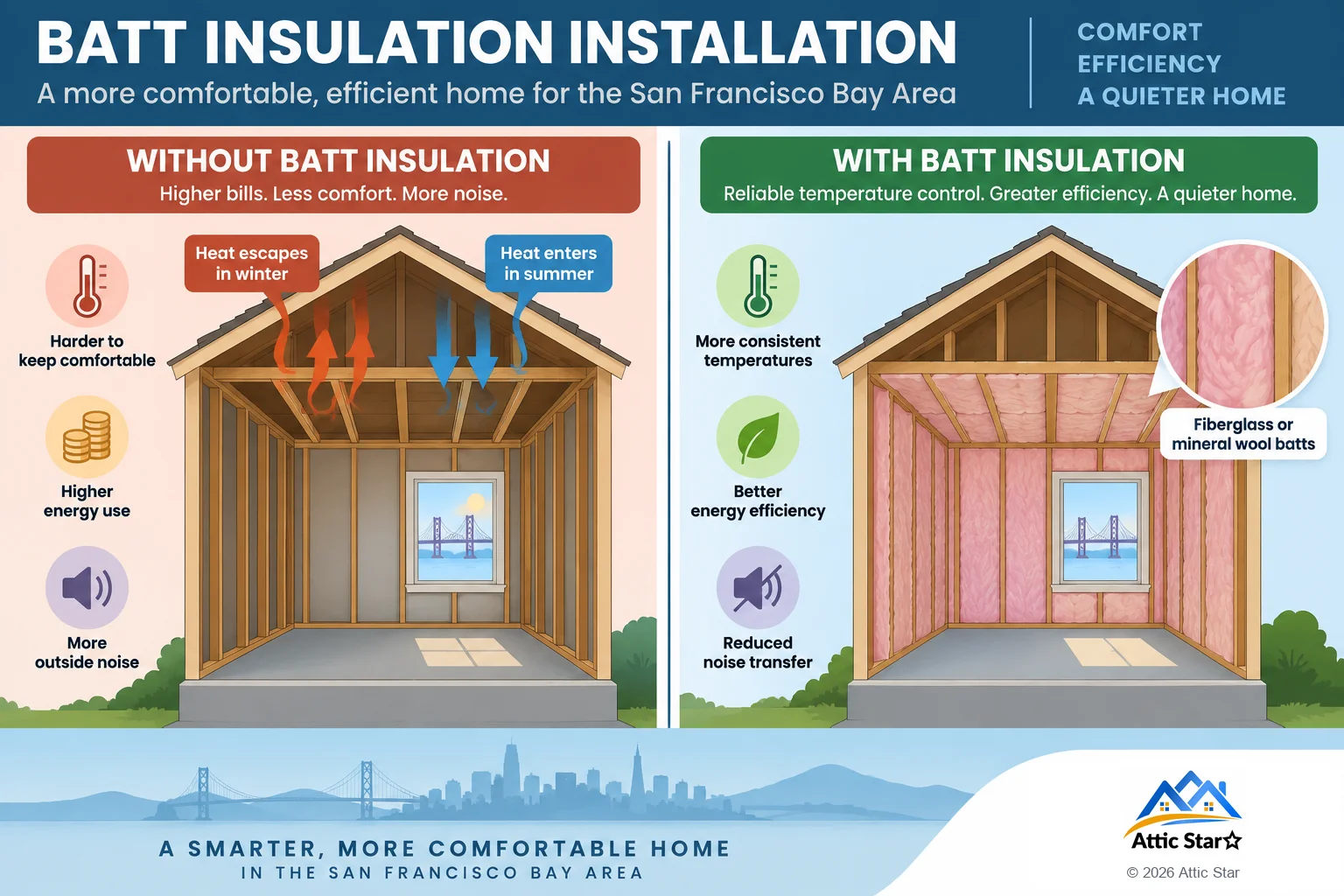
Batts hold their thickness in walls and under floors, places where loose material won't stay put in an open cavity.
- Sized for 16- and 24-inch framing
- Stays in place in walls and floors
- Faced or unfaced for each location
- Clean, precise fit around wiring
 i
Everything You Need to Know About Batt Insulation Installation
Batt insulation comes as pre-cut, flat panels, most often fiberglass, sized to slip between framing members. Standard widths are made for studs and joists set 16 or 24 inches on center, and common lengths match a typical wall height, so in most homes they need trimming only at the ends and around obstacles. Fiberglass batts typically rate around R-2.9 to R-3.8 per inch, depending on density. Because each piece holds its shape, batts suit walls and floors, where loose material would simply fall out of an open cavity.
Batts come faced or unfaced. Faced batts carry a kraft paper layer that acts as a vapor retarder and provides flanges for stapling. As a rule, the facing goes toward the side of the assembly that is heated in winter: toward the room in a wall, and up against the subfloor under a raised floor. Unfaced batts are used where a vapor retarder isn't wanted, such as a second layer over existing insulation. Kraft paper is combustible, so faced batts shouldn't be left exposed where code calls for a covering.
A batt's rated R-value assumes it fills the cavity at full thickness. Squeezing a thick batt into a shallow cavity, leaving a gap along one side, or stuffing it behind a wire all reduce what you actually get, and small voids add up across a whole wall. The right method is to split the batt so part sits behind the wire and part in front, and to cut a neat notch around electrical boxes instead of jamming material over them. California's energy code even offers a third-party verification option for insulation installation quality.
Under raised floors, gravity works against the insulation. Batts placed between floor joists need support, typically spring-steel wire supports set at regular intervals or netting stapled across the joists, so they stay pressed against the subfloor. Unsupported batts sag over the years and drop to the crawl space floor, leaving the room above cold and the crawl space littered with material rodents like to nest in. Many older Bay Area homes sit on raised foundations with floors that were never insulated, which makes this one of the region's most common batt applications.
Batt Insulation Installation at a Glance
Batts Compared With Other Insulation Types
Batts and rolls are usually the same fiberglass; what separates them is packaging. Batts are pre-cut to a set length, which makes them easier to handle in walls and in short or interrupted bays. Rolls are long blankets cut on site, better suited to long, open attic runs. For a stud wall, a kneewall, or a raised floor with plumbing crossing every few feet, pre-cut batts usually waste less material and are quicker to fit neatly. Plenty of projects use both, each where it handles best.
Kneewalls deserve special attention. These short walls separate a finished attic room from the unconditioned space behind it, and batts installed there often underperform because nothing holds them against the drywall and the attic side is open to moving air. The fix is to fit the batts snugly, then cover the attic side with a rigid backing or air barrier so the insulation is fully enclosed. The joist bays running under the kneewall need blocking as well, so attic air can't slip beneath the finished room's floor.
Batts have clear strengths: they are widely available, need no blowing machine, and have the R-value printed right on the package. Their weakness is that results depend almost entirely on the installer. In open attics with uneven framing, loose-fill often gives more complete coverage, and in closed walls that can't be opened, dense-packed cellulose is usually the practical retrofit. Where cavities are open and spacing is standard, carefully fitted batts remain a dependable, cost-effective choice for walls, floors, and kneewalls alike.
Recent Batt Insulation Installation Jobs
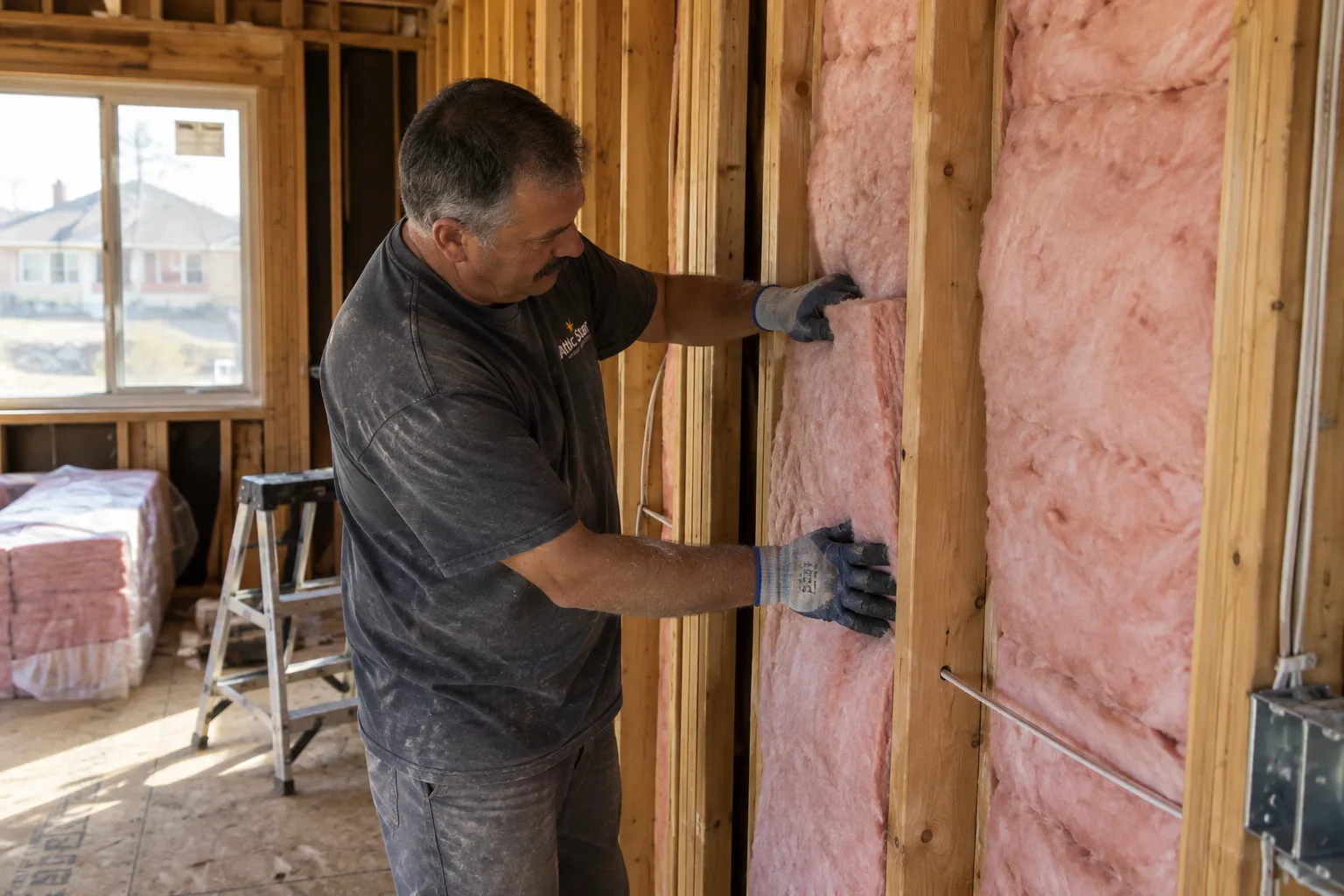 i📍 Richmond District, San Franciscoi📍 Palo Altoi📍 Novato
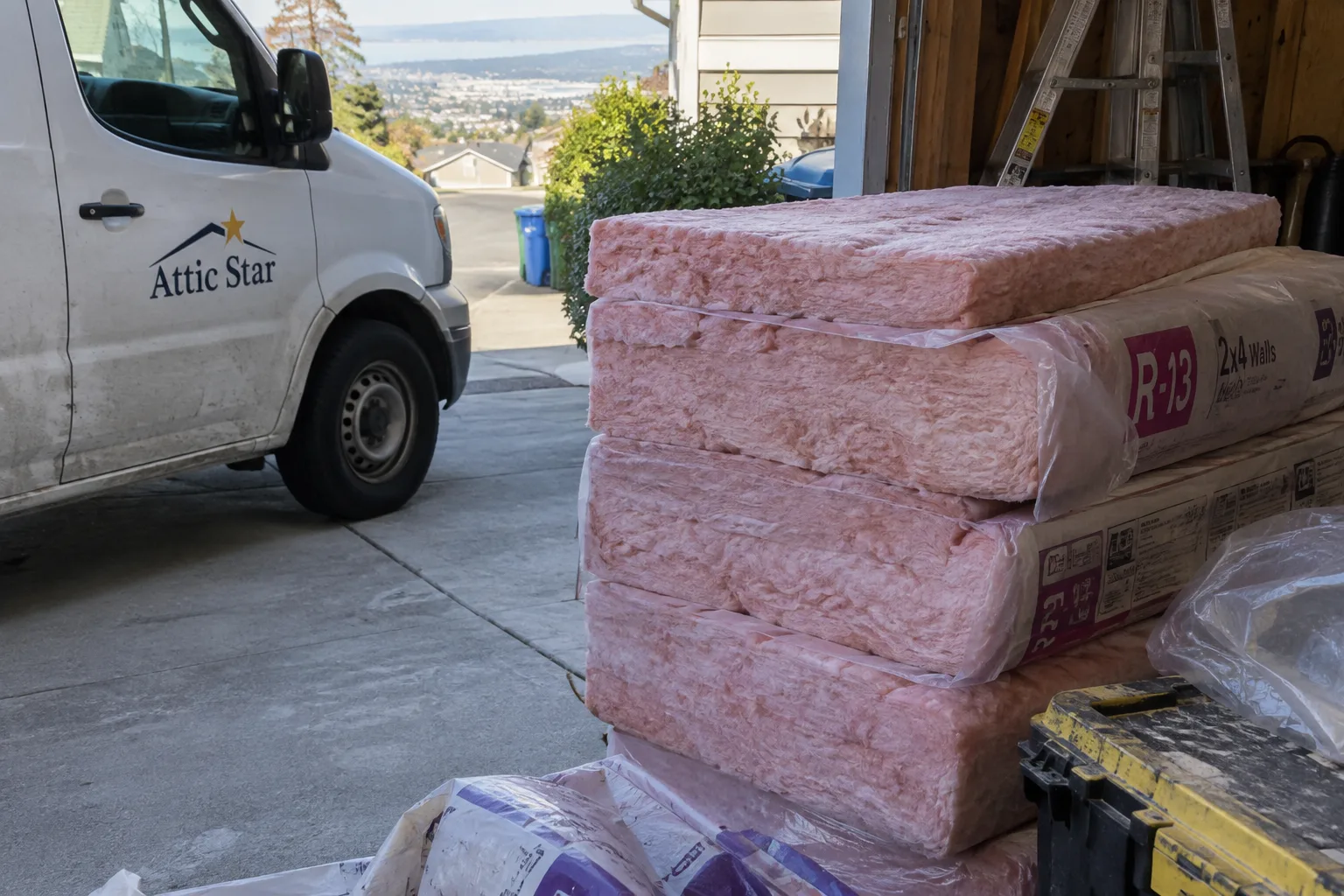 i📍 Burlingame
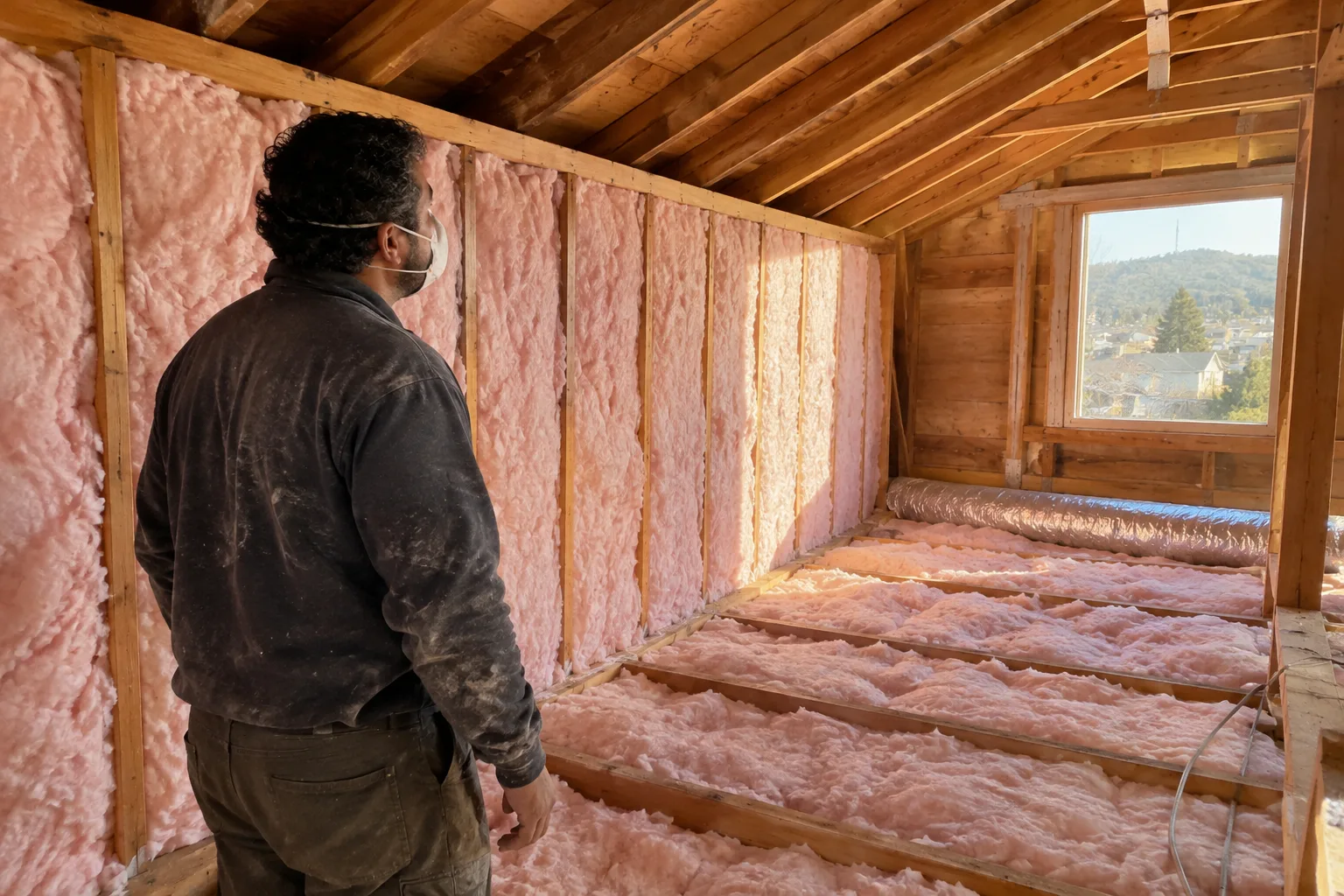 i📍 Danville
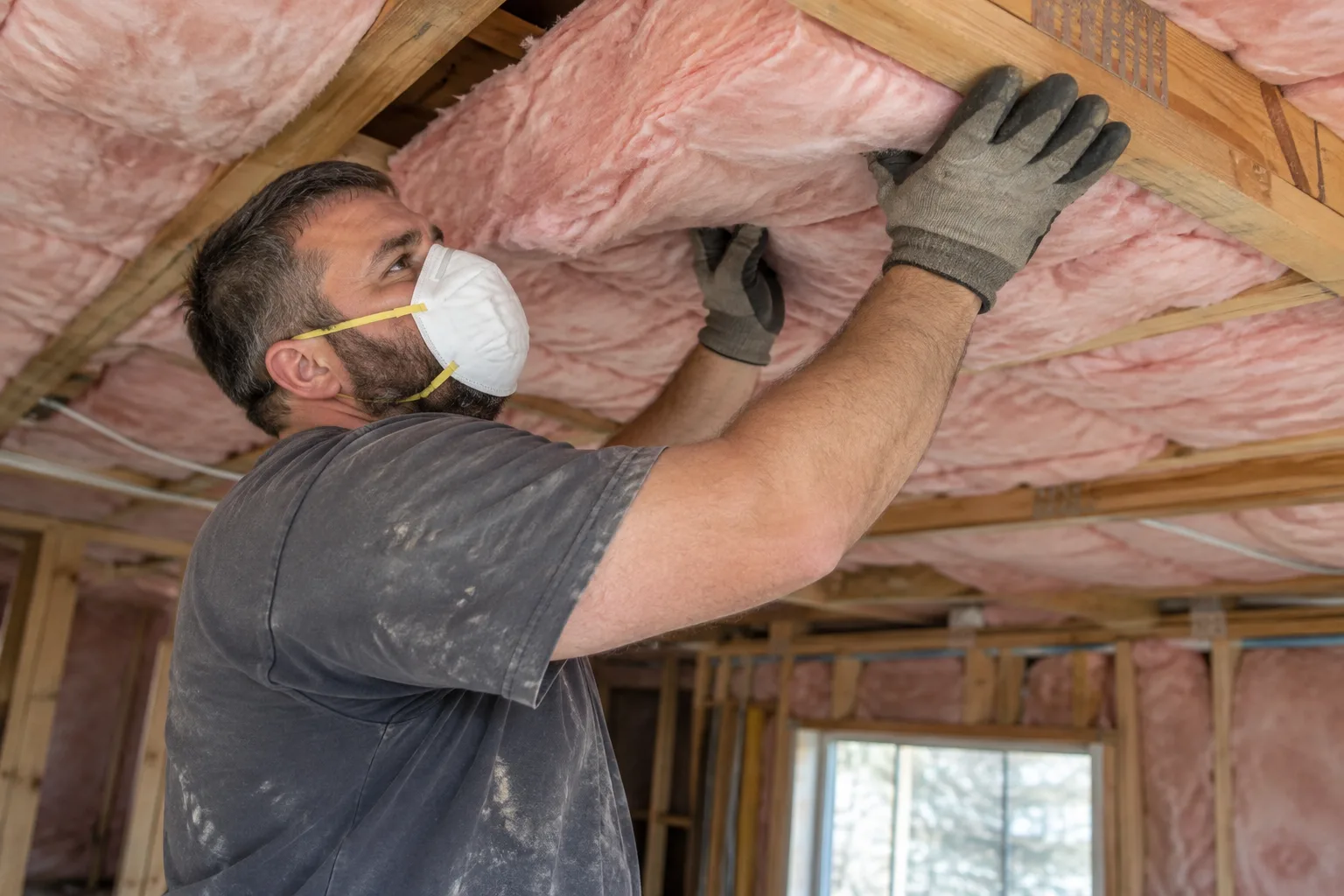 i📍 Montclair, Oakland
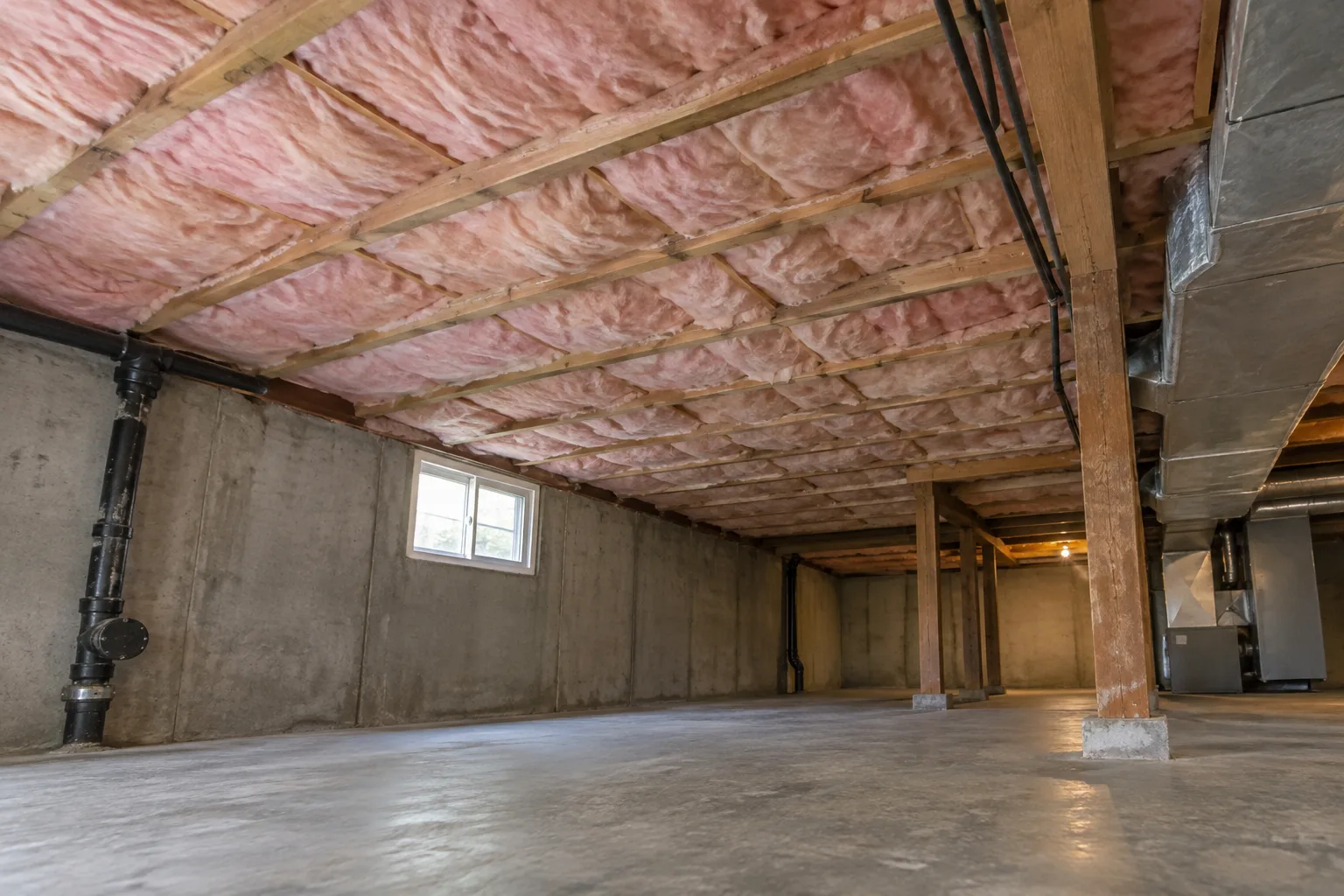 i📍 Cambrian Park, San Jose
How We Handle Batt Insulation Installation
Measure the Cavities
We check stud and joist spacing, cavity depth, and what runs through each bay so every batt is sized and faced correctly.
Prep and Air-Seal
Framing gaps and penetrations get sealed, and fallen or damaged batts are removed before any new insulation goes in.
Cut and Fit Each Batt
Batts are trimmed to length and split around wires, pipes, and electrical boxes so they fill the cavity without being squeezed.
Support and Inspect
Underfloor batts get wire supports or netting, and each bay is checked for gaps, voids, and compression before we finish.
Other Services Homeowners Ask About
Most projects involve more than one service. These are the ones our Bay Area crews pair with this work most often:
- attic insulation removal and replacement
- blown-in attic insulation
- fiberglass roll insulation
- attic cleaning and cleanup
We do batt insulation installation across the Bay Area from four offices, on the Mid-Peninsula, in the South Bay and East Bay, and in the North Bay, San Francisco and Oakland.
What Bay Area Homeowners Are Saying
Our Guarantee: Expert, Reliable, Affordable
We start with a free inspection, and every batt is fitted to code by our in-house crew, with no subcontractors handling the details.
FAQ
How much does batt insulation installation cost? +
Cost depends on the size of your home and the scope of the work. We provide a free, no-obligation inspection and give you an exact quote before anything begins — no surprises.
How long does the work take? +
Most jobs are completed in a single day. Larger or more involved projects may take longer, which we'll confirm during your free inspection.
Do I need to be home during the work? +
You don't need to stay in the work area itself, but we do ask that someone is available at the start and end of the appointment. Our crew works cleanly and keeps you updated throughout.
Are you licensed and insured? +
Yes — Attic Star is fully licensed, bonded, and insured, and has served Bay Area homeowners for over 25 years.
Which way should the paper facing on batt insulation face? +
Generally toward the space that is heated in winter. In exterior walls that means toward the interior drywall; under a raised floor it means up against the subfloor. When batts are added on top of existing attic insulation, unfaced batts are the better choice so a vapor retarder doesn't end up trapped between layers.
Why is the insulation under my floor falling down? +
Batts between floor joists stay up only as long as their supports hold, and staples through the facing or a few scattered wires often give out with time. Moisture, pests, and plain gravity do the rest. Fallen batts should be pulled out and replaced with new ones that are properly supported tight to the floor above.
Can I use thicker batts to get a higher R-value in my walls? +
Not effectively. A batt rated for a deeper cavity loses part of its rating when compressed into a standard 2x4 wall. The better approach is a batt designed for that cavity depth, sometimes a higher-density version that packs more R-value into the same space.
Do batts help with noise between rooms? +
They help. Batts in interior walls and between floor joists absorb some of the sound that would otherwise echo inside the hollow cavity, taking the edge off voices and TV noise. They won't block everything, since sound also travels through framing, doors, and gaps. For rooms where quiet really matters, denser mineral wool batts are worth considering.
Get Your Free Batt Insulation Installation Quote
Fill out the form and we'll follow up to schedule your free, no-obligation inspection — most homeowners hear back the same day. Prefer to talk now? Call us directly.
Get Your Free Estimate
Takes less than a minute — tell us about your project and we'll follow up the same day.
Get my Free Estimate